
 Image 1 of 4
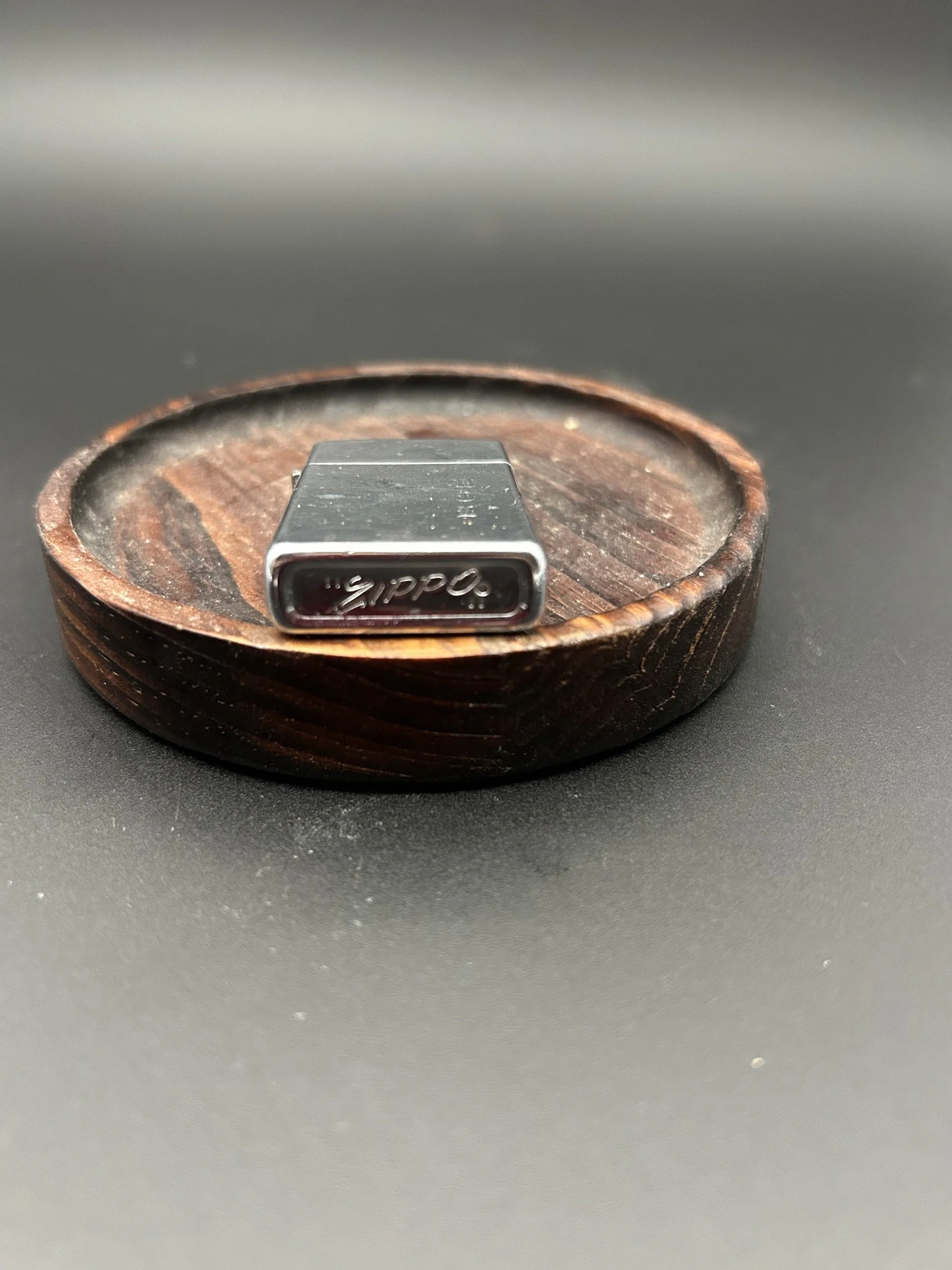 Image 2 of 4
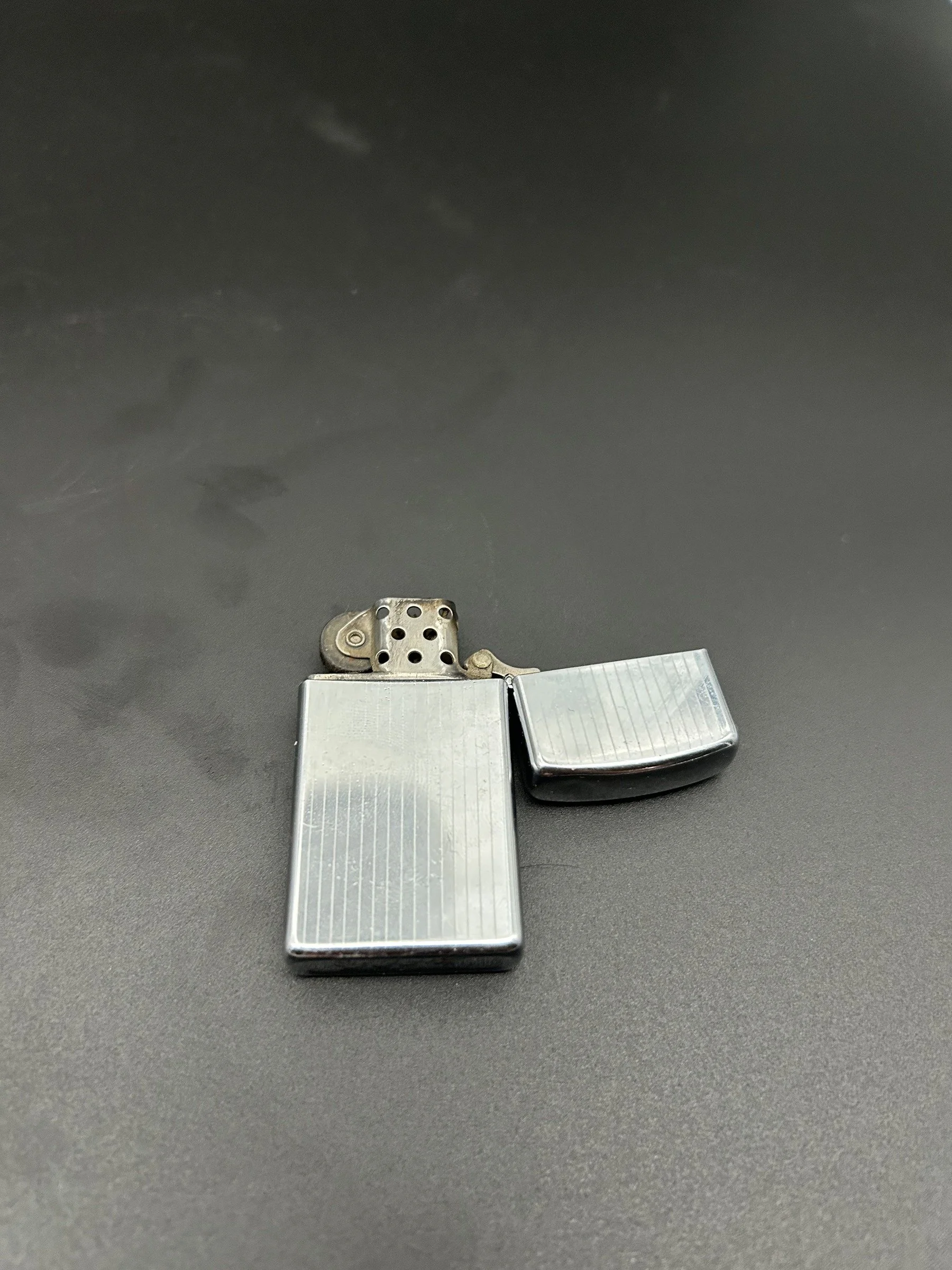 Image 3 of 4
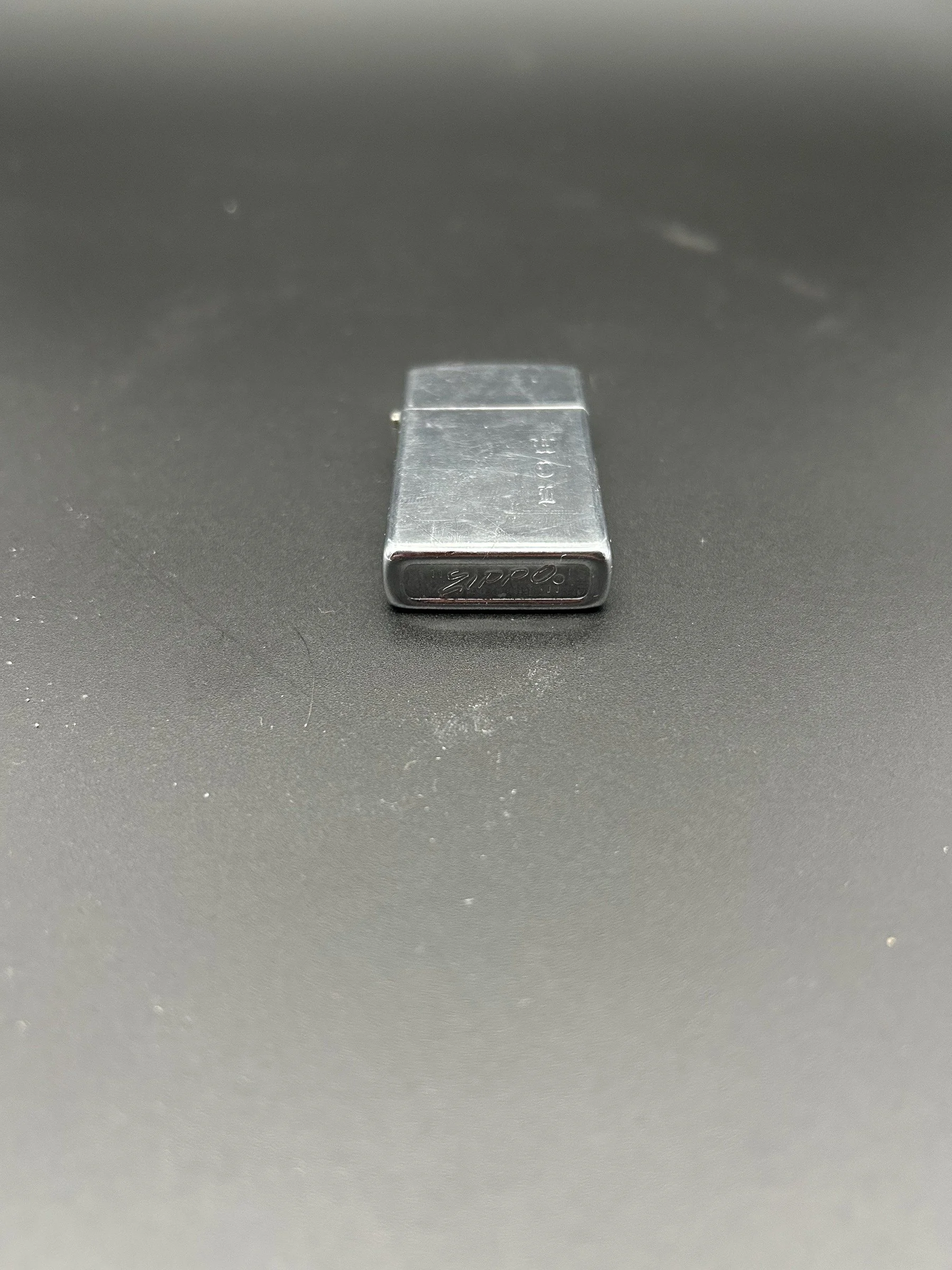 Image 4 of 4
The Tale of the Soldier's Zippo, a Haunted Diagonal-Monogrammed Vintage Lighter, c. 1970, Vietnam Era - Polished Chrome over Brass
Item No. RSF – M – 3 – β – 67
Object Description
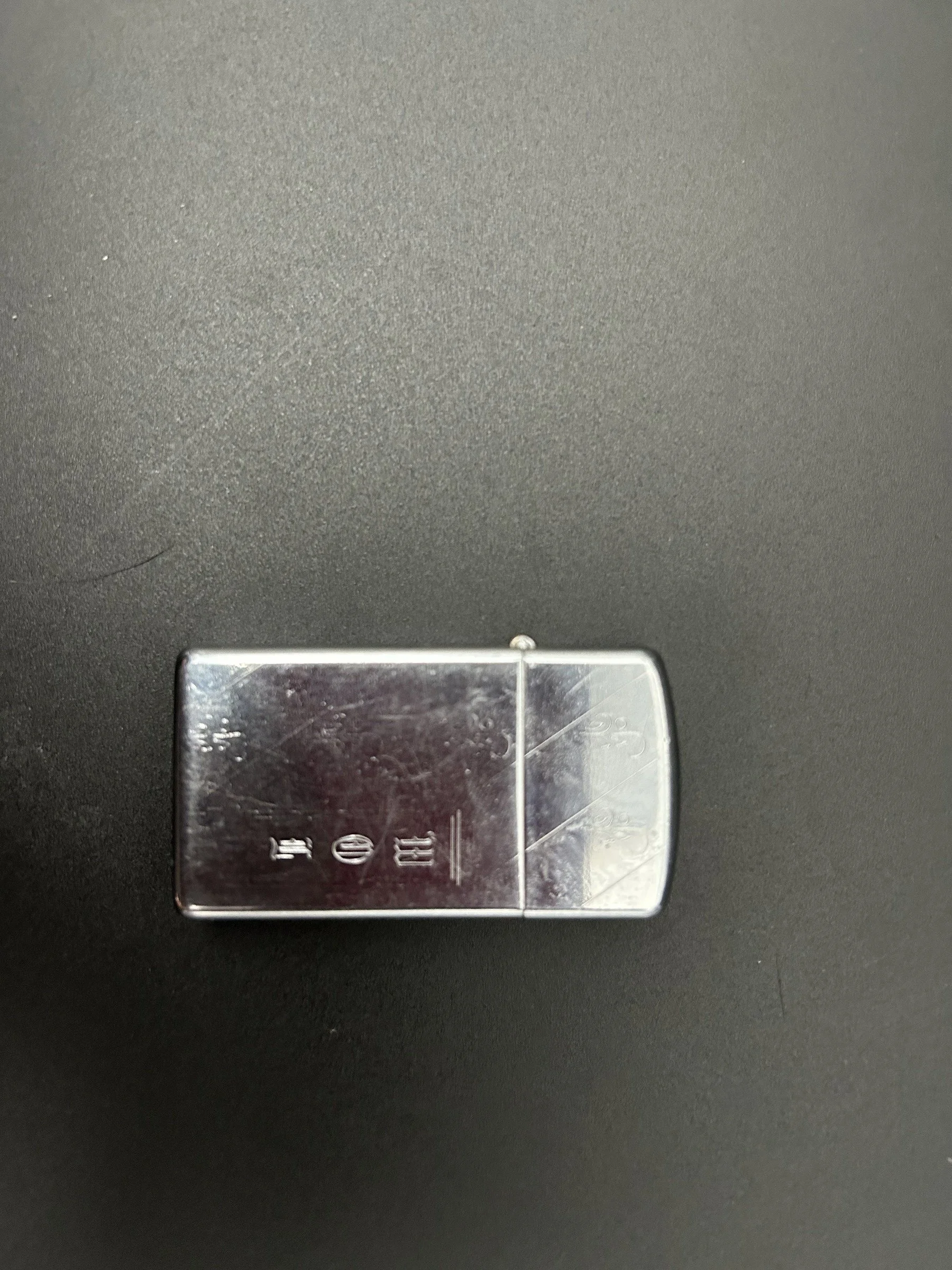
This is a slim vintage Zippo lighter, most likely produced in 1970 in Bradford, Pennsylvania, where Zippo has manufactured continuously since 1932. The obverse is engraved with a diagonal slash pattern across the entire face, broken at the center by a vertical rectangular cartouche containing a three-letter monogram in Old English Blackletter, accompanied by a delicate engraved spray of small flowers along one side of the cartouche. The reverse is engraved with a fine vertical pinstripe pattern across the full face. The lighter was a personal-carry piece, meant to be pulled from a jacket pocket, opened with a practiced flick, and held out to light another person’s cigarette. It saw years of that use.
Physical Details
Polished chrome over brass, slim profile, with vertical pinstripe engraving on the reverse and diagonal slash engraving on the obverse. The front lower face bears three small flower motifs, with two additional flower motifs on the lid. The initials WOI are engraved in Old English Blackletter inside a vertical cartouche. The base is stamped ZIPPO BRADFORD, PA, with the underside coding consistent with production in 1970.
Honest pocket wear consistent with steady use across decades: chrome rubs at the corners and along the edges, a soft veil of fine scratches across both faces, a small ding visible on the lid, and a darkened pewter-grey patina pooling around the engraved lines where polish never quite reached. Hinge tight. Mechanism flicks open and closed with the original Zippo action. Insert and chimney in working order.
Dimensions
2.25” x 1.25” x 0.5”
Tradition
The haunted lighter motif is rich within the American military tradition. During the First World War, soldiers were paranoid about revealing their position in the trenches when lighting a cigarette. It was said that the first light would alert the enemy to the owner’s position, the second light would allow the enemy to aim, and by the third light the owner would be dead. By the Vietnam era, this tradition had transformed into something closer to a memento mori. Soldiers carried Zippos through the jungle, engraved them with initials and dates and death-dates, and used them to commemorate fallen comrades. The emotional weight of the war and the trauma of the turbulent 1960s fill these objects with an undeniable sense of haunting.
Story
The last names of the families affected by this story have been omitted for their safety and privacy.
Richard felt the weight of the jungle heat beat against his lungs as he took drags from his cigarette. He glanced at the lighter in his hand and quickly pocketed it. It was his lucky lighter, which had helped him survive his tour of the Mekong Delta from 1970 to 1971.
The lighter had originally belonged to a dead man. Richard did not know his full name, but based on the initials he must have had a first name with a W, a middle name starting with O, and a last name with I or was that an L? Richard was unsure. He stumbled upon the corpse of William just two weeks prior while doing a reconnaissance mission to a small Viet Cong controlled village. William had fallen into a trap and had skewered his legs in bamboo spikes. Unable to crawl out, he bled to death.
Richard searched his body before reporting it back to camp, taking possession of the Zippo lighter. The war continued, and Richard witnessed his fellow soldiers burning villages, spraying Agent Orange, and desecrating the jungles of Vietnam. He partook in it too, but he prefers to keep his participation as secret as possible. While on another mission deep in the Delta, Richard fell into a trap, narrowly missing the bamboo spears at the bottom. With the help of the lighter, he was able to attract the attention of another soldier at night, leading to his rescue.
That was not the only instance. A few of the men wanted to go into town to look for women. Richard looked up at his poster of Brigitte Bardot. He wanted nothing more than to be with another body. He got himself ready to go, but his lighter was nowhere to be found. The men went off without him, since he refused to leave without first locating his lucky charm. Their tank rolled over a hidden mine and all of them paid with their lives. Richard found his lighter in a pocket he swore he checked dozens of times.
Richard began to treat the lighter as a lucky protection amulet. When he or any of his friends would go into the jungle, they were sure to smoke a cigarette lit with the protective lighter. They imagined its protective power filling their lungs with magical, protective smoke. Per Richard’s claims, it was only when his friends refused the light that they saw their death.
Richard endured a few more months before returning home. He witnessed society change around him. The Sexual Revolution, Woodstock, all were a thing of the past now. America was moving forward, forgetting those stuck in the jungles. Richard held on to the lighter and allowed its protective magic to surround him with blessings. He died a natural death in 2023.
Provenance
Unknown American soldier (likely William, initials WOI or WOL), Mekong Delta, c. 1970; recovered in the field by Richard, U.S. Army, Mekong Delta, 1970; Richard, personal possession, 1970 to 2023; Rooks–St. Felix, 2023 to present.
Supernatural Scale: 3
This lighter is great for lighting cigarettes, candles, or incense in a protection ritual. There are no manifestations or voices, but simply a sense of confidence and self-worth. If the lighter is maintained and used, it will endow its owner with a protective warmth. Owners should expect the occasional small phenomenon. The lighter has been known to turn up in a pocket that was checked. It carries a faint smell of jungle damp and tobacco when the lid is opened in still air.
Maintenance Scale: β (Beta), Beginner
This piece requires the owner to maintain the lighter while also ensuring it stays beautiful. Lighter fluid and flints should be replaced as needed and the wick trimmed. Richard’s spirit is calm and watchful, not insistent. He is suited to an owner who appreciates American military history, who travels into uncertain places, or who simply likes to carry a lucky thing.
Item No. RSF – M – 3 – β – 67
Object Description
This is a slim vintage Zippo lighter, most likely produced in 1970 in Bradford, Pennsylvania, where Zippo has manufactured continuously since 1932. The obverse is engraved with a diagonal slash pattern across the entire face, broken at the center by a vertical rectangular cartouche containing a three-letter monogram in Old English Blackletter, accompanied by a delicate engraved spray of small flowers along one side of the cartouche. The reverse is engraved with a fine vertical pinstripe pattern across the full face. The lighter was a personal-carry piece, meant to be pulled from a jacket pocket, opened with a practiced flick, and held out to light another person’s cigarette. It saw years of that use.
Physical Details
Polished chrome over brass, slim profile, with vertical pinstripe engraving on the reverse and diagonal slash engraving on the obverse. The front lower face bears three small flower motifs, with two additional flower motifs on the lid. The initials WOI are engraved in Old English Blackletter inside a vertical cartouche. The base is stamped ZIPPO BRADFORD, PA, with the underside coding consistent with production in 1970.
Honest pocket wear consistent with steady use across decades: chrome rubs at the corners and along the edges, a soft veil of fine scratches across both faces, a small ding visible on the lid, and a darkened pewter-grey patina pooling around the engraved lines where polish never quite reached. Hinge tight. Mechanism flicks open and closed with the original Zippo action. Insert and chimney in working order.
Dimensions
2.25” x 1.25” x 0.5”
Tradition
The haunted lighter motif is rich within the American military tradition. During the First World War, soldiers were paranoid about revealing their position in the trenches when lighting a cigarette. It was said that the first light would alert the enemy to the owner’s position, the second light would allow the enemy to aim, and by the third light the owner would be dead. By the Vietnam era, this tradition had transformed into something closer to a memento mori. Soldiers carried Zippos through the jungle, engraved them with initials and dates and death-dates, and used them to commemorate fallen comrades. The emotional weight of the war and the trauma of the turbulent 1960s fill these objects with an undeniable sense of haunting.
Story
The last names of the families affected by this story have been omitted for their safety and privacy.
Richard felt the weight of the jungle heat beat against his lungs as he took drags from his cigarette. He glanced at the lighter in his hand and quickly pocketed it. It was his lucky lighter, which had helped him survive his tour of the Mekong Delta from 1970 to 1971.
The lighter had originally belonged to a dead man. Richard did not know his full name, but based on the initials he must have had a first name with a W, a middle name starting with O, and a last name with I or was that an L? Richard was unsure. He stumbled upon the corpse of William just two weeks prior while doing a reconnaissance mission to a small Viet Cong controlled village. William had fallen into a trap and had skewered his legs in bamboo spikes. Unable to crawl out, he bled to death.
Richard searched his body before reporting it back to camp, taking possession of the Zippo lighter. The war continued, and Richard witnessed his fellow soldiers burning villages, spraying Agent Orange, and desecrating the jungles of Vietnam. He partook in it too, but he prefers to keep his participation as secret as possible. While on another mission deep in the Delta, Richard fell into a trap, narrowly missing the bamboo spears at the bottom. With the help of the lighter, he was able to attract the attention of another soldier at night, leading to his rescue.
That was not the only instance. A few of the men wanted to go into town to look for women. Richard looked up at his poster of Brigitte Bardot. He wanted nothing more than to be with another body. He got himself ready to go, but his lighter was nowhere to be found. The men went off without him, since he refused to leave without first locating his lucky charm. Their tank rolled over a hidden mine and all of them paid with their lives. Richard found his lighter in a pocket he swore he checked dozens of times.
Richard began to treat the lighter as a lucky protection amulet. When he or any of his friends would go into the jungle, they were sure to smoke a cigarette lit with the protective lighter. They imagined its protective power filling their lungs with magical, protective smoke. Per Richard’s claims, it was only when his friends refused the light that they saw their death.
Richard endured a few more months before returning home. He witnessed society change around him. The Sexual Revolution, Woodstock, all were a thing of the past now. America was moving forward, forgetting those stuck in the jungles. Richard held on to the lighter and allowed its protective magic to surround him with blessings. He died a natural death in 2023.
Provenance
Unknown American soldier (likely William, initials WOI or WOL), Mekong Delta, c. 1970; recovered in the field by Richard, U.S. Army, Mekong Delta, 1970; Richard, personal possession, 1970 to 2023; Rooks–St. Felix, 2023 to present.
Supernatural Scale: 3
This lighter is great for lighting cigarettes, candles, or incense in a protection ritual. There are no manifestations or voices, but simply a sense of confidence and self-worth. If the lighter is maintained and used, it will endow its owner with a protective warmth. Owners should expect the occasional small phenomenon. The lighter has been known to turn up in a pocket that was checked. It carries a faint smell of jungle damp and tobacco when the lid is opened in still air.
Maintenance Scale: β (Beta), Beginner
This piece requires the owner to maintain the lighter while also ensuring it stays beautiful. Lighter fluid and flints should be replaced as needed and the wick trimmed. Richard’s spirit is calm and watchful, not insistent. He is suited to an owner who appreciates American military history, who travels into uncertain places, or who simply likes to carry a lucky thing.