Item Number: RSF - DV - 4 - γ - 07
Update from Yumeko CLICK HERE
Object Description: This pair have been together since 1986. The doll is a beautiful vintage Japanese doll known as an ichimatsu ningyo. Ichimatsu ningyo were produced in Japan since the 18th century, typically made with human hair and with child-like features. The doll comes signed by the artist Kogetsu (孝月作) with personal hanko seal consistent with mid-Showa-era production and may represent the master’s workshop or temple. The urn is a designer urn by Naoko Nobata (野畑直子) and the title Gold Narcissus (黄金の水仙 ) produced by Franklin Mint in 1986, marked on the bottom and with identification tags.
Physical Details: The doll’s face depicts a child and is in excellent condition. It is made from gofun (oyster-shell composite), which creates a smooth porcelain look. Her hair is unique, as ichimatsu dolls typically either have buns or bowl cuts. She sports a bun but also long hair with two pony tails on the side. By the 1960s, a mixture of human and synthetic hair was used, which gives the doll’s hair that matte feeling to the touch. Her features are delicate and hand painted: small red lips, playful black eyes, and raised eyebrows. She wears a three layered kimono, which features metal brocades in a lotus blossom pattern. In Buddhism, the lotus flower is seen as a symbol of nirvana, because its beautiful petals burst from the muddy waters. The kimono is typical of young girls, with an auspicious red top layer meant to signify luck and wealth. She is holding a denden daiko drum, a traditional toy for young girls during the 18th century.
The urn is a limited edition designer item. It is made with cobalt glazed porcelain and with 24-karat gold bas-relief decoration. It is stamped on the bottom and comes with a designer tag. The design is known as Gold Narcissus. In Ancient Greek mythology, Narcissus was a beautiful young man that drowned in a pool after becoming obsessed with his own reflection. However, in Japan, the Narcissus blooms in late winter, signaling the return of spring, resurrection, and abundance. Coupled with the gold, this urn is meant to show the resurrection and abundance of life.
Dimensions: Doll - 15.5” x 8.5” Urn - 12” x 4.5”
Tradition: Ichimatsu Ningyo belong to Shinto tradition but they sometimes border on Buddhist traditions, especially when they involve trapped souls. This doll can be considered possessed or haunted to use Western terminology.
Urns belong to the Buddhist tradition. In Japan, it is typical to have birthdays and weddings in the Shinto tradition and funerals in the Buddhist tradition. Indeed, it is most common in Japan for people to cremate loved ones and burials are extremely rare.
Story:
The last names of the families affected by this story have been omitted for their safety and privacy.
The doll seized my attention in 2022 at the Japanese Gardens in Balboa Park, San Diego. It was March and the cherry blossoms (sakura) were in view. The garden was hosting a traditional Cherry Blossom Viewing Party (ohanami) full of performances and exhibits. She was part of a display, along with the urn, of traditional Japanese arts.
There was something about the doll that made me uneasy yet drawn to it. I could not explain the sensation, but I kept coming back to her. Her eyes and her smile were mesmerizing. I could almost hear her laughing and playing her drum. I felt my head fill with fog, and disco lights. I shook my head and decided to get some air.
I walked around the garden, enjoyed the performances, but I kept coming back to the doll. Towards the end of the day, I saw a woman around mid-30s, hovering near the exhibit. She was tall, slim, and had short hair. She wore a silk white shirt and jeans with bedazzled jewels. On her wrist was a Cartier watch. Her earrings were subtle diamonds. She oozed class and luxury. I approached her and discovered she was the owner.
I asked her if the doll was for sale like some of the other items on display. She said it was not. I told her I felt a connection to the doll, and she told me the doll was possessed by the spirit of what she believes is her mother. I was very interested in the story, so I sat next to her as she told me the following.
In 2018, Naomi received a package from her family in Japan. Born in San Diego in 1985, Naomi had limited communication with her Japanese family. Sure, she spoke some of the language, but mostly infantile speech that her mother spoke to her when she was a baby in the 90s. Indeed, when she speaks Japanese, elders often say she sounds like a little kid in use of words and phrasing.
Growing up, she felt more American than Japanese. Her mother married a classmate from UCLA medical school in 1988. He was a white guy from Modesto. Her mother and step-father graduated and moved to La Jolla where they practice neural surgery to this day. They had visited Japan a few times, and Naomi’s mom’s family often came to America for visits. It wasn’t, therefore, completely out of place for Naomi to receive a package from them. However, the package was from another family. A name she had not heard before.
The package came with a note written in Japanese that was hard for Naomi to read, but something inside of her told her that if she showed her mother, it would not go well. Naomi reached out to a friend who translated the note:
This doll was owned by your mother. She was a beautiful woman. The urn which once contained her ashes is for you to keep as well. If you receive this, both my and her ashes will have been spread over Osaka Bay. Tanaka.
Naomi was confused. Her mother was alive. What did this mean? She took the box to her mother. At first, her mother avoided any talk of the doll. She said it must have been mailed by mistake. Naomi could sense her mother was holding back. She left the doll with her mother, Natsuko. The next day, her mother gave her a call and said the following.
I could not sleep last night, because I had to tell you. Naomi, I am not an only child. I had a twin sister. Her name was Narumi.
Narumi was the opposite of her twin, Natsuko. She was rebellious and wild. When she was in high school, she ran away from home to follow her dreams of becoming a pop idol in Tokyo. She took only one suitcase, which contained a few changes of clothes, makeup, and the doll her grandmother had gifted her mother at her birth in 1966.
The doll had always granted her wishes. As a child. Narumi kept a small altar for the doll with a glass of fresh water, an orange, a candle, some incense, and a piece of gold jewelry. Narumi dreamed of becoming a huge star, singing for thousands of fans, and wearing jewelry. When she arrived in Tokyo, she found a small apartment with a girl who had graduated a few years ago. That same girl helped her get a job singing at a night club in the Shinjuku district of Tokyo.
Narumi had mild success in the 80s as a young pop idol. She had a few records that were produced, almost none of which exist today. During that time period, Japan was experiencing an economic boom, and so was Narumi. She went out to the best restaurants, received diamonds and gold jewelry, and took trips all over the world. Every night, she would place her new gift on the altar she built for the doll and give thanks.
On New Year’s 1985, she began having an affair with one of her biggest patrons, Mr. Tanaka, a 45 year old married bank executive. At the end of 1985, she took a trip to San Diego to visit Natsuko who was an undergraduate at UCSD where she gave birth to Naomi. Narumi returned to Japan in 1986, full of shame at what had transpired. Eventually, the shame of having left her responsible sister with a newborn from her affair with a married man was too much for Narumi. She took her life later that year. Mr. Tanaka kept her ashes in the urn in a secret altar along with the doll until his death in 2018.
In Japanese Buddhism, dolls are said to become possessed or haunted by owners who pass in peculiar circumstances. Based on what we know, Narumi’s faith in the doll was so strong that her soul must have inhabited it after her suicide. This would mean that Narumi is cursed in a karmic sense, since she is trapped inside of a doll. Thus, to escape and to be reborn as a human or to be reborn in Buddhist heaven, known as Nirvana, she must let go of her material desires. Something that for a 1980s material girl will be very hard to do.
Naomi said that the doll came to her in a dream soon after learning the truth about her mother. In the dream, the doll told her that her name was Yumeko. Yumeko was Narumi’s stage name when she performed. It also means child of dreams. Naomi believes the doll is possessed by her mom’s soul, and enjoys listening to Japanese music from the 1980s known as City Pop.
I told Naomi that the story was beautiful and we kept in touch. A year later, Naomi reached out to me and asked me if I was still interested in purchasing Yumeko. She felt the doll watching her. She heard her feet shuffle at times. She heard the faint drumbeat. She felt that her mother, Narumi, had passed on and that only Yumeko, the pop star, was left.
In a dream, Yumeko told Naomi she dreamed of touring. She wanted to be seen. She wanted to be known. Naomi understood that Rooks - St. Felix was the correct dealer to handle such an item. Thus, Yumeko was acquired in 2023 by Rooks - St. Felix where she has been on display with an altar. She has brought a lot of success and monetary gain to the emporium.
Similarly to Naomi’s story, in a dream the night before the Tucson Terror and Oddities Market, Yumeko spoke of her desire to once again be moved. To once again go on tour and to once again explore the rest of the world.
Provenance: Narumi, Japan c 1966 (origin), Mr. Tanaka, Tokyo (1986 - 2018, privately displayed in altar), Naomi (2018 - 2022, privately displayed), Rooks - St. Felix (2023 - 2026, privately displayed), Chuy Corti, founder of Horrorwood (2026, on display)
Supernatural Scale: 4 - The doll likes to be called Yumeko (夢子). She loves listening to 1980s City Pop, and is very active when you play “Mayonaka no Door” by Miki Matsubara. Because of her love of pop music, she speaks a lot with spirit boxes. Moreover, due to her diva attitude she will become hard to ignore. As her name implies, she also communicates frequently in dreams. She is most active around 3 and 4 am.
She is extremely active around pets. Do not be surprised if pets take naps near her or want to be around her. On her altar, she likes oranges, water, candles, incense, and of course her urn. Additionally, for extra blessings, it is best practice to keep gold, jewelry, and other luxury items in front of her. Her red kimono is meant to bring abundance and fame to your home. If you adore her correctly, she will bring you the fame she had in her lifetime. If she is neglected, she will start with small financial catastrophes and then escalate. If she’s adored, she will bring in wealth.
The night after leaving Rooks - St. Felix, an entity associated with Yumeko slashed a sheet in the middle of the night. Photographic evidence was taken. Chuy has reported several things namely that Yumeko is very active with spirit boxes. A woman can be heard laughing and clapping. She has appeared visually and physically. Some pets are attracted while others are repelled. Multiple pieces of equipment gave a reading of kasha which could mean two things.
火車 (kasha) — "fire cart" — a yokai/demon in Japanese folklore. It is a fire-wreathed demon, often depicted as a flaming wagon or cat-like creature, that steals the corpses of sinful or wicked people before they can be buried. It specifically targets the dead who have committed serious karmic wrongs. In Buddhist iconography, it's associated with the punishment realms.
華奢 (kasha) — "luxury, elegance, dainty refinement." This reading describes something delicate and exquisite. Yumeko in life would absolutely have used this word about herself or her clothing.
The two readings together are catastrophically resonant with Yumeko's biography. She was kasha (華奢, elegant, luxurious) in life as a pop idol and her death by suicide, in Japanese Buddhist cosmology, would make her body a target for kasha (火車, the corpse-stealing fire demon) because suicide carries karmic weight. The same word names both her vanity and her potential damnation.
When the urn and the doll were separated, they gave different answers to questions. The urn repeated the word yurei. Yurei (幽霊) is the most specific Japanese term for "ghost" and crucially, it refers to the spirit of a person who died with unresolved attachment, regret, or violent circumstance, unable to pass on. This is the Banchō Sarayashiki / Yotsuya Kaidan tradition of Japanese ghost stories.
Maintenance Scale: γ - gamma: Intermediate. Yumeko requires weekly maintenance. As all Ichimatsu Ningyo, the owners should place a glass of fresh water every few days as well as an offering of fresh fruit, flowers, a candle, and incense. Yumeko needs to be adored as she was in life. The owner needs to keep her urn with her if possible. Moreover, the owner should place objects of luxury as she is accustomed to receiving gifts. In exchange, the spirit will bless the owner with wealth and fame.
Item Number: RSF - DV - 4 - γ - 07
Update from Yumeko CLICK HERE
Object Description: This pair have been together since 1986. The doll is a beautiful vintage Japanese doll known as an ichimatsu ningyo. Ichimatsu ningyo were produced in Japan since the 18th century, typically made with human hair and with child-like features. The doll comes signed by the artist Kogetsu (孝月作) with personal hanko seal consistent with mid-Showa-era production and may represent the master’s workshop or temple. The urn is a designer urn by Naoko Nobata (野畑直子) and the title Gold Narcissus (黄金の水仙 ) produced by Franklin Mint in 1986, marked on the bottom and with identification tags.
Physical Details: The doll’s face depicts a child and is in excellent condition. It is made from gofun (oyster-shell composite), which creates a smooth porcelain look. Her hair is unique, as ichimatsu dolls typically either have buns or bowl cuts. She sports a bun but also long hair with two pony tails on the side. By the 1960s, a mixture of human and synthetic hair was used, which gives the doll’s hair that matte feeling to the touch. Her features are delicate and hand painted: small red lips, playful black eyes, and raised eyebrows. She wears a three layered kimono, which features metal brocades in a lotus blossom pattern. In Buddhism, the lotus flower is seen as a symbol of nirvana, because its beautiful petals burst from the muddy waters. The kimono is typical of young girls, with an auspicious red top layer meant to signify luck and wealth. She is holding a denden daiko drum, a traditional toy for young girls during the 18th century.
The urn is a limited edition designer item. It is made with cobalt glazed porcelain and with 24-karat gold bas-relief decoration. It is stamped on the bottom and comes with a designer tag. The design is known as Gold Narcissus. In Ancient Greek mythology, Narcissus was a beautiful young man that drowned in a pool after becoming obsessed with his own reflection. However, in Japan, the Narcissus blooms in late winter, signaling the return of spring, resurrection, and abundance. Coupled with the gold, this urn is meant to show the resurrection and abundance of life.
Dimensions: Doll - 15.5” x 8.5” Urn - 12” x 4.5”
Tradition: Ichimatsu Ningyo belong to Shinto tradition but they sometimes border on Buddhist traditions, especially when they involve trapped souls. This doll can be considered possessed or haunted to use Western terminology.
Urns belong to the Buddhist tradition. In Japan, it is typical to have birthdays and weddings in the Shinto tradition and funerals in the Buddhist tradition. Indeed, it is most common in Japan for people to cremate loved ones and burials are extremely rare.
Story:
The last names of the families affected by this story have been omitted for their safety and privacy.
The doll seized my attention in 2022 at the Japanese Gardens in Balboa Park, San Diego. It was March and the cherry blossoms (sakura) were in view. The garden was hosting a traditional Cherry Blossom Viewing Party (ohanami) full of performances and exhibits. She was part of a display, along with the urn, of traditional Japanese arts.
There was something about the doll that made me uneasy yet drawn to it. I could not explain the sensation, but I kept coming back to her. Her eyes and her smile were mesmerizing. I could almost hear her laughing and playing her drum. I felt my head fill with fog, and disco lights. I shook my head and decided to get some air.
I walked around the garden, enjoyed the performances, but I kept coming back to the doll. Towards the end of the day, I saw a woman around mid-30s, hovering near the exhibit. She was tall, slim, and had short hair. She wore a silk white shirt and jeans with bedazzled jewels. On her wrist was a Cartier watch. Her earrings were subtle diamonds. She oozed class and luxury. I approached her and discovered she was the owner.
I asked her if the doll was for sale like some of the other items on display. She said it was not. I told her I felt a connection to the doll, and she told me the doll was possessed by the spirit of what she believes is her mother. I was very interested in the story, so I sat next to her as she told me the following.
In 2018, Naomi received a package from her family in Japan. Born in San Diego in 1985, Naomi had limited communication with her Japanese family. Sure, she spoke some of the language, but mostly infantile speech that her mother spoke to her when she was a baby in the 90s. Indeed, when she speaks Japanese, elders often say she sounds like a little kid in use of words and phrasing.
Growing up, she felt more American than Japanese. Her mother married a classmate from UCLA medical school in 1988. He was a white guy from Modesto. Her mother and step-father graduated and moved to La Jolla where they practice neural surgery to this day. They had visited Japan a few times, and Naomi’s mom’s family often came to America for visits. It wasn’t, therefore, completely out of place for Naomi to receive a package from them. However, the package was from another family. A name she had not heard before.
The package came with a note written in Japanese that was hard for Naomi to read, but something inside of her told her that if she showed her mother, it would not go well. Naomi reached out to a friend who translated the note:
This doll was owned by your mother. She was a beautiful woman. The urn which once contained her ashes is for you to keep as well. If you receive this, both my and her ashes will have been spread over Osaka Bay. Tanaka.
Naomi was confused. Her mother was alive. What did this mean? She took the box to her mother. At first, her mother avoided any talk of the doll. She said it must have been mailed by mistake. Naomi could sense her mother was holding back. She left the doll with her mother, Natsuko. The next day, her mother gave her a call and said the following.
I could not sleep last night, because I had to tell you. Naomi, I am not an only child. I had a twin sister. Her name was Narumi.
Narumi was the opposite of her twin, Natsuko. She was rebellious and wild. When she was in high school, she ran away from home to follow her dreams of becoming a pop idol in Tokyo. She took only one suitcase, which contained a few changes of clothes, makeup, and the doll her grandmother had gifted her mother at her birth in 1966.
The doll had always granted her wishes. As a child. Narumi kept a small altar for the doll with a glass of fresh water, an orange, a candle, some incense, and a piece of gold jewelry. Narumi dreamed of becoming a huge star, singing for thousands of fans, and wearing jewelry. When she arrived in Tokyo, she found a small apartment with a girl who had graduated a few years ago. That same girl helped her get a job singing at a night club in the Shinjuku district of Tokyo.
Narumi had mild success in the 80s as a young pop idol. She had a few records that were produced, almost none of which exist today. During that time period, Japan was experiencing an economic boom, and so was Narumi. She went out to the best restaurants, received diamonds and gold jewelry, and took trips all over the world. Every night, she would place her new gift on the altar she built for the doll and give thanks.
On New Year’s 1985, she began having an affair with one of her biggest patrons, Mr. Tanaka, a 45 year old married bank executive. At the end of 1985, she took a trip to San Diego to visit Natsuko who was an undergraduate at UCSD where she gave birth to Naomi. Narumi returned to Japan in 1986, full of shame at what had transpired. Eventually, the shame of having left her responsible sister with a newborn from her affair with a married man was too much for Narumi. She took her life later that year. Mr. Tanaka kept her ashes in the urn in a secret altar along with the doll until his death in 2018.
In Japanese Buddhism, dolls are said to become possessed or haunted by owners who pass in peculiar circumstances. Based on what we know, Narumi’s faith in the doll was so strong that her soul must have inhabited it after her suicide. This would mean that Narumi is cursed in a karmic sense, since she is trapped inside of a doll. Thus, to escape and to be reborn as a human or to be reborn in Buddhist heaven, known as Nirvana, she must let go of her material desires. Something that for a 1980s material girl will be very hard to do.
Naomi said that the doll came to her in a dream soon after learning the truth about her mother. In the dream, the doll told her that her name was Yumeko. Yumeko was Narumi’s stage name when she performed. It also means child of dreams. Naomi believes the doll is possessed by her mom’s soul, and enjoys listening to Japanese music from the 1980s known as City Pop.
I told Naomi that the story was beautiful and we kept in touch. A year later, Naomi reached out to me and asked me if I was still interested in purchasing Yumeko. She felt the doll watching her. She heard her feet shuffle at times. She heard the faint drumbeat. She felt that her mother, Narumi, had passed on and that only Yumeko, the pop star, was left.
In a dream, Yumeko told Naomi she dreamed of touring. She wanted to be seen. She wanted to be known. Naomi understood that Rooks - St. Felix was the correct dealer to handle such an item. Thus, Yumeko was acquired in 2023 by Rooks - St. Felix where she has been on display with an altar. She has brought a lot of success and monetary gain to the emporium.
Similarly to Naomi’s story, in a dream the night before the Tucson Terror and Oddities Market, Yumeko spoke of her desire to once again be moved. To once again go on tour and to once again explore the rest of the world.
Provenance: Narumi, Japan c 1966 (origin), Mr. Tanaka, Tokyo (1986 - 2018, privately displayed in altar), Naomi (2018 - 2022, privately displayed), Rooks - St. Felix (2023 - 2026, privately displayed), Chuy Corti, founder of Horrorwood (2026, on display)
Supernatural Scale: 4 - The doll likes to be called Yumeko (夢子). She loves listening to 1980s City Pop, and is very active when you play “Mayonaka no Door” by Miki Matsubara. Because of her love of pop music, she speaks a lot with spirit boxes. Moreover, due to her diva attitude she will become hard to ignore. As her name implies, she also communicates frequently in dreams. She is most active around 3 and 4 am.
She is extremely active around pets. Do not be surprised if pets take naps near her or want to be around her. On her altar, she likes oranges, water, candles, incense, and of course her urn. Additionally, for extra blessings, it is best practice to keep gold, jewelry, and other luxury items in front of her. Her red kimono is meant to bring abundance and fame to your home. If you adore her correctly, she will bring you the fame she had in her lifetime. If she is neglected, she will start with small financial catastrophes and then escalate. If she’s adored, she will bring in wealth.
The night after leaving Rooks - St. Felix, an entity associated with Yumeko slashed a sheet in the middle of the night. Photographic evidence was taken. Chuy has reported several things namely that Yumeko is very active with spirit boxes. A woman can be heard laughing and clapping. She has appeared visually and physically. Some pets are attracted while others are repelled. Multiple pieces of equipment gave a reading of kasha which could mean two things.
火車 (kasha) — "fire cart" — a yokai/demon in Japanese folklore. It is a fire-wreathed demon, often depicted as a flaming wagon or cat-like creature, that steals the corpses of sinful or wicked people before they can be buried. It specifically targets the dead who have committed serious karmic wrongs. In Buddhist iconography, it's associated with the punishment realms.
華奢 (kasha) — "luxury, elegance, dainty refinement." This reading describes something delicate and exquisite. Yumeko in life would absolutely have used this word about herself or her clothing.
The two readings together are catastrophically resonant with Yumeko's biography. She was kasha (華奢, elegant, luxurious) in life as a pop idol and her death by suicide, in Japanese Buddhist cosmology, would make her body a target for kasha (火車, the corpse-stealing fire demon) because suicide carries karmic weight. The same word names both her vanity and her potential damnation.
When the urn and the doll were separated, they gave different answers to questions. The urn repeated the word yurei. Yurei (幽霊) is the most specific Japanese term for "ghost" and crucially, it refers to the spirit of a person who died with unresolved attachment, regret, or violent circumstance, unable to pass on. This is the Banchō Sarayashiki / Yotsuya Kaidan tradition of Japanese ghost stories.
Maintenance Scale: γ - gamma: Intermediate. Yumeko requires weekly maintenance. As all Ichimatsu Ningyo, the owners should place a glass of fresh water every few days as well as an offering of fresh fruit, flowers, a candle, and incense. Yumeko needs to be adored as she was in life. The owner needs to keep her urn with her if possible. Moreover, the owner should place objects of luxury as she is accustomed to receiving gifts. In exchange, the spirit will bless the owner with wealth and fame.

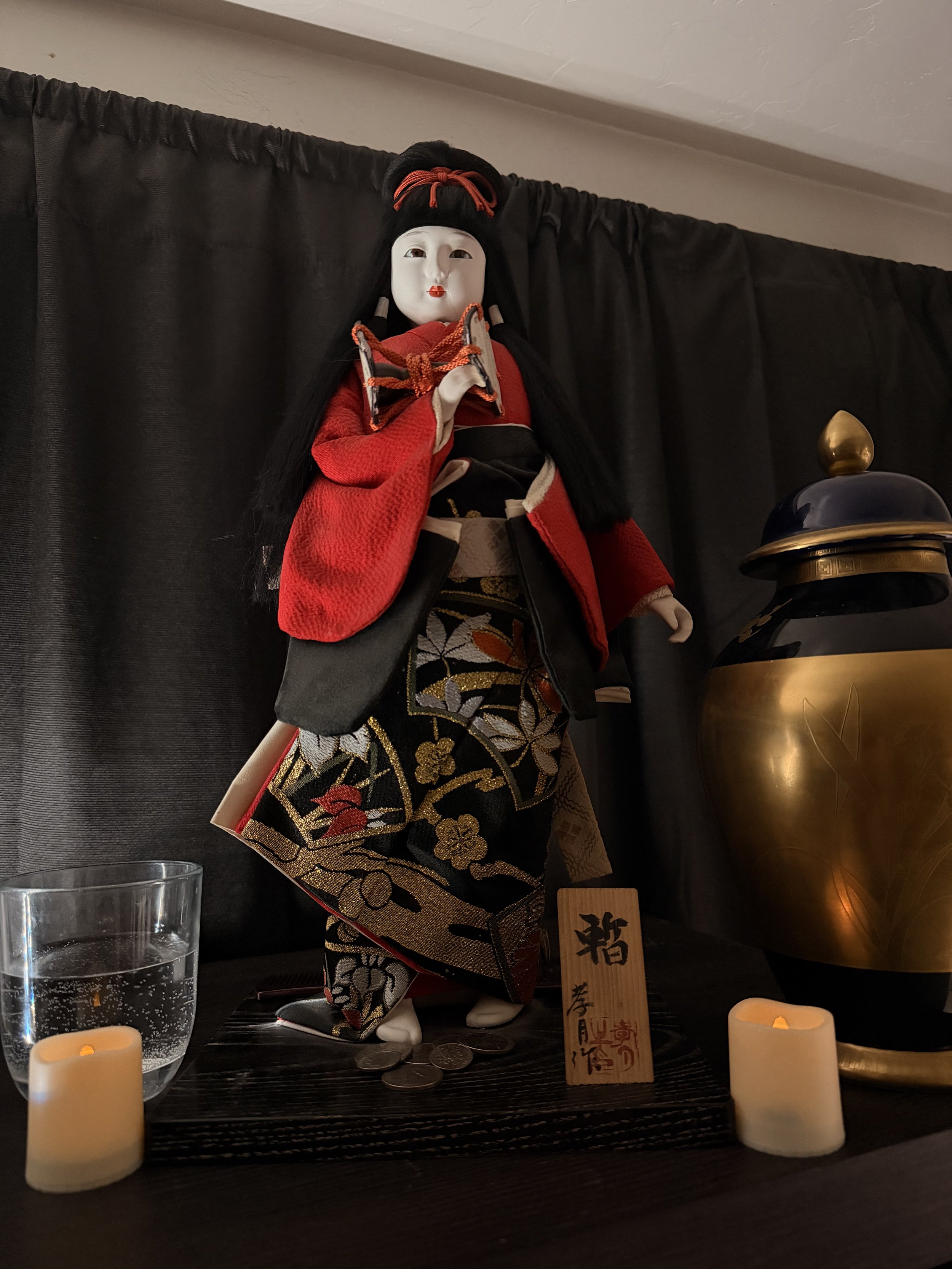 Image 1 of 11
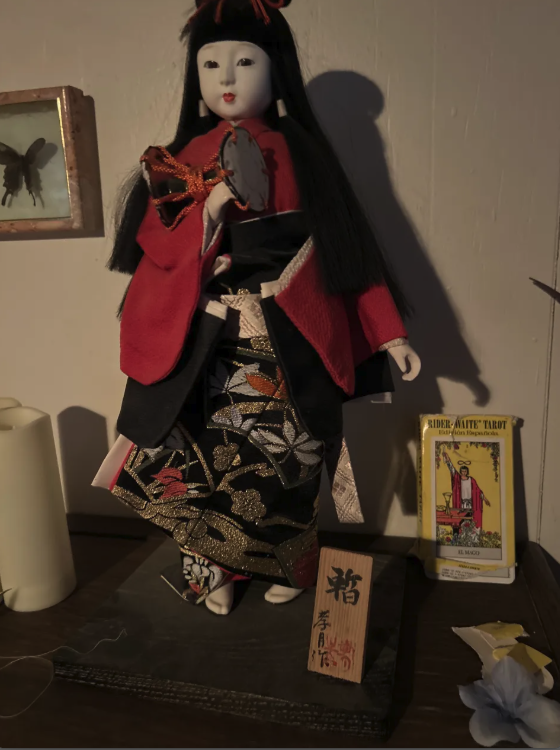 Image 2 of 11
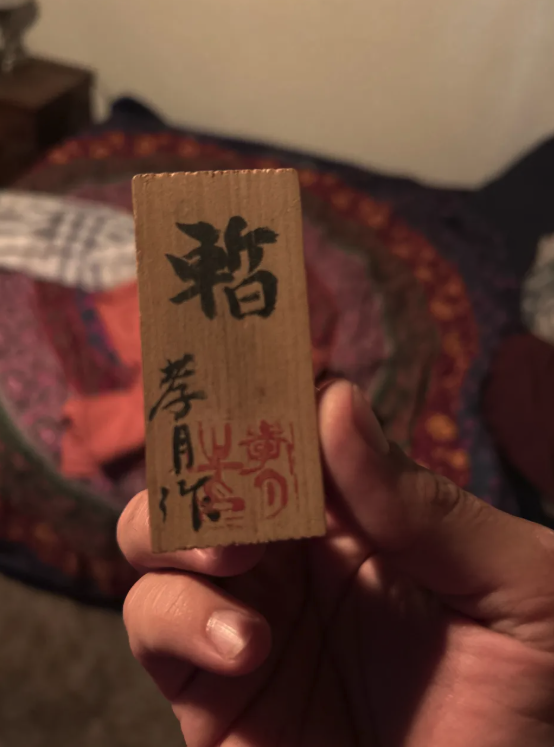 Image 3 of 11
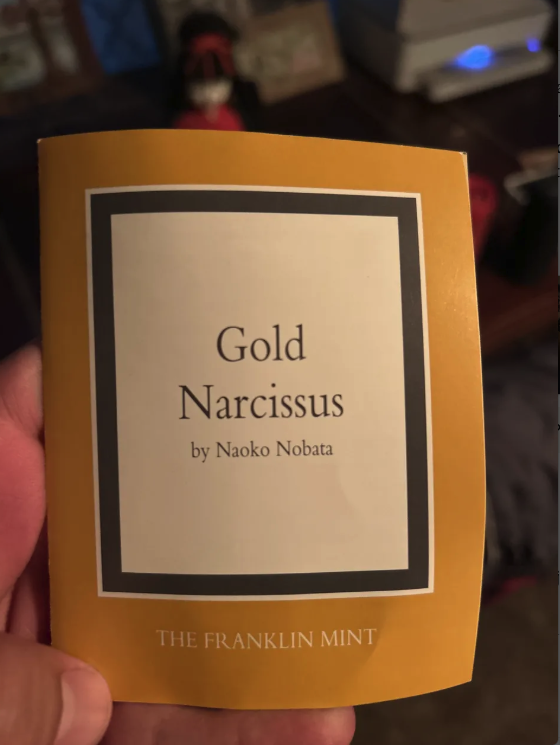 Image 4 of 11
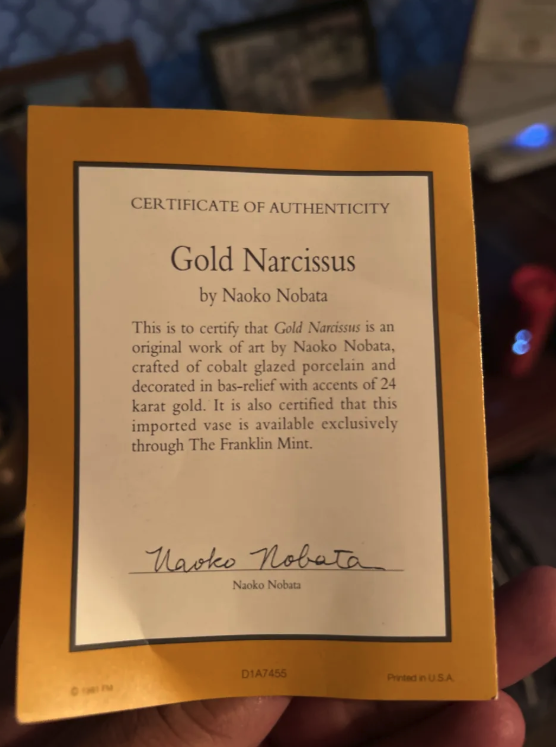 Image 5 of 11
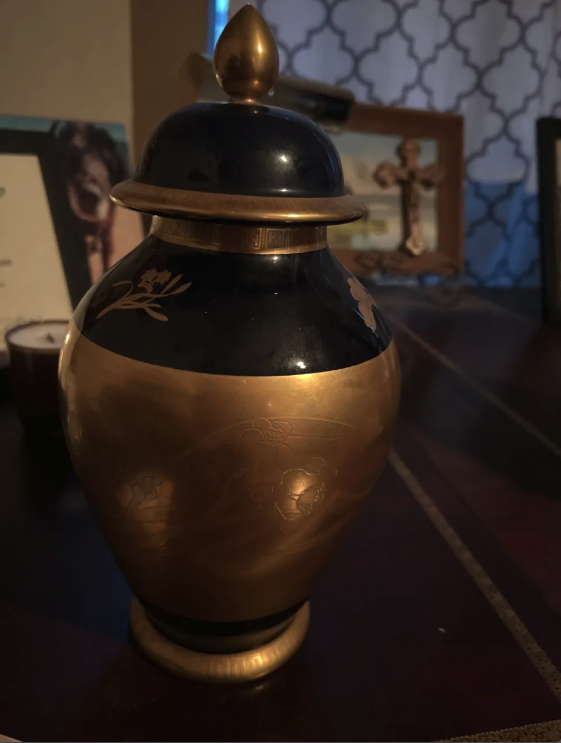 Image 6 of 11
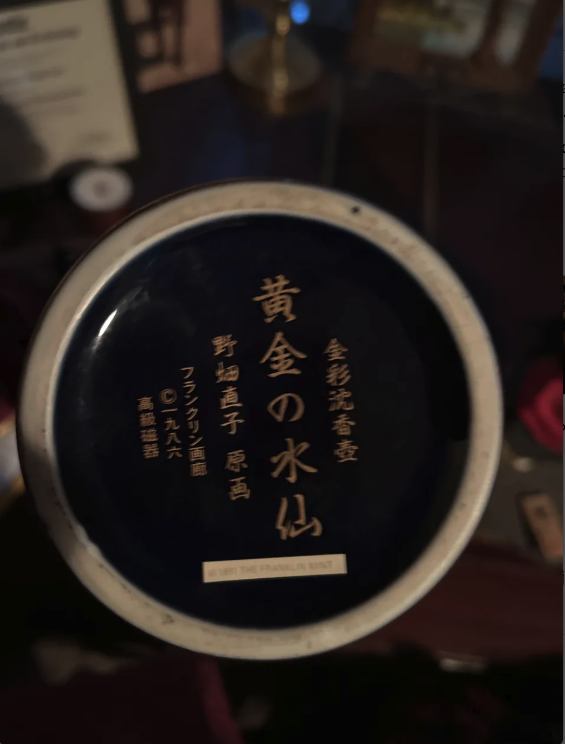 Image 7 of 11
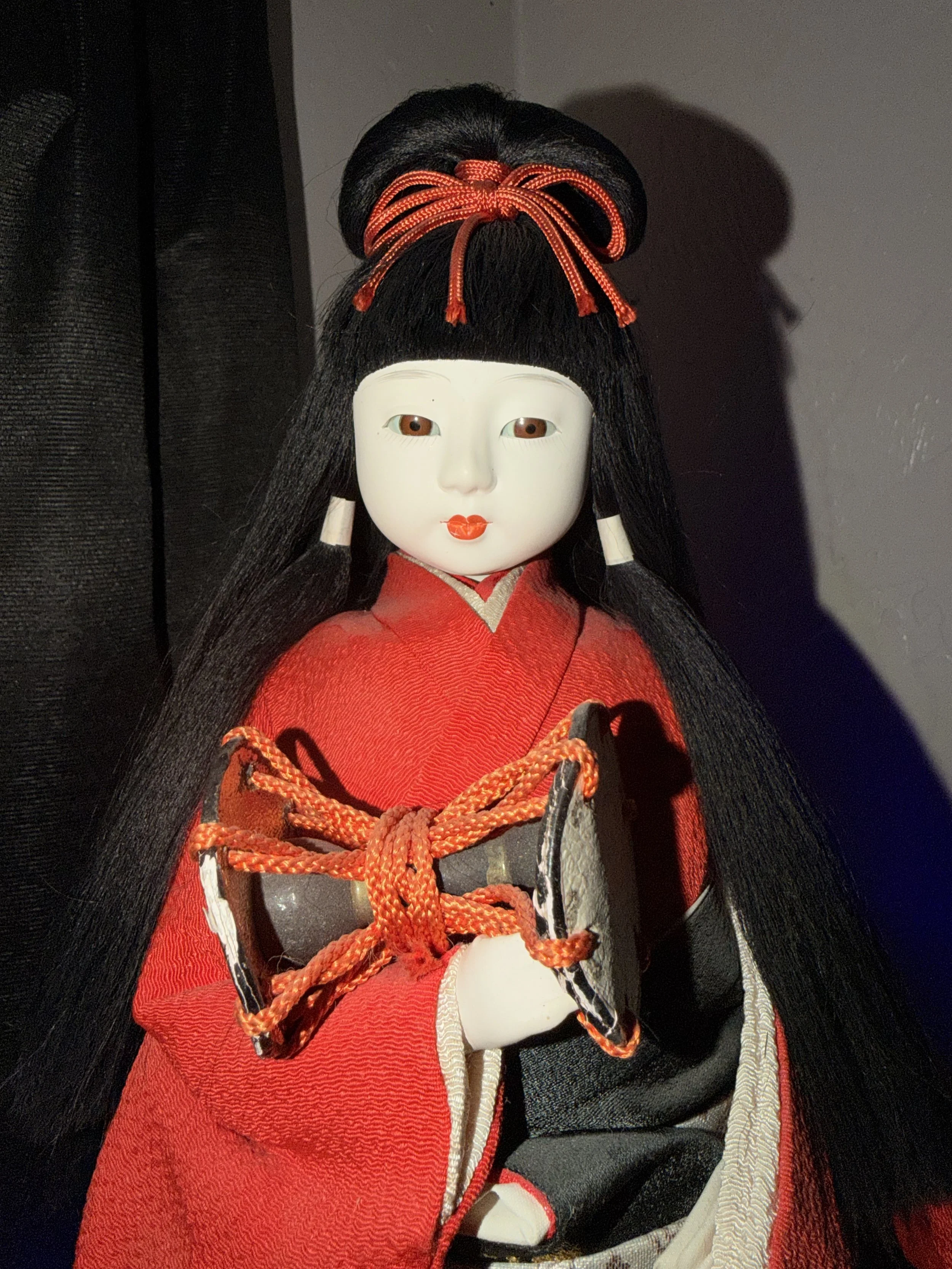 Image 8 of 11
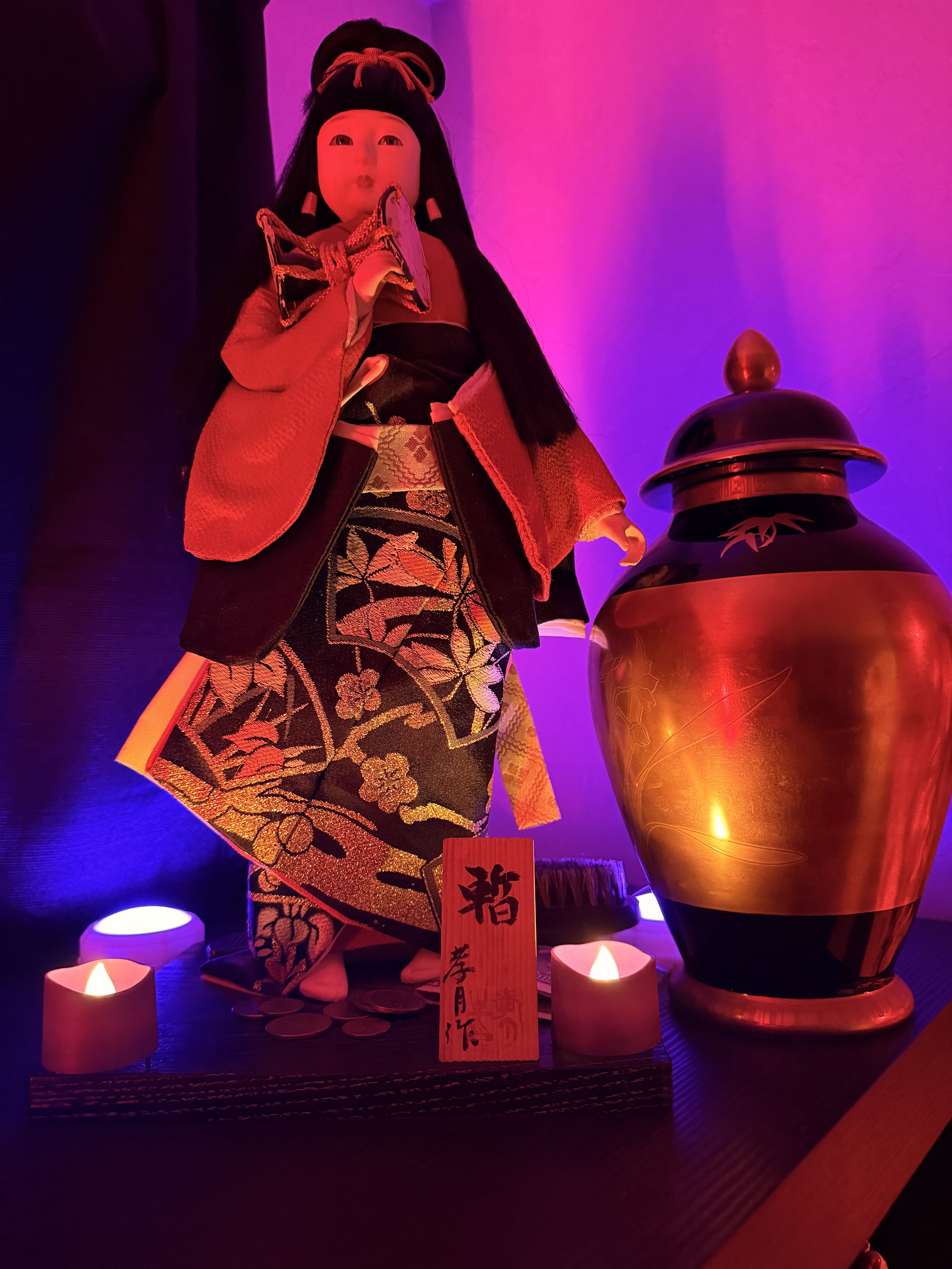 Image 9 of 11
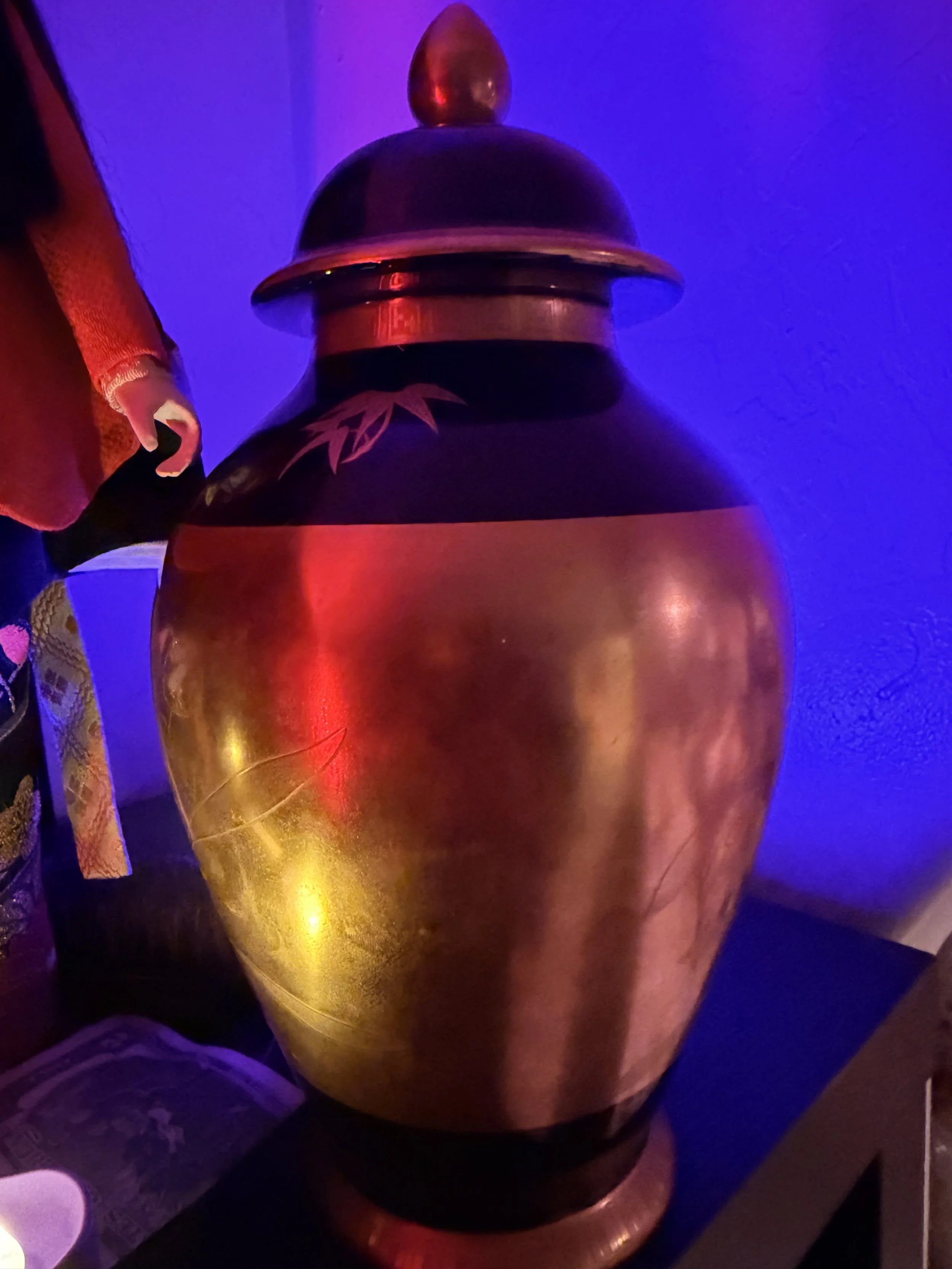 Image 10 of 11
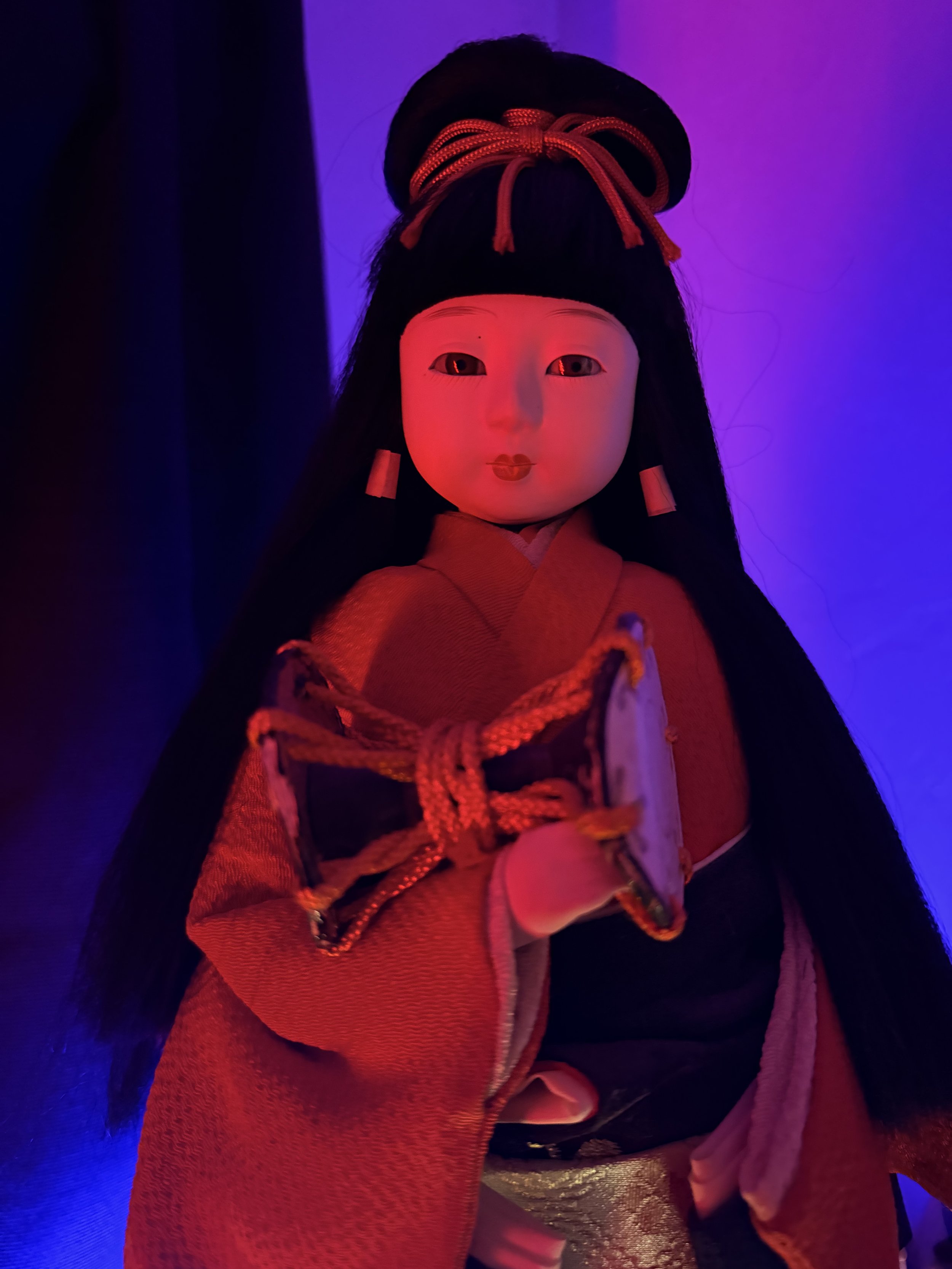 Image 11 of 11