Item No. RSF – B – 4 – δ – 129
Object Description
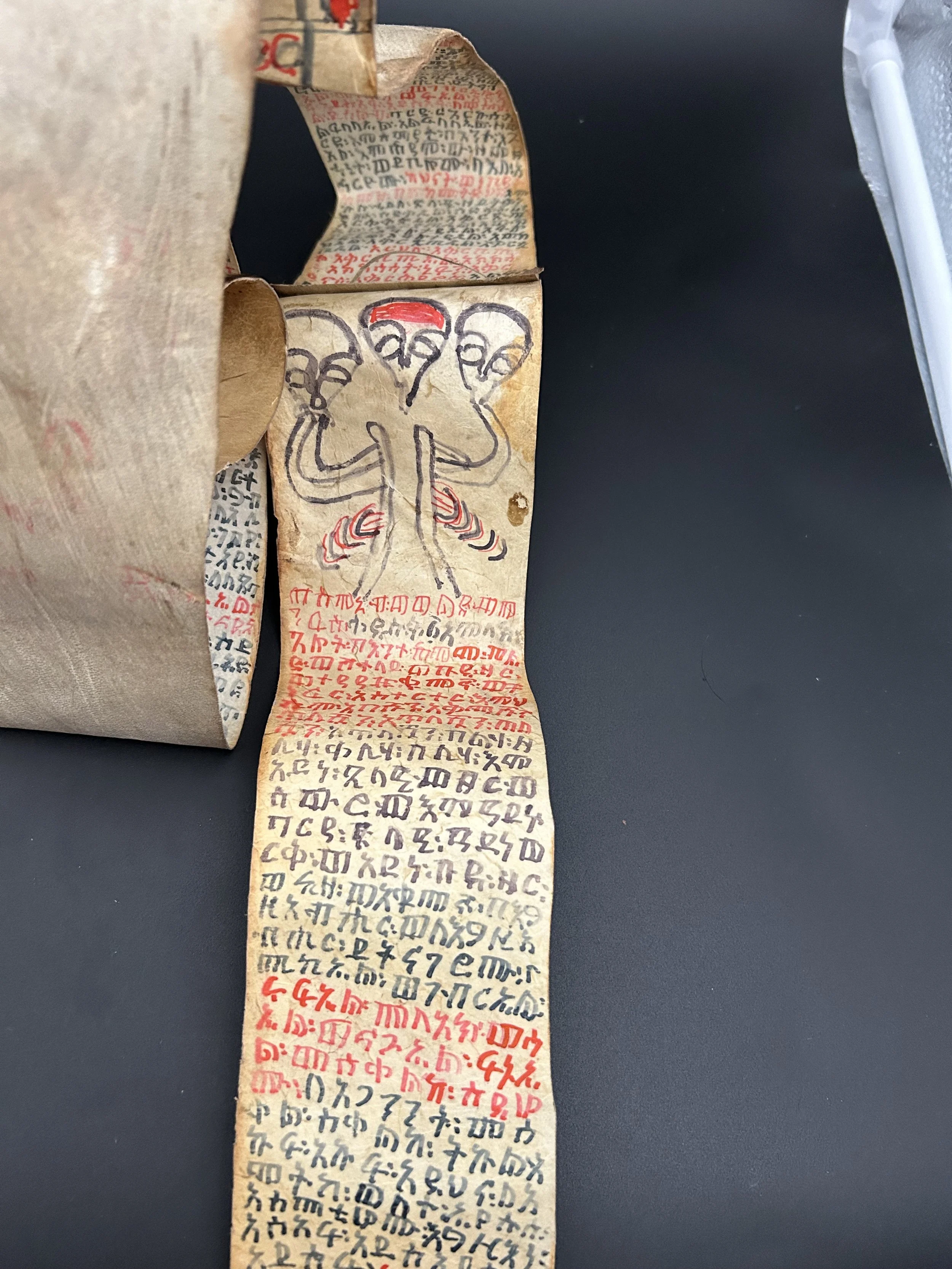
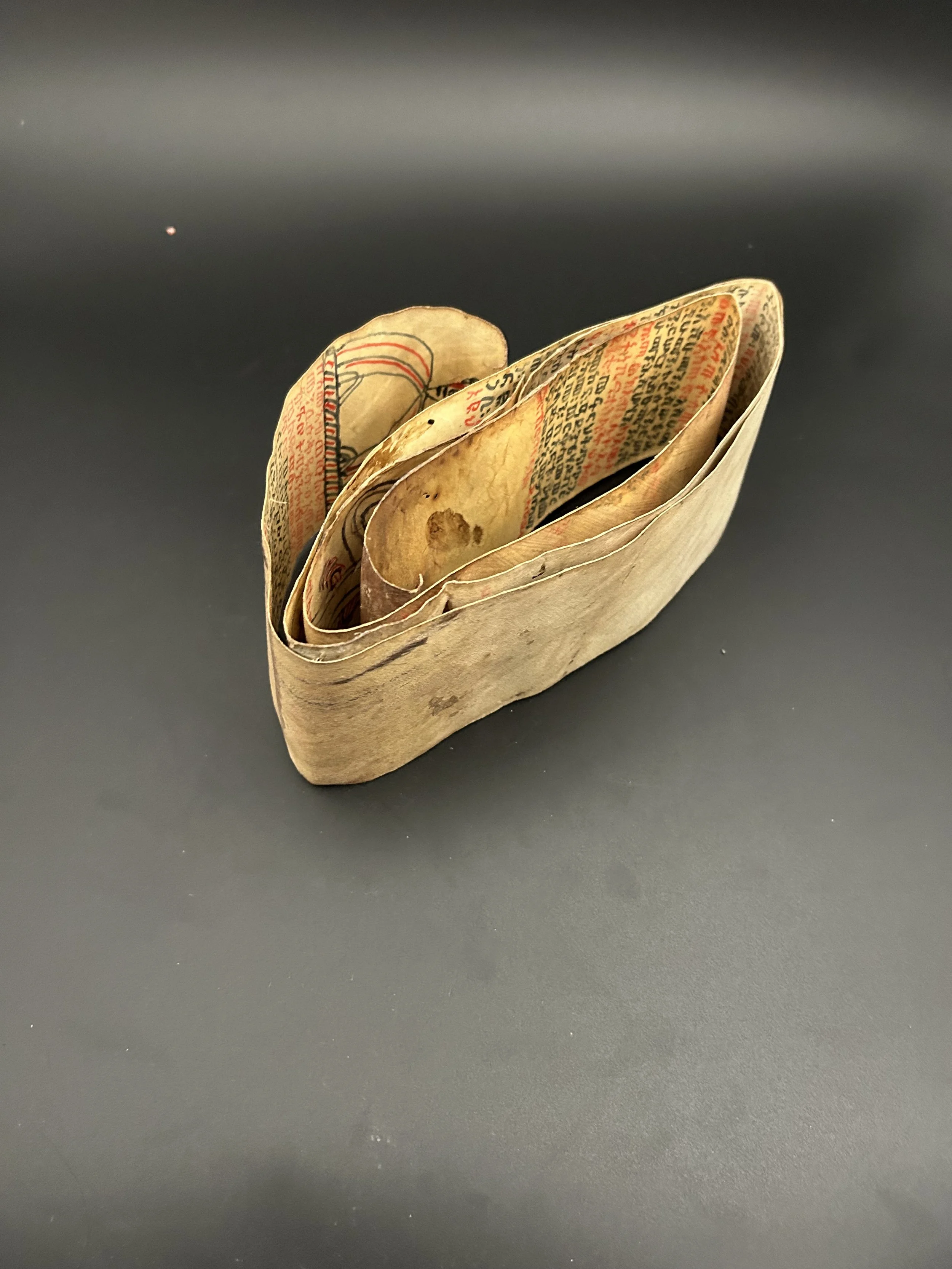
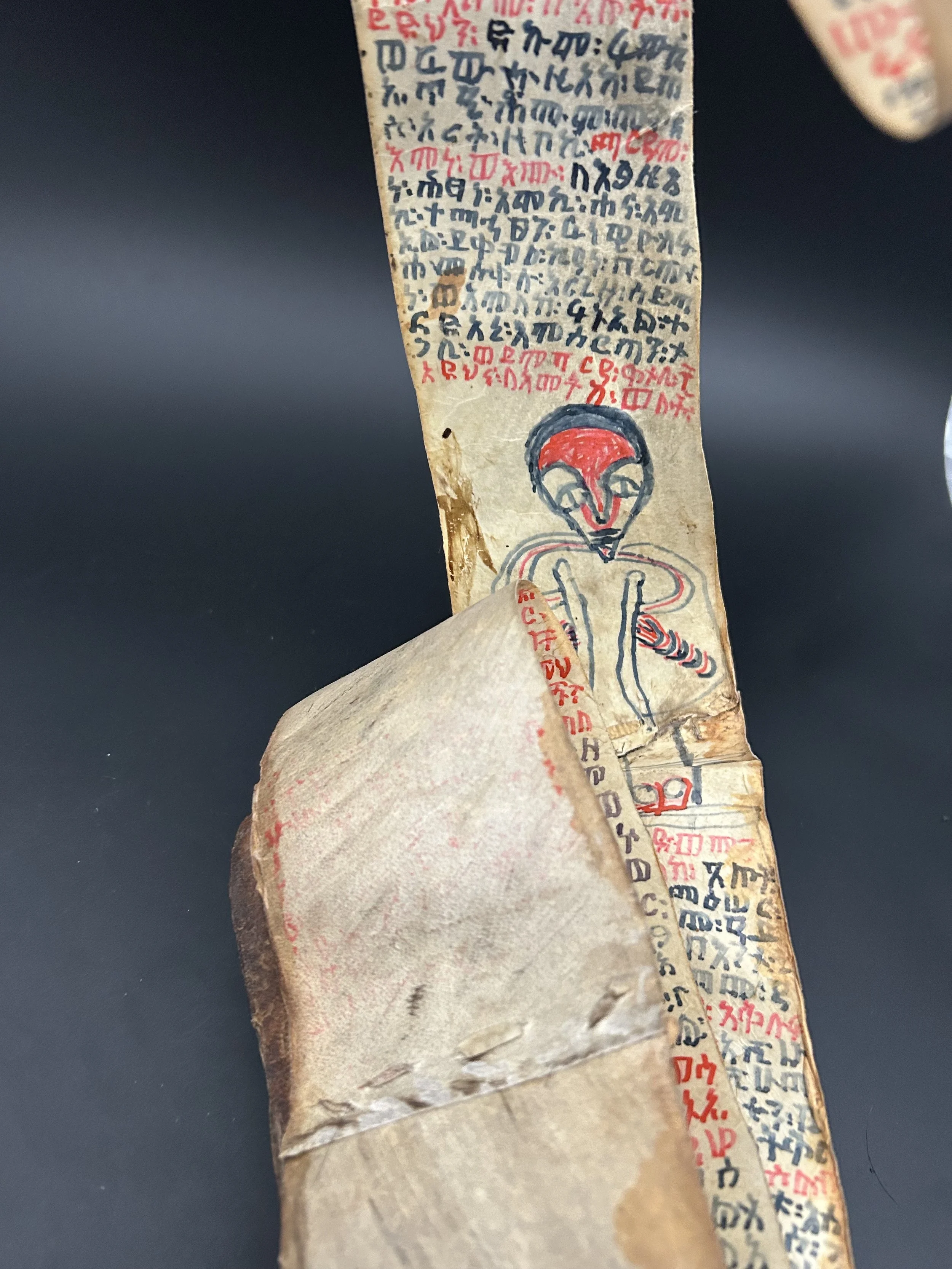
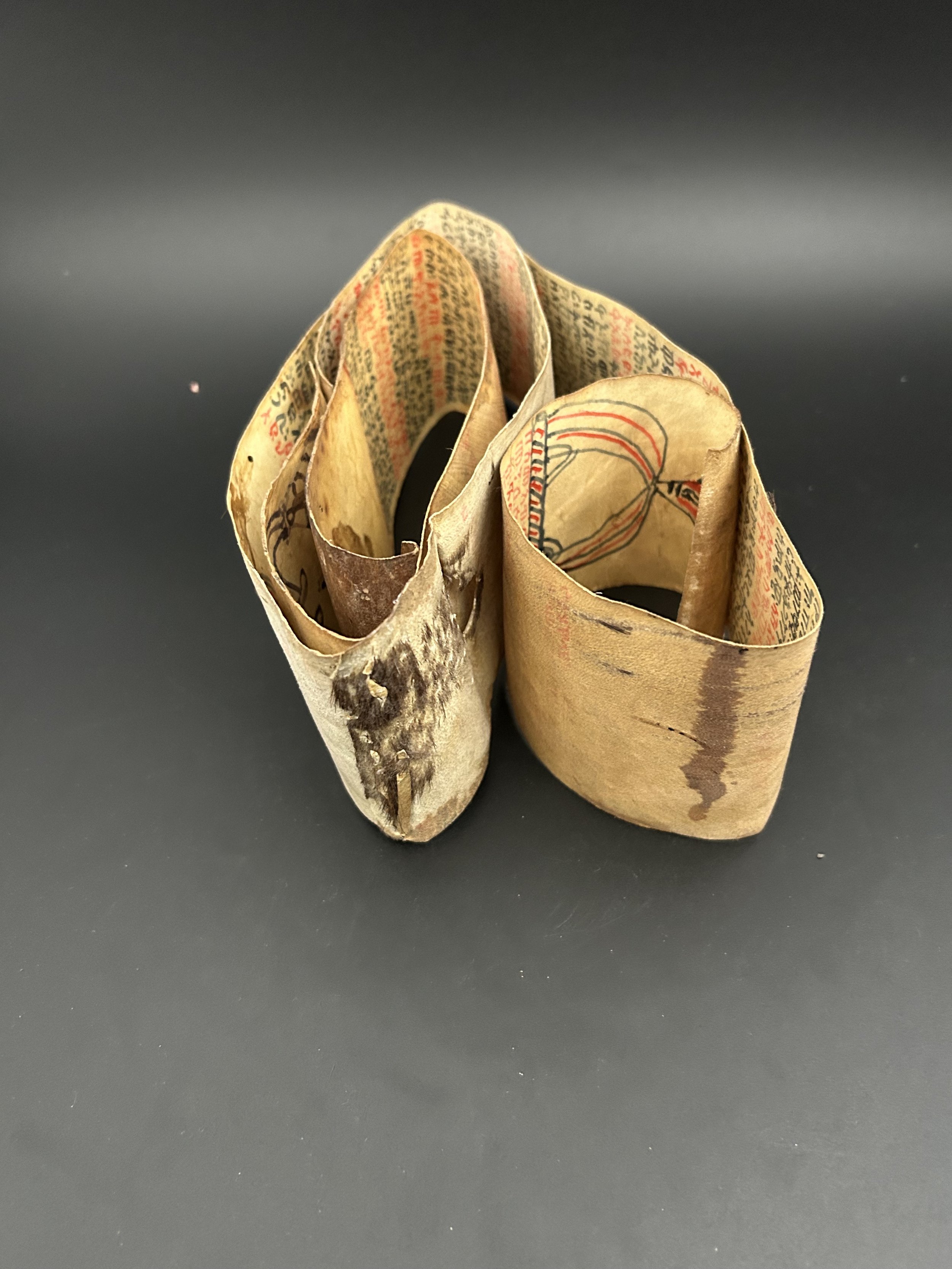
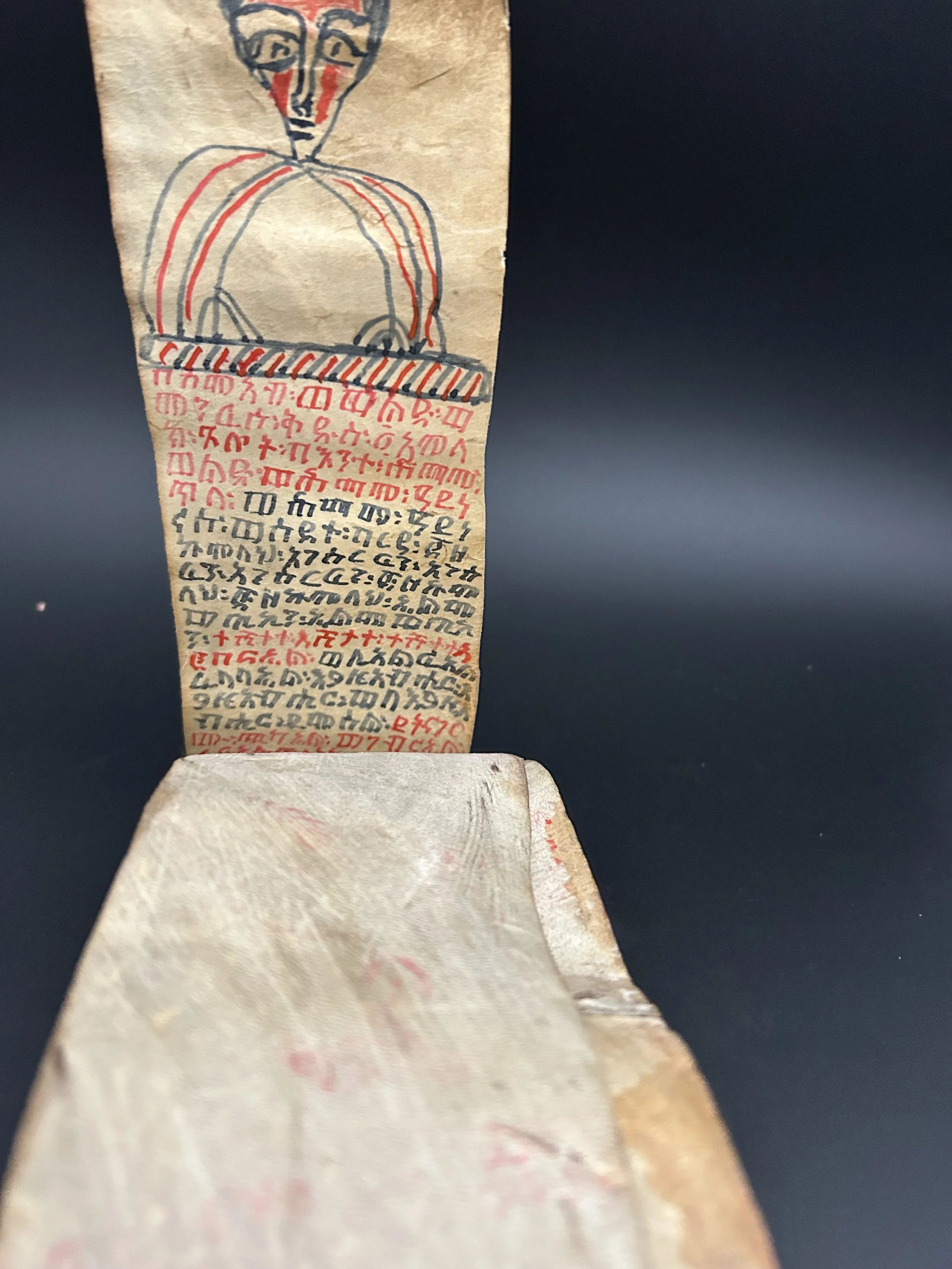
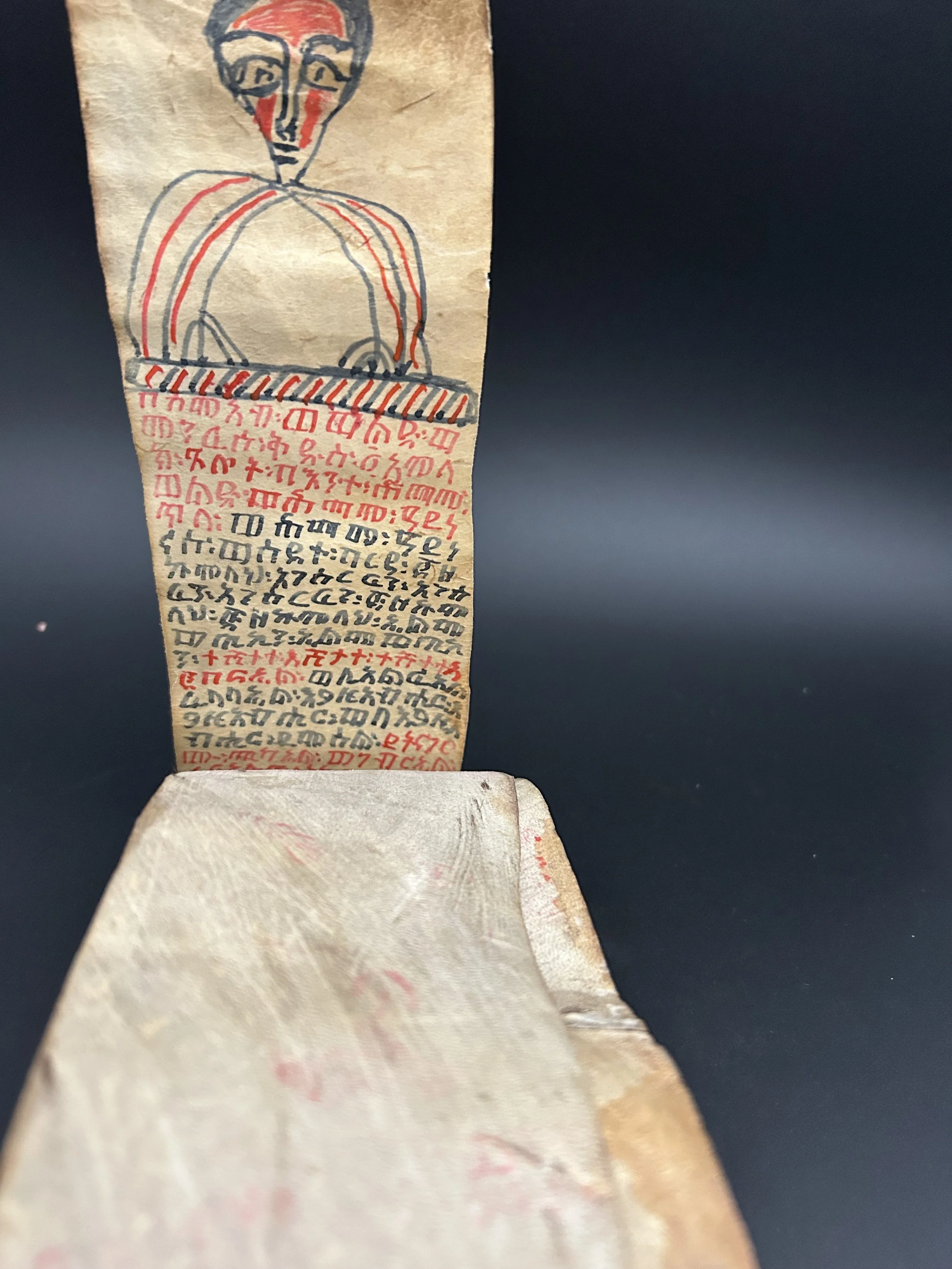
A rare Burmese parabaik in the traditional folding accordion format, of the black, soot-and-lacquer working type used by masters for esoteric and astrological work. It is hand-illustrated with mythological and ritual figures, fantastic animals, and magic squares, inscribed in Burmese script, and bound between decorative lacquered wooden covers.
Physical Details
Paper, soot, lacquer, and pigment, with lacquered wooden boards. Accordion fold, with rubbing and wear to the folds and surfaces consistent with age and use. Overall good collectible condition. Early 20th century.
Dimensions
88 cm × 16 cm.
Tradition
A parabaik is a traditional accordion-style folding book of Myanmar, made from thick handmade paper. They served at once as practical notebooks and as artistic canvases, preserving state chronicles, royal court life, and esoteric knowledge until the European codex displaced them. There are two primary forms. Black parabaiks carried a blackened surface of soot and lacquer and could be written on and erased; they were used for daily records, sketches, calculations, and the working notebooks of astrologers and masters of the magical arts. White parabaiks were cream-colored, meant for permanent works, and carried formal writing and finished illustration. This is a black parabaik of the magical and astrological kind, the working book of someone who told fortunes and worked spells, dense with in (magic squares) and ritual figures.
Story
In the last days of the Burmese empire, a court astrologer began his revenge on the people he believed were his enemies. His name was U Thant Zin, and though kings consulted him, he owned little beyond a lacquer chest and a single black folding parabaik. He lived in the Rainy Temple. No one could remember the temple’s real name. As the astrologer worked his magic and his spells, the empire fell, and his library was scattered. A parabaik is a curious thing. Unlike a palm-leaf manuscript, it unfolds like an accordion, page after page of dark paper coated with soot and lacquer.
U Thant Zin’s parabaik was said to contain far more than horoscopes. When he died in 1885, shortly before the British entered the city, the manuscript disappeared. For decades no one knew where it had gone. Then, in 1923, a dealer in antiques bought out an abandoned monastery library near Sagaing. Among broken Buddha images and worm-eaten chests, he found a lacquer box sealed with red wax. Inside lay a black parabaik. He unfolded it by candlelight and saw a dancing array of Buddhist astrological figures and spells, and then he saw a picture that resembled himself, a figure thrown beside an overturned cart that was on fire. He shrugged off the gooseflesh that rose on his arms and closed the book. The next day a carriage carrying lamp oil ran him down in the street, overturned, and caught fire.
Years later, villagers along the Irrawaddy told stories of a wandering manuscript seller. He carried no books except a single folded volume wrapped in silk. He never sold it, though he always claimed he would. When curious buyers asked to see its contents, he would unfold only one page, and each person saw something different. A lost ring. A future marriage. A burning house. A distant voyage. Some called it a trick. Others swore the images came true.
The strangest account came from a monk in the 1960s, who said the seller allowed him to view the final page. The monk expected a prophecy. Instead he saw only an illustration of a black parabaik resting inside a lacquer chest. Within the drawing was another parabaik, and inside that one, another, the image repeating forever, falling away into darkness. When the monk looked up, the seller was gone, and only the scent of old lacquer remained.
To this day, Burmese collectors repeat a saying. A palm-leaf manuscript preserves the past. A parabaik remembers the future. And in antique markets from Mandalay to Yangon, if an unusually old black folding manuscript appears without provenance, experienced dealers will sometimes refuse to open it after sunset, because they fear it may already know they are coming.
Provenance
Tradition associates this type with the lost library of the court astrologer U Thant Zin (d. 1885). The present example is an early 20th-century working parabaik of the same magical and astrological tradition, Burma (Myanmar); acquired by Rooks–St. Felix at auction, 2026.
Supernatural Scale: 4
Communicative and prophetic. The manuscript shows its viewer images, and those images have a way of arriving. It is associated with the apparition of the wandering seller, and with the recursive final page that no one has been able to reach the bottom of.
Maintenance Scale: δ (Delta) — Advanced
This is not a piece for novices, and it is not a piece to consult idly. Advanced practice and real restraint are required. Do not open it seeking a fortune. Do not open it after dark. Keep it folded in its box, and understand before you acquire it that a parabaik of this kind is said to look back at the reader, and to remember what it has shown.
Item No. RSF – B – 4 – δ – 129
Object Description
A rare Burmese parabaik in the traditional folding accordion format, of the black, soot-and-lacquer working type used by masters for esoteric and astrological work. It is hand-illustrated with mythological and ritual figures, fantastic animals, and magic squares, inscribed in Burmese script, and bound between decorative lacquered wooden covers.
Physical Details
Paper, soot, lacquer, and pigment, with lacquered wooden boards. Accordion fold, with rubbing and wear to the folds and surfaces consistent with age and use. Overall good collectible condition. Early 20th century.
Dimensions
88 cm × 16 cm.
Tradition
A parabaik is a traditional accordion-style folding book of Myanmar, made from thick handmade paper. They served at once as practical notebooks and as artistic canvases, preserving state chronicles, royal court life, and esoteric knowledge until the European codex displaced them. There are two primary forms. Black parabaiks carried a blackened surface of soot and lacquer and could be written on and erased; they were used for daily records, sketches, calculations, and the working notebooks of astrologers and masters of the magical arts. White parabaiks were cream-colored, meant for permanent works, and carried formal writing and finished illustration. This is a black parabaik of the magical and astrological kind, the working book of someone who told fortunes and worked spells, dense with in (magic squares) and ritual figures.
Story
In the last days of the Burmese empire, a court astrologer began his revenge on the people he believed were his enemies. His name was U Thant Zin, and though kings consulted him, he owned little beyond a lacquer chest and a single black folding parabaik. He lived in the Rainy Temple. No one could remember the temple’s real name. As the astrologer worked his magic and his spells, the empire fell, and his library was scattered. A parabaik is a curious thing. Unlike a palm-leaf manuscript, it unfolds like an accordion, page after page of dark paper coated with soot and lacquer.
U Thant Zin’s parabaik was said to contain far more than horoscopes. When he died in 1885, shortly before the British entered the city, the manuscript disappeared. For decades no one knew where it had gone. Then, in 1923, a dealer in antiques bought out an abandoned monastery library near Sagaing. Among broken Buddha images and worm-eaten chests, he found a lacquer box sealed with red wax. Inside lay a black parabaik. He unfolded it by candlelight and saw a dancing array of Buddhist astrological figures and spells, and then he saw a picture that resembled himself, a figure thrown beside an overturned cart that was on fire. He shrugged off the gooseflesh that rose on his arms and closed the book. The next day a carriage carrying lamp oil ran him down in the street, overturned, and caught fire.
Years later, villagers along the Irrawaddy told stories of a wandering manuscript seller. He carried no books except a single folded volume wrapped in silk. He never sold it, though he always claimed he would. When curious buyers asked to see its contents, he would unfold only one page, and each person saw something different. A lost ring. A future marriage. A burning house. A distant voyage. Some called it a trick. Others swore the images came true.
The strangest account came from a monk in the 1960s, who said the seller allowed him to view the final page. The monk expected a prophecy. Instead he saw only an illustration of a black parabaik resting inside a lacquer chest. Within the drawing was another parabaik, and inside that one, another, the image repeating forever, falling away into darkness. When the monk looked up, the seller was gone, and only the scent of old lacquer remained.
To this day, Burmese collectors repeat a saying. A palm-leaf manuscript preserves the past. A parabaik remembers the future. And in antique markets from Mandalay to Yangon, if an unusually old black folding manuscript appears without provenance, experienced dealers will sometimes refuse to open it after sunset, because they fear it may already know they are coming.
Provenance
Tradition associates this type with the lost library of the court astrologer U Thant Zin (d. 1885). The present example is an early 20th-century working parabaik of the same magical and astrological tradition, Burma (Myanmar); acquired by Rooks–St. Felix at auction, 2026.
Supernatural Scale: 4
Communicative and prophetic. The manuscript shows its viewer images, and those images have a way of arriving. It is associated with the apparition of the wandering seller, and with the recursive final page that no one has been able to reach the bottom of.
Maintenance Scale: δ (Delta) — Advanced
This is not a piece for novices, and it is not a piece to consult idly. Advanced practice and real restraint are required. Do not open it seeking a fortune. Do not open it after dark. Keep it folded in its box, and understand before you acquire it that a parabaik of this kind is said to look back at the reader, and to remember what it has shown.

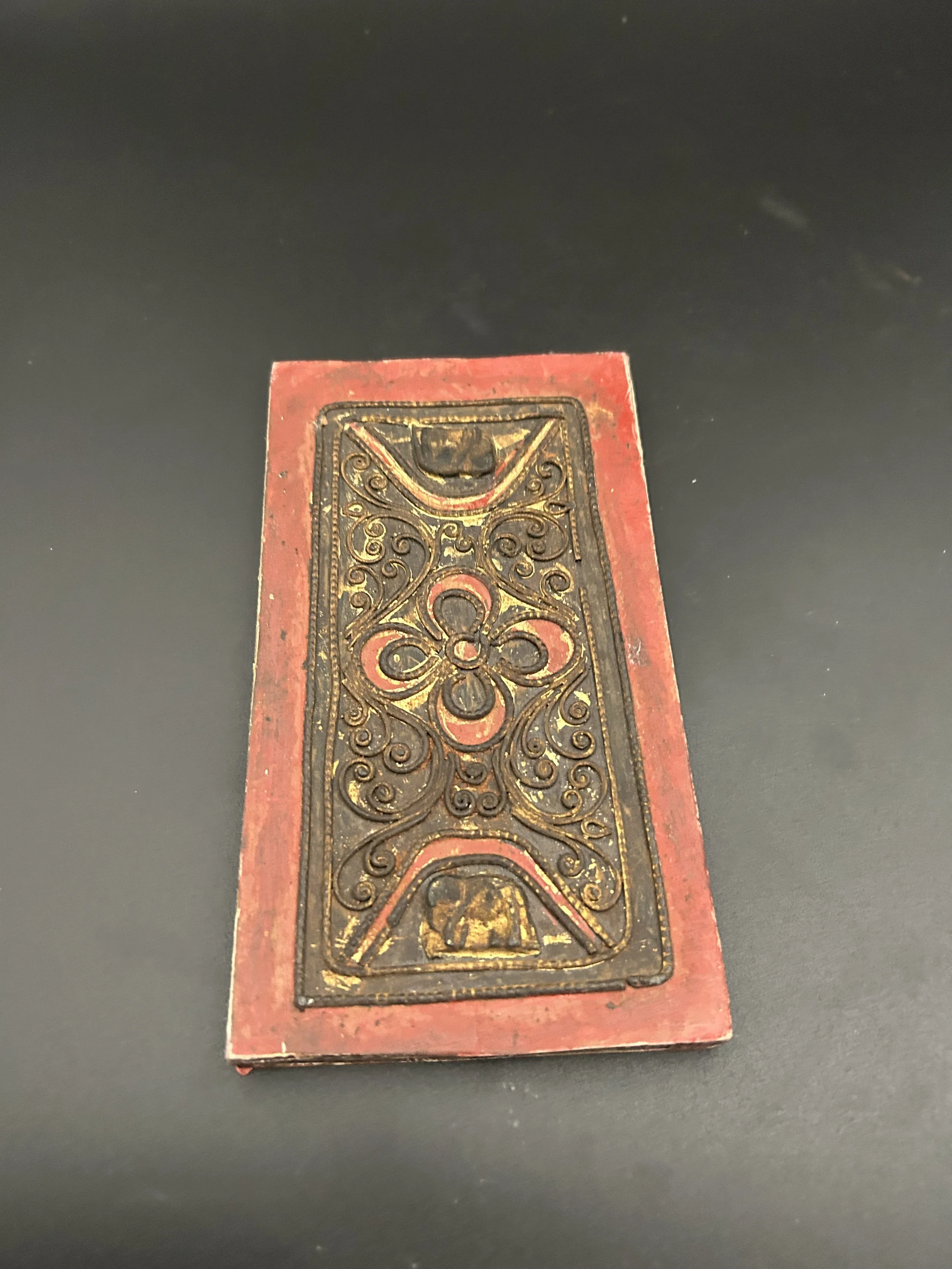 Image 1 of 6
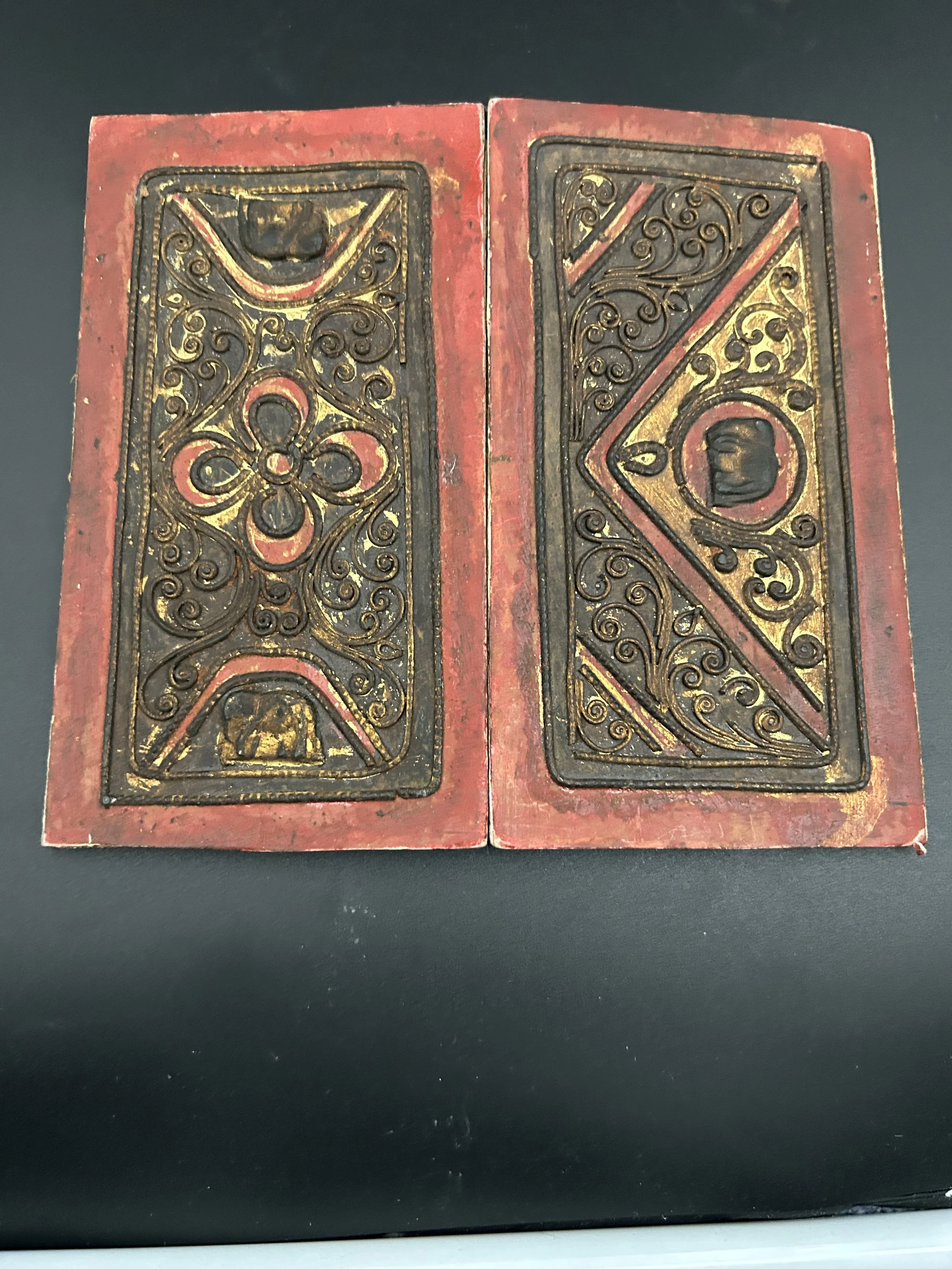 Image 2 of 6
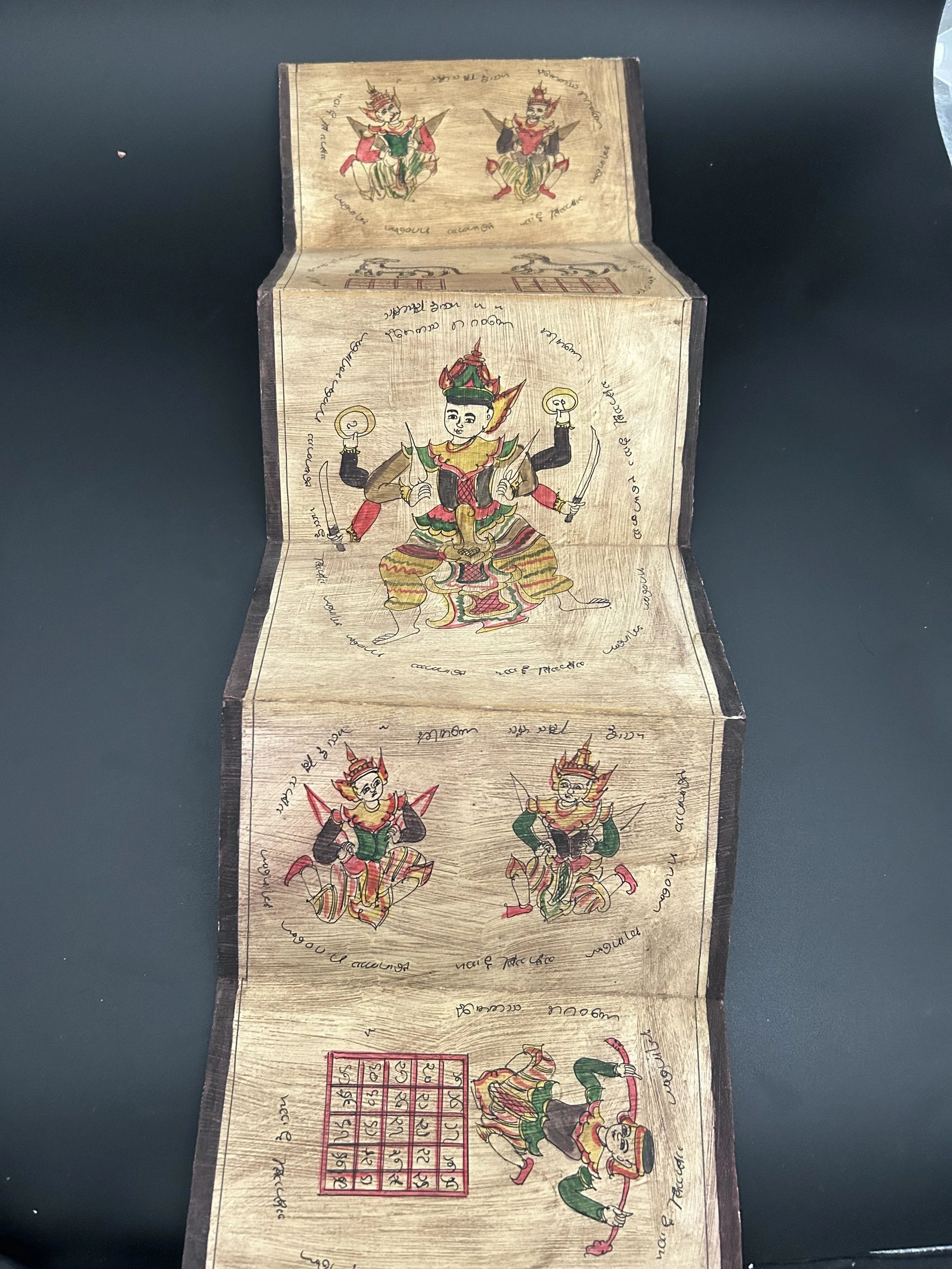 Image 3 of 6
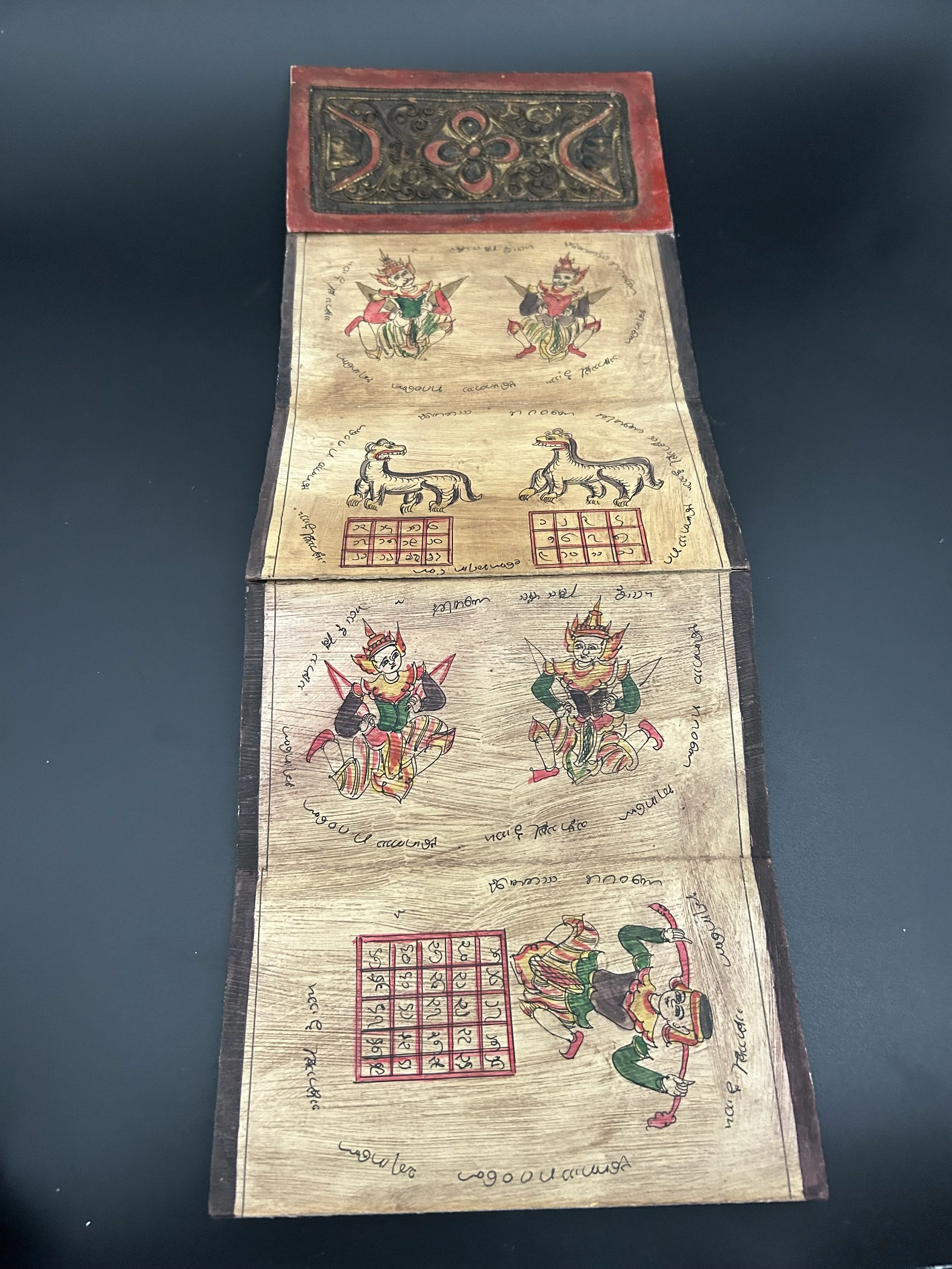 Image 4 of 6
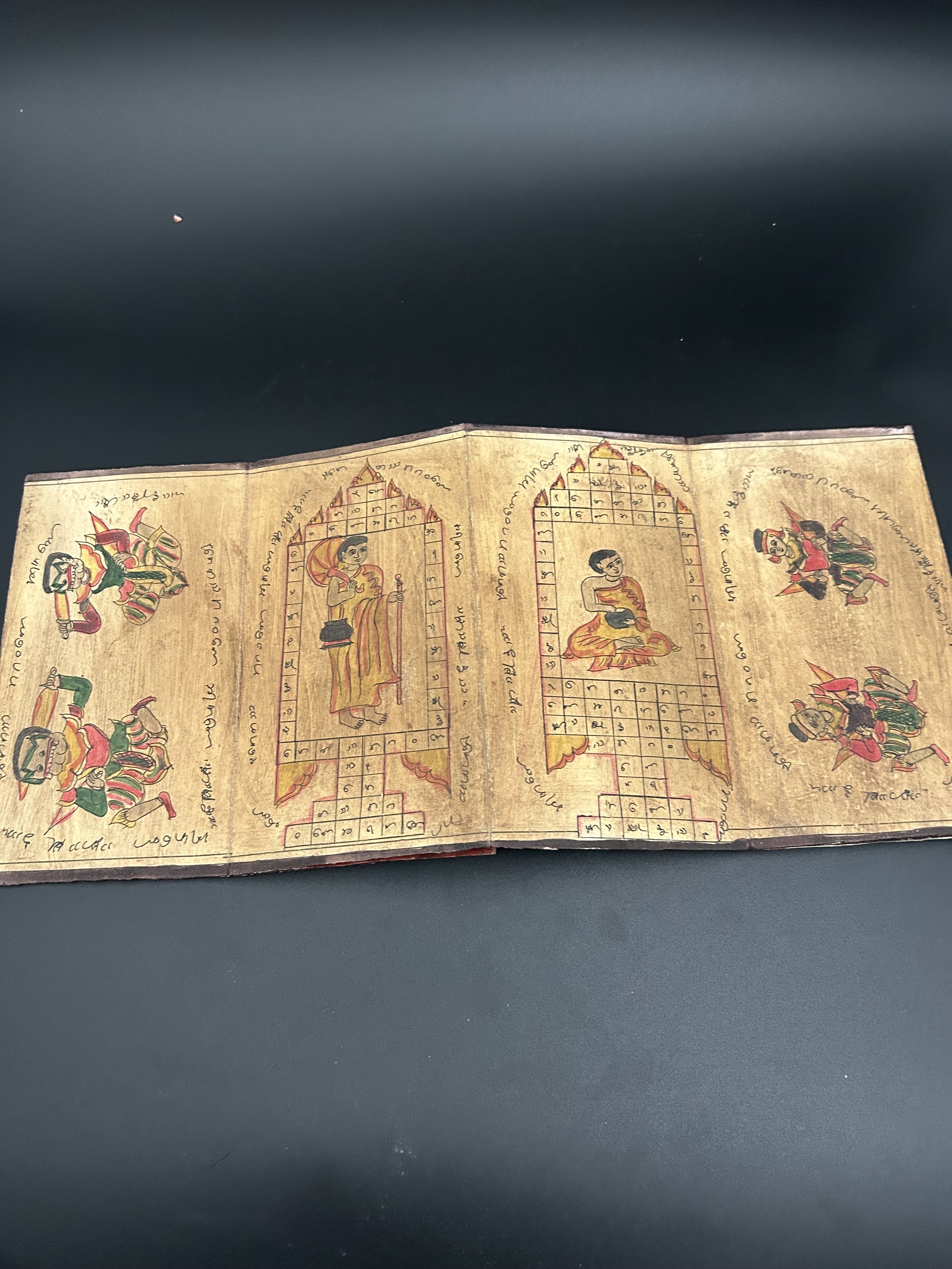 Image 5 of 6
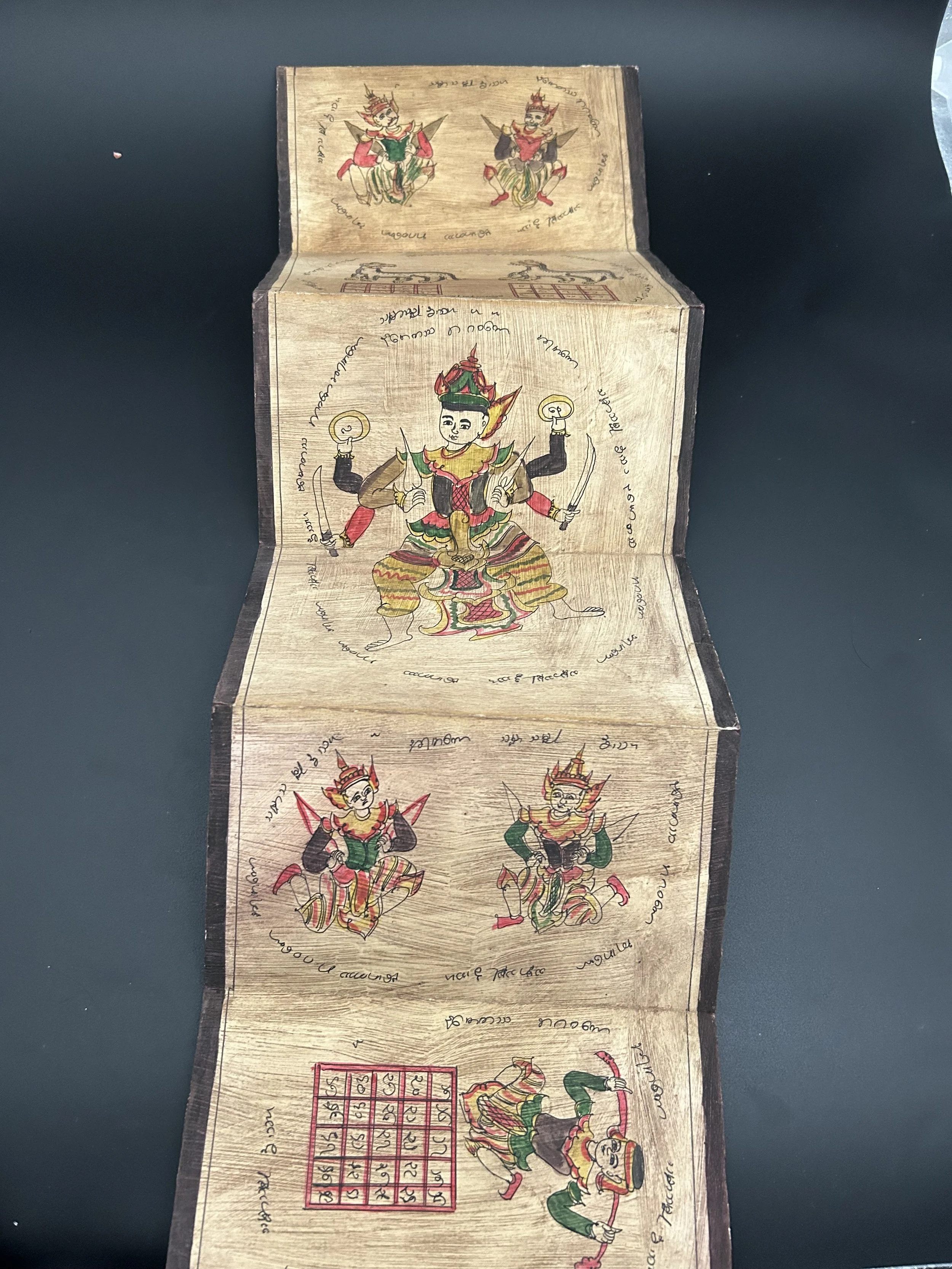 Image 6 of 6