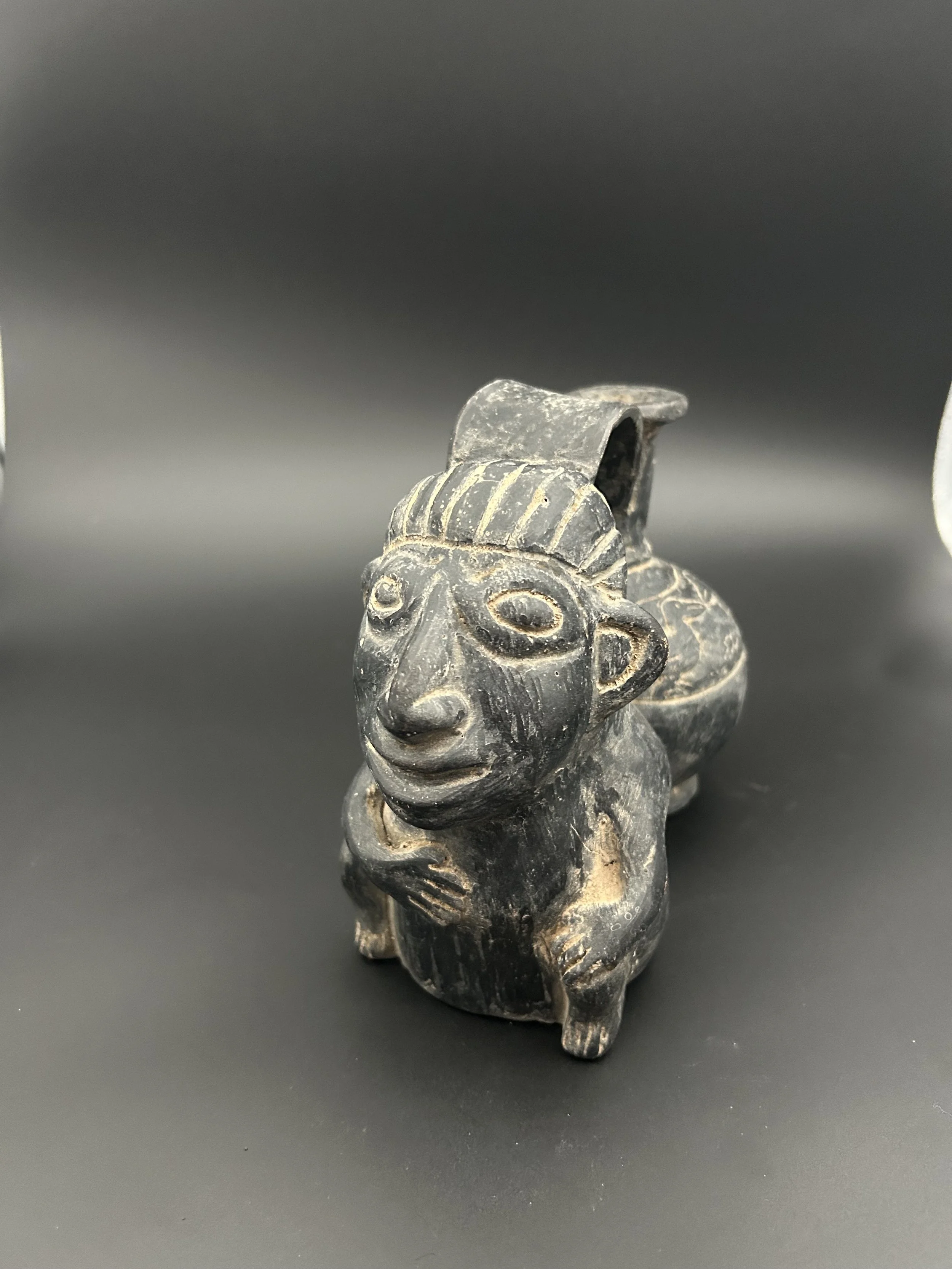
 Image 1 of 4
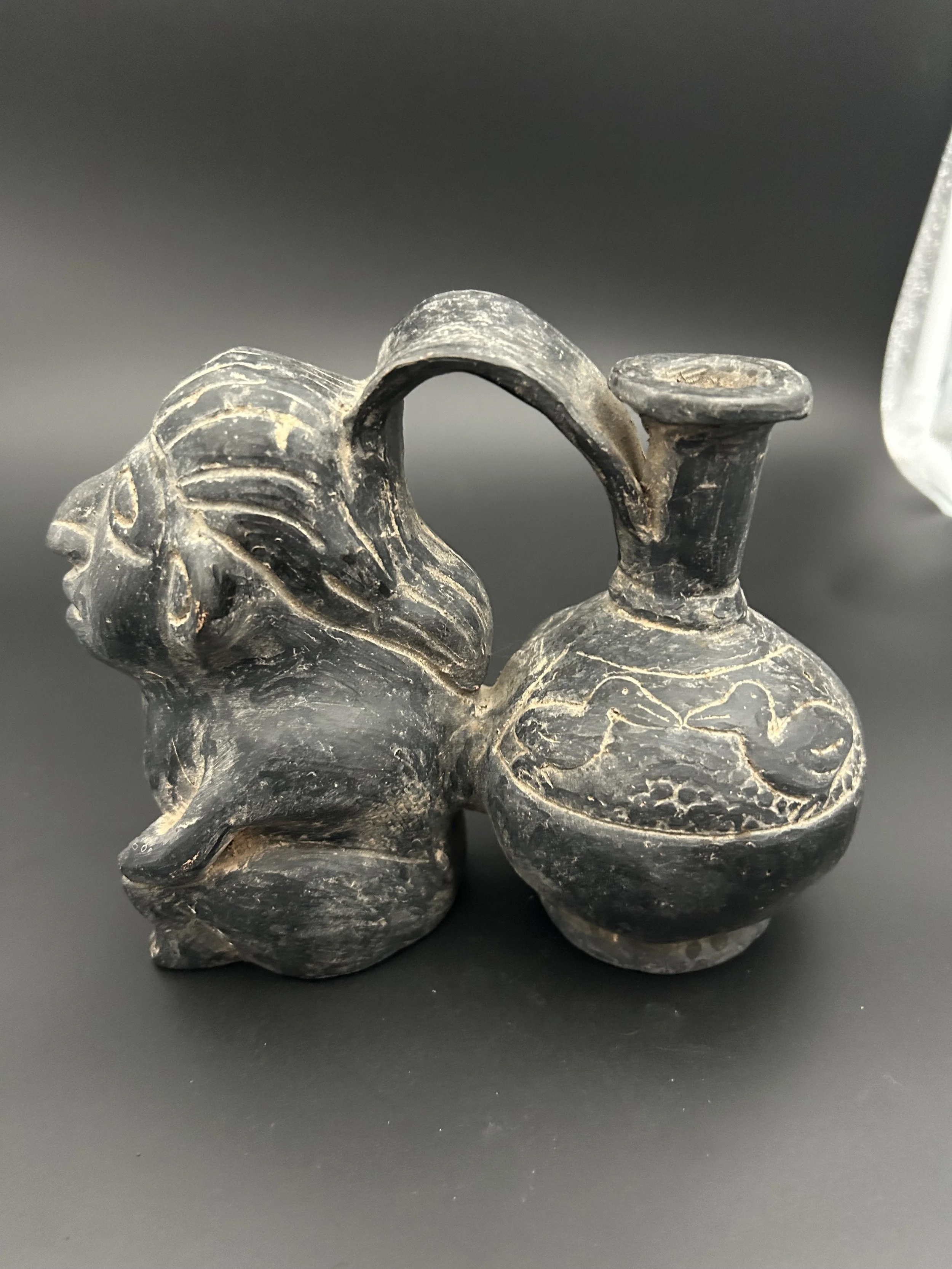
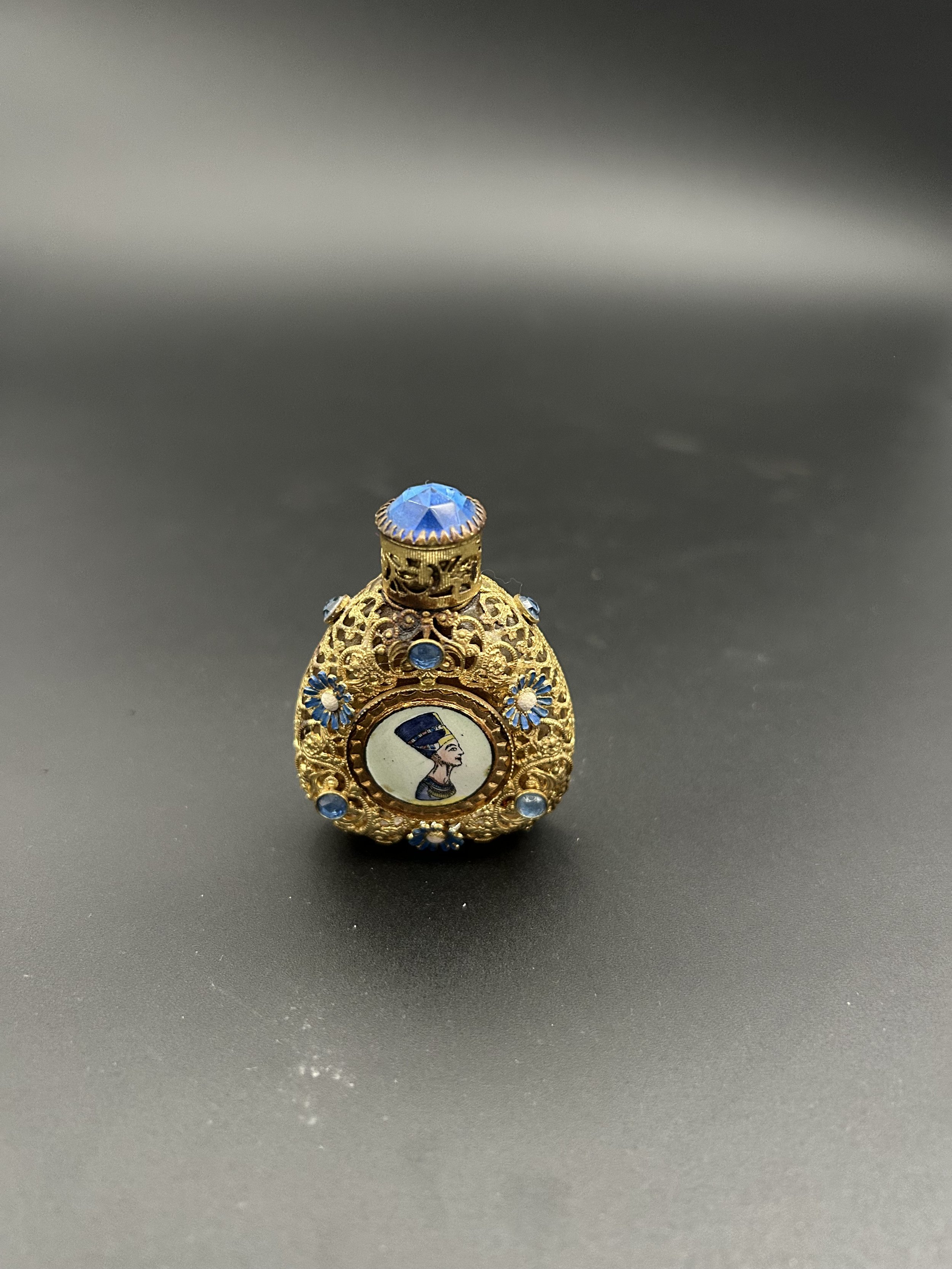 Image 2 of 4
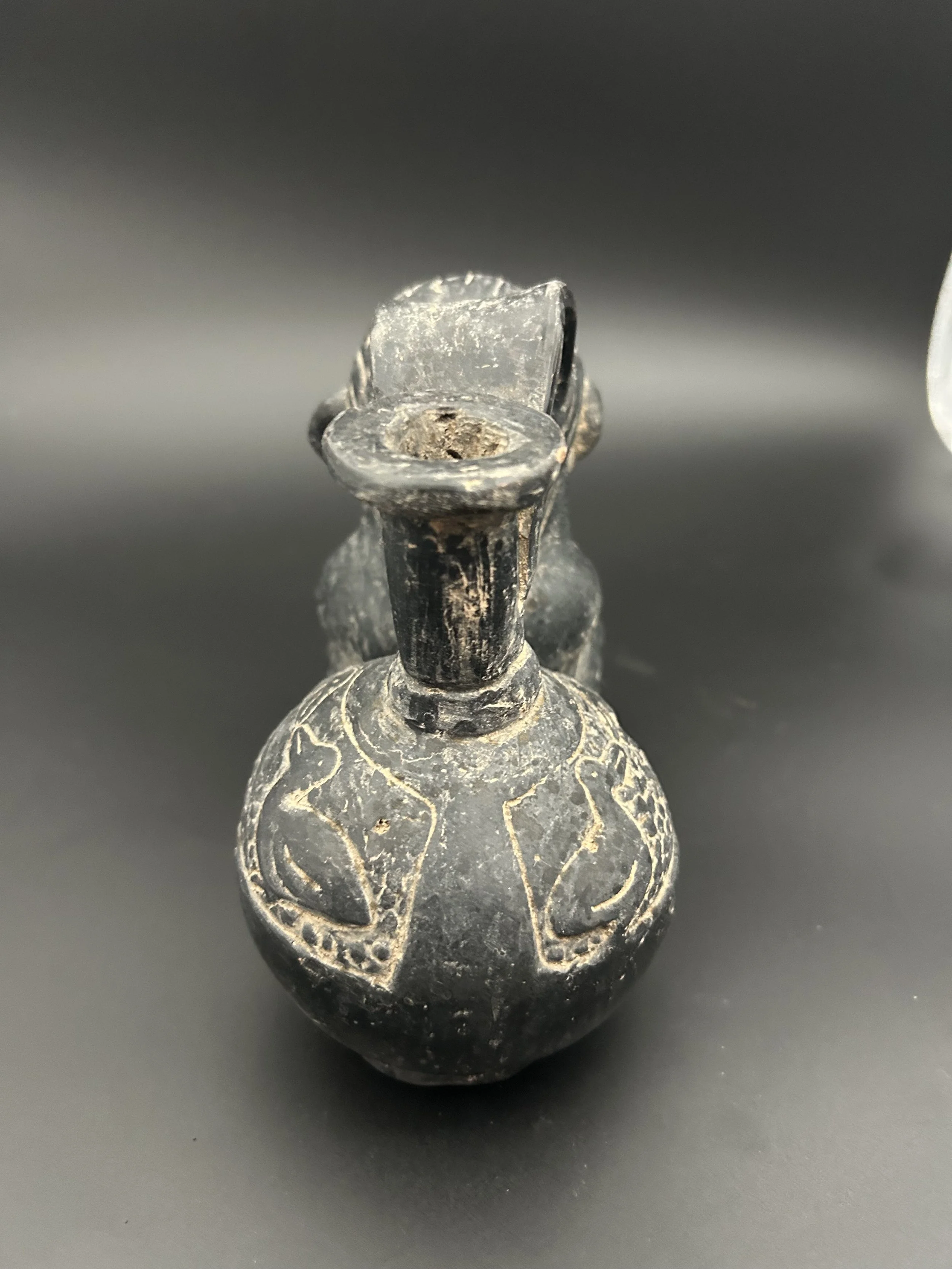
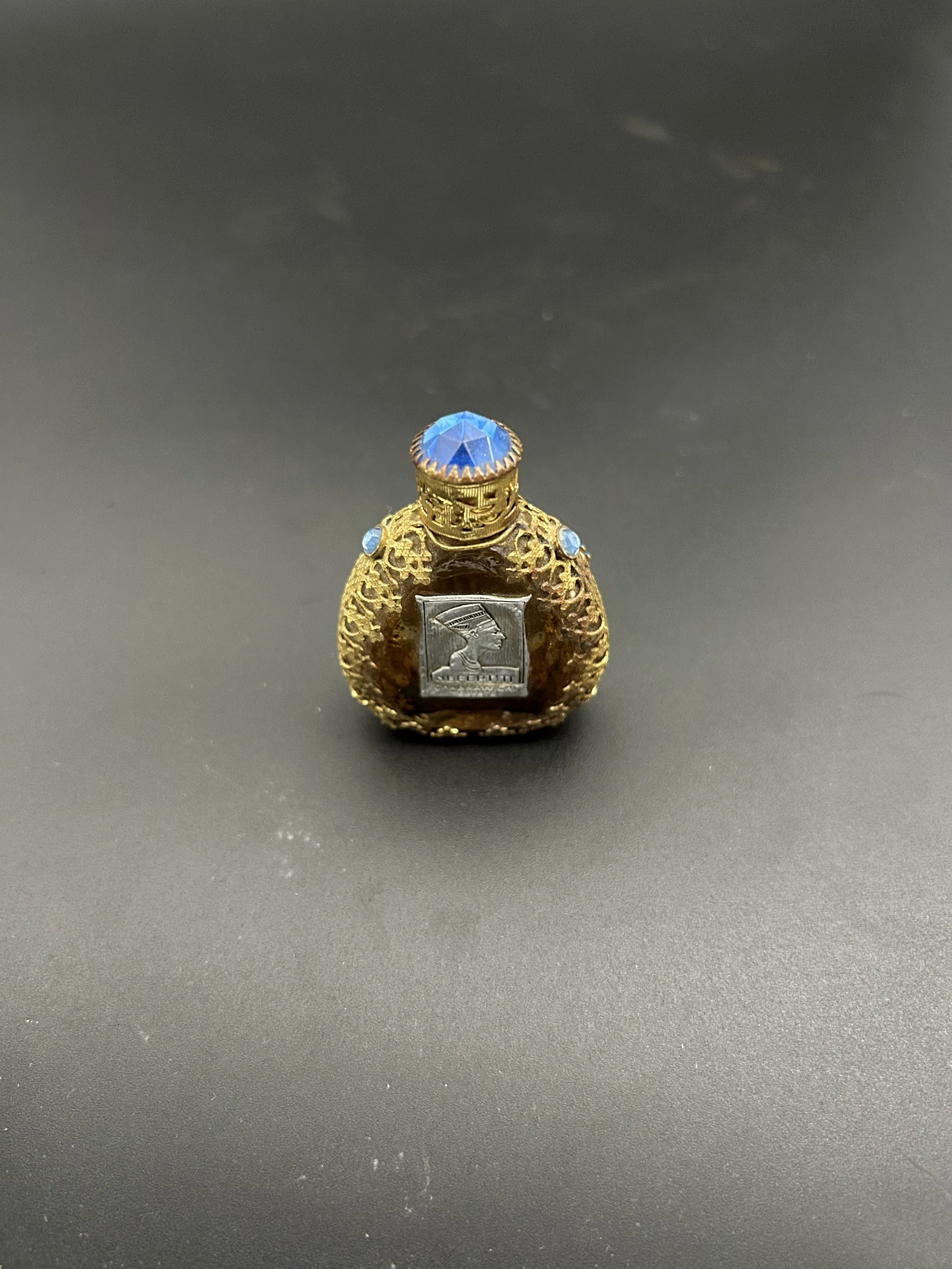 Image 3 of 4
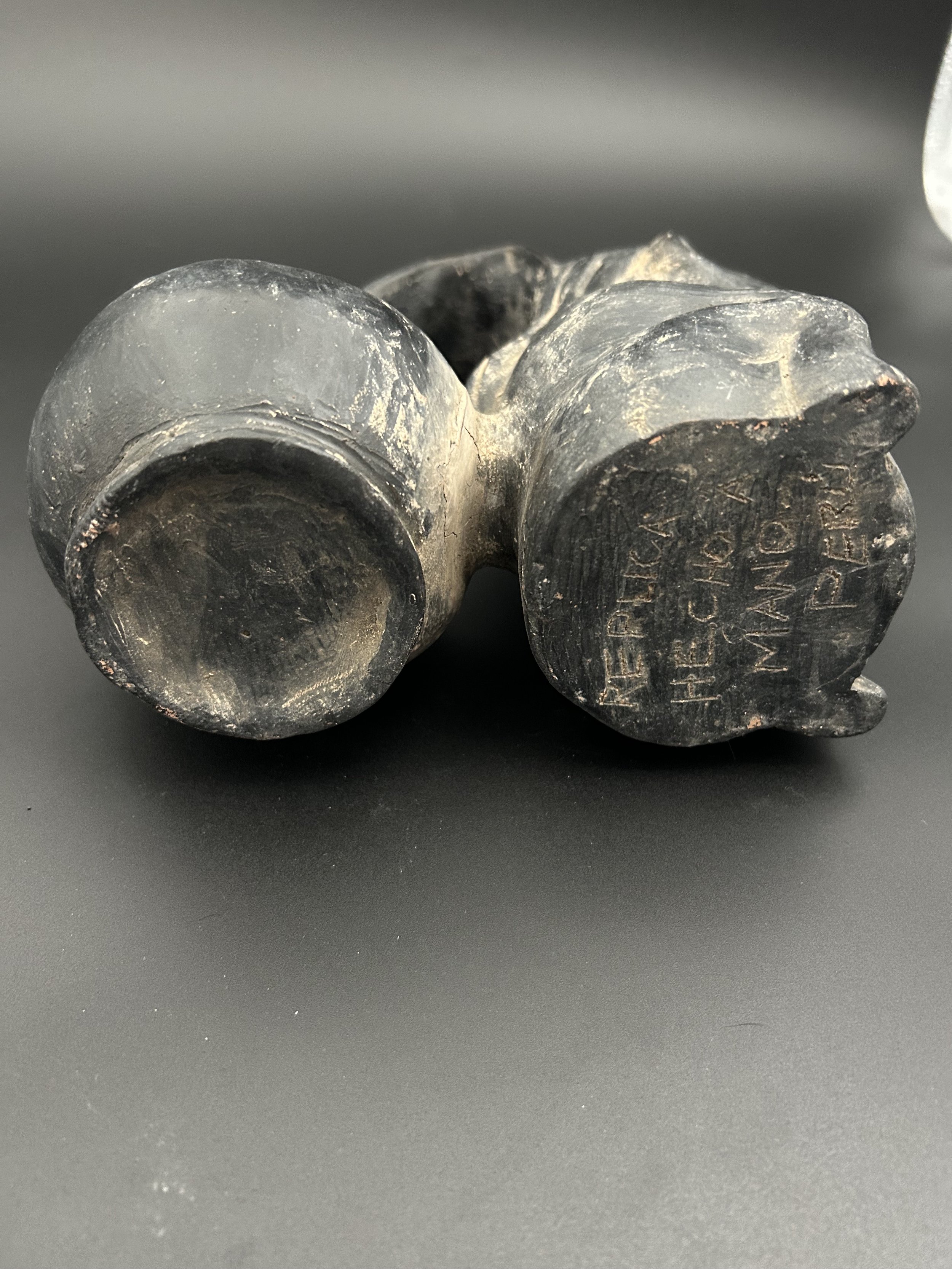
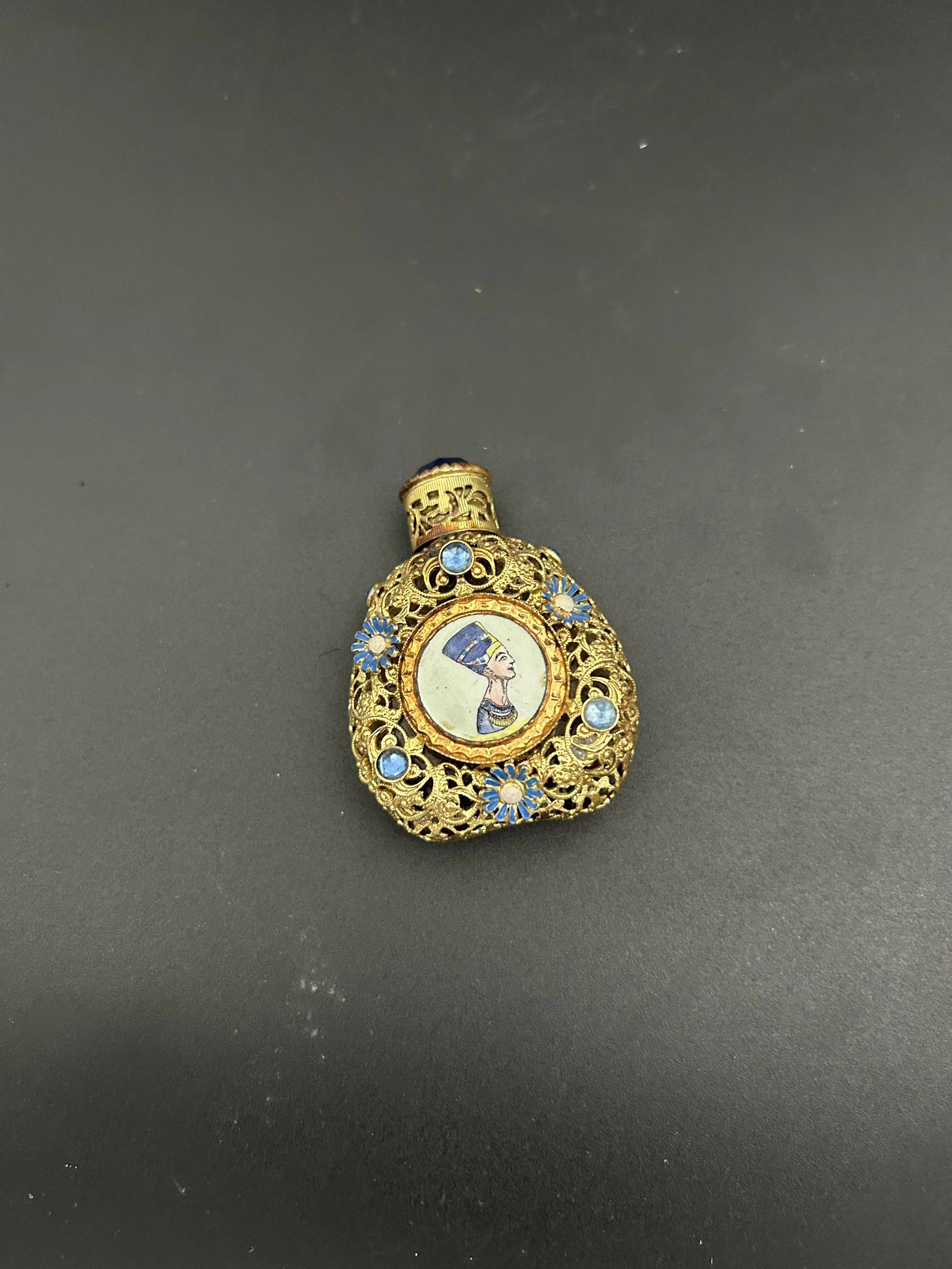 Image 4 of 4
Item No. RSF – V – 4 – γ – 75
Object Description
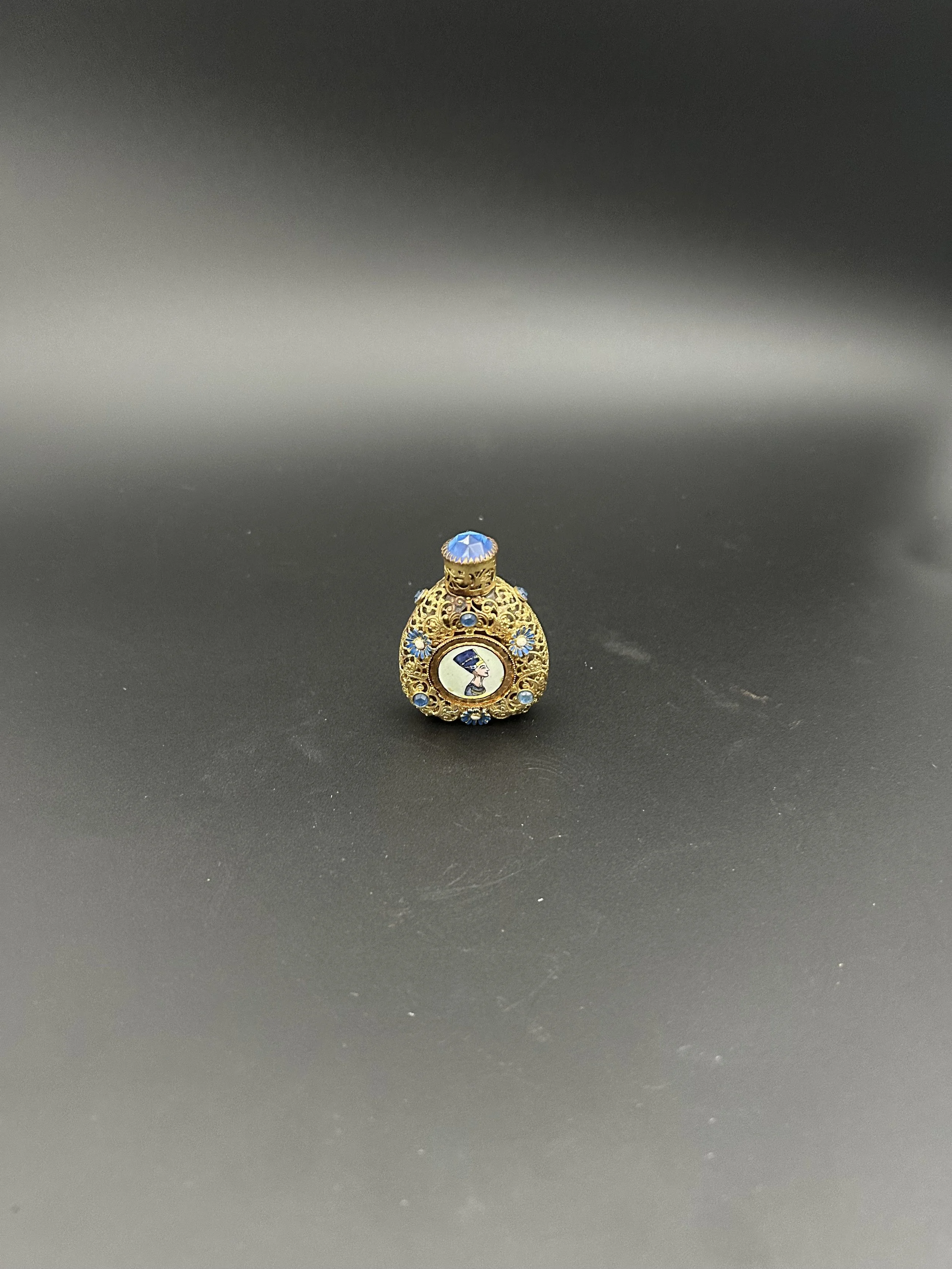
A miniature Egyptian perfume bottle produced by Chabrawichi, the Cairo perfume house founded in 1920 and still trading today. The body is a small glass flask sheathed in pierced gilt-metal filigree, set with cabochons the deep blue of the river at night and small enamel daisies, and centered on the obverse with a hand-painted miniature of Queen Nefertiti under a glazed roundel. The cap is a high domed cabochon of Egyptian blue. The lid has fused to the collar and will not open. A faint residue remains within the glass, though the scent itself is long gone.
Physical Details
Gilt filigree over glass, slim and palm-sized. Cobalt cabochons at the shoulders and around the cap, five enamel blossom motifs, and a stamped collar in the Egyptian Revival manner. The Nefertiti miniature is hand-painted and bright. Honest wear consistent with a near-century-old vanity object: light loss to the gilding at the high points, settings tight and secure, cap fused, faint dried residue within. Good vintage condition.
Dimensions
Approximately 3.25" × 2.25" (estimate, pending measurement).
Tradition
This piece belongs to the Arabian and Islamic tradition of the djinn جني (jinnī). In that cosmology the djinn are not ghosts of the dead but a separate creation, made of smokeless fire, older than mankind and dwelling in the liminal places of the world. They may be cruel or generous, and they are known to fold themselves into a beautiful object and wait inside it. The motif of the spirit bound in a vessel is ancient in the region. King Sulayman was said to have sealed rebellious djinn into stoppered vessels of brass, and from that tradition descends every later story of the spirit in the bottle. The djinn that choose perfume and ornament, by the reckoning of those who know them, tend to be of the gentler kind. They love scent, glamour, and being adored, and they reward those things in kind.
Story
The last names of the families affected by this story have been omitted for their safety and privacy.
In the winter of 1934, with the world still feverish over the boy king whose tomb had been opened just a decade before, a young American woman we will call Adeline came up the Nile on a hired dahabeah. She had money that was new to her and a husband who had decided, at the last moment, not to come. In his place she brought the one companion she trusted without reservation: a card reader out of New Orleans who worked under the name Madame Vasquine. Adeline did nothing without the cards. She had not booked the passage, nor bought a single hat, nor turned away a single admirer, before Madame had laid the deck across the green baize of her little folding table.
Cairo that season was dust and jasmine and the noise of motorcars, and everywhere the talk was of curses and gold. In a perfumer’s stall off the Khan el-Khalili, Adeline found the bottle. It was small enough to close her hand around, gilt filigree wrapped over glass, set with stones the color of the deep river at night, and on its face a little painted queen looked out from under glass. The perfumer told her the house was Chabrawichi, that the scent inside was made for queens. Adeline paid without bargaining, which is not done, and carried it back to the boat pressed against her heart.
That evening Madame laid the cards and went very still. She turned the Moon, and then the Tower, and then she set the deck down and did not finish the reading. “There is someone already living in it,” she said. “In the bottle. He has been waiting a long while for a woman who would not bargain.” Adeline laughed and asked whether he was handsome. Madame did not laugh. She said the old people of that country knew a kind of spirit made not of clay or of breath but of fire without smoke, and that such a one will sometimes fold itself into a beautiful thing and wait there, patient as scent, for an owner worth the trouble. She said the spirit was not unkind. She said it would have to be adored.
And it was. That winter Adeline could not lose. She was luckier at cards than Madame, which had never once happened. Men who had not noticed her in New York wrote to her now from three cities. She woke each morning feeling that the day had already been arranged in her favor. The bottle she kept always at the center of whatever room she was given, among flowers, among her good things, and she never let the maid touch it. Once, hurried and careless, she packed it down into the bottom of a trunk under her boots, and within the week she lost a bracelet, a friendship, and very nearly a finger in the slammed door of the cabin. She understood. She took the bottle out, set it among the lilies, and apologized to it aloud, and the luck came back the way warmth comes back into a cold room.
Madame read for the spirit directly after that, the cards spread before the bottle rather than before Adeline, and this became their habit. The answers came plainly. It wished to be kept beautiful. It wished never to be emptied, so that something of the scent it loved would always remain. It wished, above all, to be wanted. In exchange it gave what it had always given the women who kept it well: glamour, and the particular abundance that follows a person who has decided, somewhere a spirit can hear it, that she deserves a good life.
Adeline went home in the spring a different woman than the one who had sailed, and she lived, by every account that reached us, extremely well. The bottle stayed with her to the end, and after her it went on, as these things do, to whoever next would set it among the flowers and never let it be emptied. The scent is gone now. The spirit is not. It waits behind the fused lid, where it has been since before Adeline, with the patience of perfume, for the next owner who will not bargain.
Provenance
Manufactured by the House of Chabrawichi, Cairo, c. 1930s; earlier ownership unknown; private collection, California; Rooks–St. Felix, 2026 to present.
Supernatural Scale: 4
A communicative djinn. It answers through cartomancy and in dreams, rewards adoration with glamour and abundance, and withdraws its favor when the bottle is emptied, neglected, or handled roughly.
Maintenance Scale: γ (Gamma) — Intermediate
Keep the bottle at the center of a beautiful room and among beautiful things. Never attempt to force the lid or empty it. Set fresh flowers near it and, on occasion, a single drop of fine perfume on the cloth beneath it as an offering. The owner who wishes to speak with it should do so through cards. Adored, it is generous. Forgotten, it sulks, and the luck goes with it.
Item No. RSF – V – 4 – γ – 75
Object Description
A miniature Egyptian perfume bottle produced by Chabrawichi, the Cairo perfume house founded in 1920 and still trading today. The body is a small glass flask sheathed in pierced gilt-metal filigree, set with cabochons the deep blue of the river at night and small enamel daisies, and centered on the obverse with a hand-painted miniature of Queen Nefertiti under a glazed roundel. The cap is a high domed cabochon of Egyptian blue. The lid has fused to the collar and will not open. A faint residue remains within the glass, though the scent itself is long gone.
Physical Details
Gilt filigree over glass, slim and palm-sized. Cobalt cabochons at the shoulders and around the cap, five enamel blossom motifs, and a stamped collar in the Egyptian Revival manner. The Nefertiti miniature is hand-painted and bright. Honest wear consistent with a near-century-old vanity object: light loss to the gilding at the high points, settings tight and secure, cap fused, faint dried residue within. Good vintage condition.
Dimensions
Approximately 3.25" × 2.25" (estimate, pending measurement).
Tradition
This piece belongs to the Arabian and Islamic tradition of the djinn جني (jinnī). In that cosmology the djinn are not ghosts of the dead but a separate creation, made of smokeless fire, older than mankind and dwelling in the liminal places of the world. They may be cruel or generous, and they are known to fold themselves into a beautiful object and wait inside it. The motif of the spirit bound in a vessel is ancient in the region. King Sulayman was said to have sealed rebellious djinn into stoppered vessels of brass, and from that tradition descends every later story of the spirit in the bottle. The djinn that choose perfume and ornament, by the reckoning of those who know them, tend to be of the gentler kind. They love scent, glamour, and being adored, and they reward those things in kind.
Story
The last names of the families affected by this story have been omitted for their safety and privacy.
In the winter of 1934, with the world still feverish over the boy king whose tomb had been opened just a decade before, a young American woman we will call Adeline came up the Nile on a hired dahabeah. She had money that was new to her and a husband who had decided, at the last moment, not to come. In his place she brought the one companion she trusted without reservation: a card reader out of New Orleans who worked under the name Madame Vasquine. Adeline did nothing without the cards. She had not booked the passage, nor bought a single hat, nor turned away a single admirer, before Madame had laid the deck across the green baize of her little folding table.
Cairo that season was dust and jasmine and the noise of motorcars, and everywhere the talk was of curses and gold. In a perfumer’s stall off the Khan el-Khalili, Adeline found the bottle. It was small enough to close her hand around, gilt filigree wrapped over glass, set with stones the color of the deep river at night, and on its face a little painted queen looked out from under glass. The perfumer told her the house was Chabrawichi, that the scent inside was made for queens. Adeline paid without bargaining, which is not done, and carried it back to the boat pressed against her heart.
That evening Madame laid the cards and went very still. She turned the Moon, and then the Tower, and then she set the deck down and did not finish the reading. “There is someone already living in it,” she said. “In the bottle. He has been waiting a long while for a woman who would not bargain.” Adeline laughed and asked whether he was handsome. Madame did not laugh. She said the old people of that country knew a kind of spirit made not of clay or of breath but of fire without smoke, and that such a one will sometimes fold itself into a beautiful thing and wait there, patient as scent, for an owner worth the trouble. She said the spirit was not unkind. She said it would have to be adored.
And it was. That winter Adeline could not lose. She was luckier at cards than Madame, which had never once happened. Men who had not noticed her in New York wrote to her now from three cities. She woke each morning feeling that the day had already been arranged in her favor. The bottle she kept always at the center of whatever room she was given, among flowers, among her good things, and she never let the maid touch it. Once, hurried and careless, she packed it down into the bottom of a trunk under her boots, and within the week she lost a bracelet, a friendship, and very nearly a finger in the slammed door of the cabin. She understood. She took the bottle out, set it among the lilies, and apologized to it aloud, and the luck came back the way warmth comes back into a cold room.
Madame read for the spirit directly after that, the cards spread before the bottle rather than before Adeline, and this became their habit. The answers came plainly. It wished to be kept beautiful. It wished never to be emptied, so that something of the scent it loved would always remain. It wished, above all, to be wanted. In exchange it gave what it had always given the women who kept it well: glamour, and the particular abundance that follows a person who has decided, somewhere a spirit can hear it, that she deserves a good life.
Adeline went home in the spring a different woman than the one who had sailed, and she lived, by every account that reached us, extremely well. The bottle stayed with her to the end, and after her it went on, as these things do, to whoever next would set it among the flowers and never let it be emptied. The scent is gone now. The spirit is not. It waits behind the fused lid, where it has been since before Adeline, with the patience of perfume, for the next owner who will not bargain.
Provenance
Manufactured by the House of Chabrawichi, Cairo, c. 1930s; earlier ownership unknown; private collection, California; Rooks–St. Felix, 2026 to present.
Supernatural Scale: 4
A communicative djinn. It answers through cartomancy and in dreams, rewards adoration with glamour and abundance, and withdraws its favor when the bottle is emptied, neglected, or handled roughly.
Maintenance Scale: γ (Gamma) — Intermediate
Keep the bottle at the center of a beautiful room and among beautiful things. Never attempt to force the lid or empty it. Set fresh flowers near it and, on occasion, a single drop of fine perfume on the cloth beneath it as an offering. The owner who wishes to speak with it should do so through cards. Adored, it is generous. Forgotten, it sulks, and the luck goes with it.