 Image 1 of 3
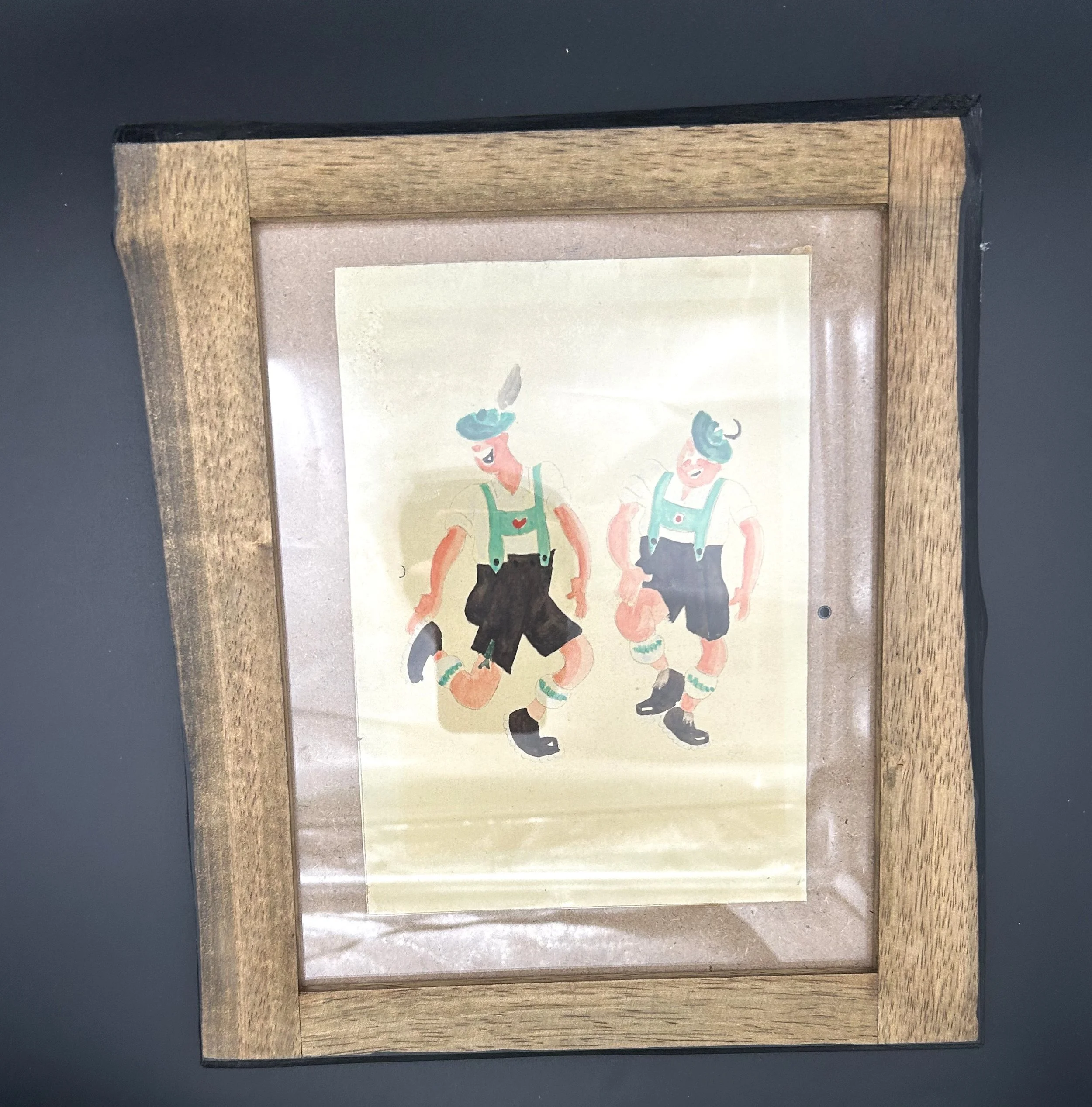 Image 2 of 3
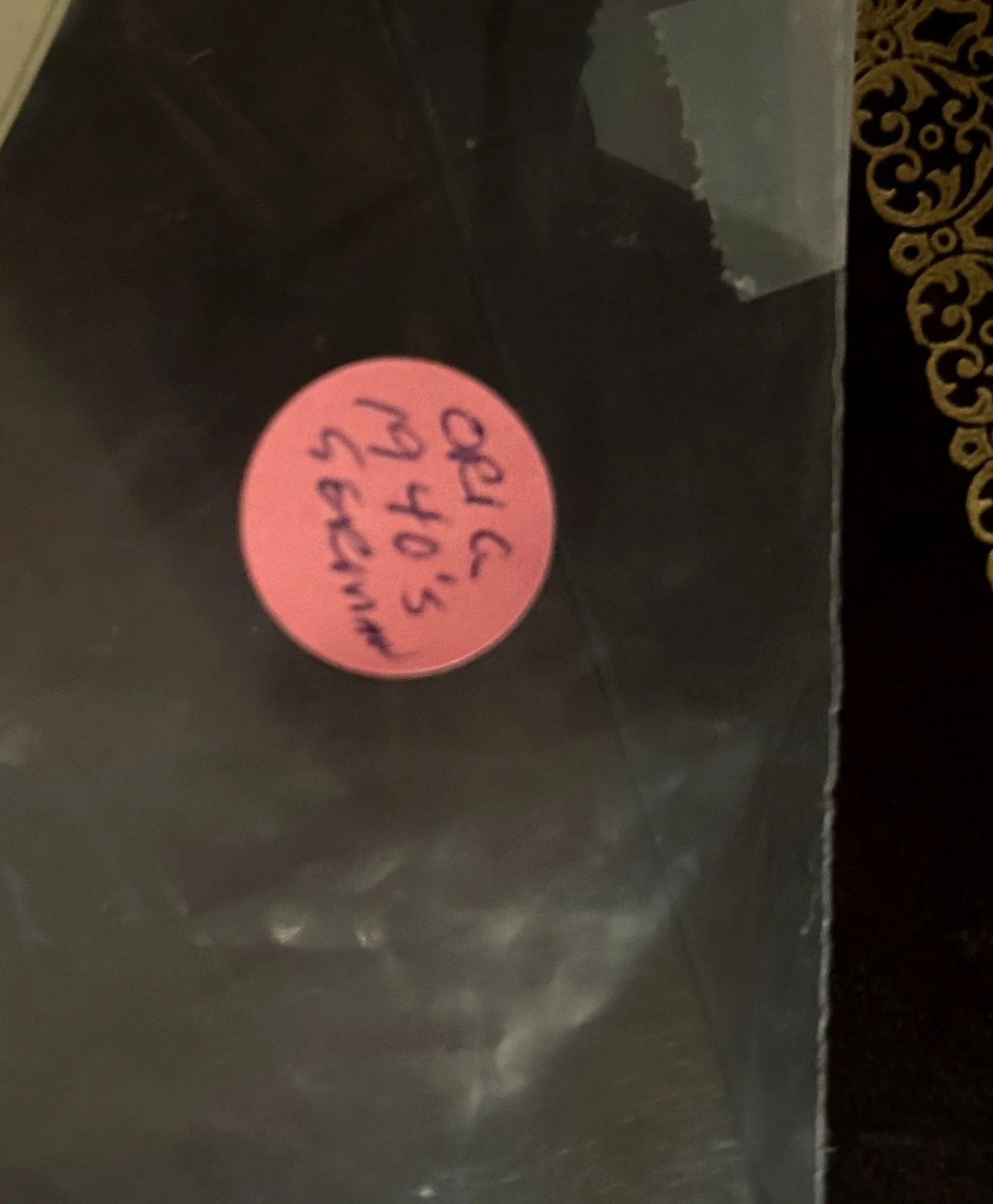 Image 3 of 3
Item No. RSF – A – 4.5 – δ – 88
Object Description
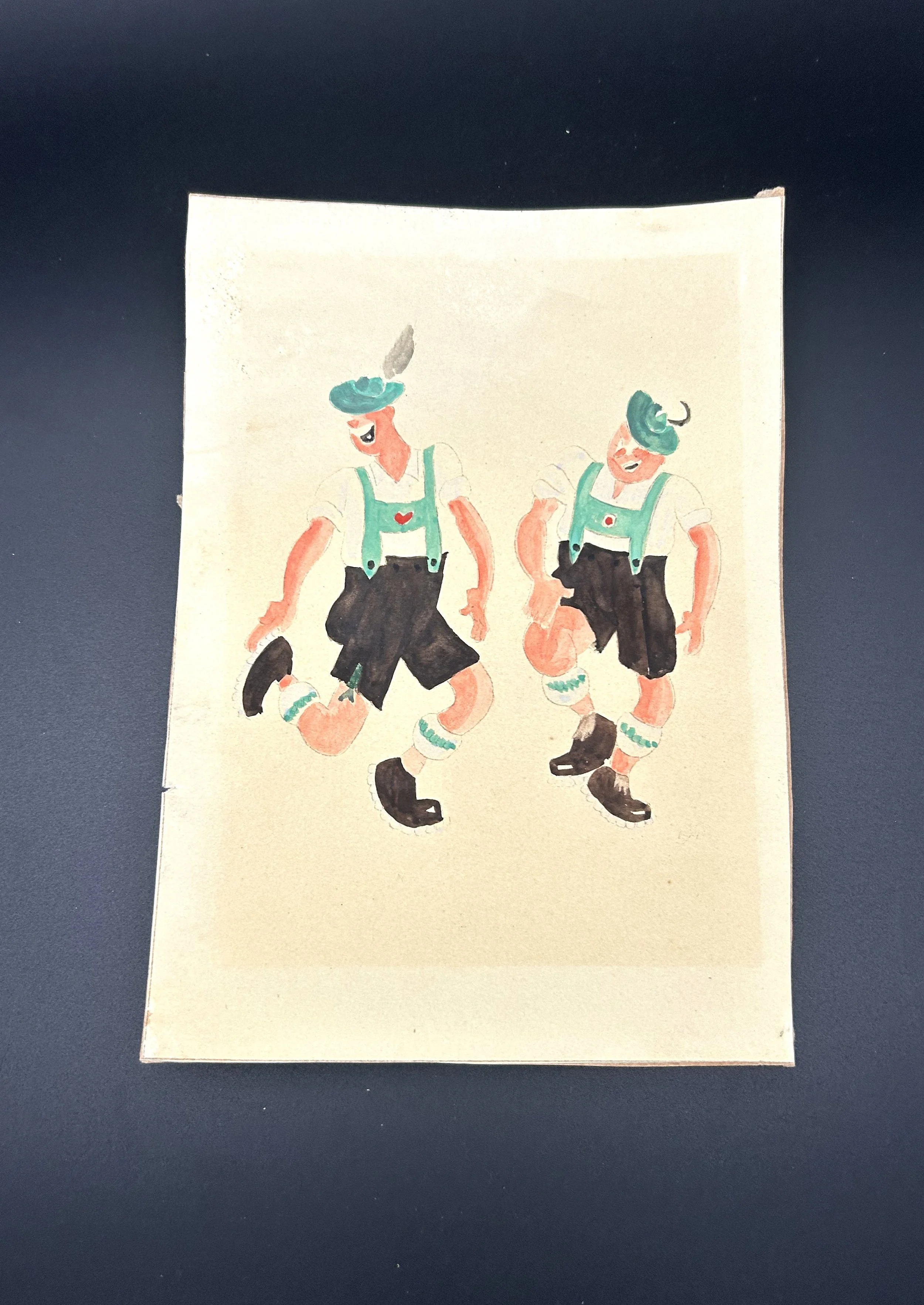
This is a small watercolor on cardboard paper typical of post-war Germany, when paper rationing dictated the materials available to local artists. Watercolors of this kind were popular souvenirs for American soldiers in occupied Germany and often depicted traditional scenes of Bavarian life. This particular scene shows two men performing a traditional German folk dance known as the Schuhplattler, or in English, the thigh-slapping dance. The dancers wear traditional Bavarian dress: Lederhosen (leather shorts), Hosenträger (suspenders), and Haferlschuhe (traditional Alpine leather shoes). The piece was acquired from an estate sale, where the dealer’s original tag attributed it as “Orig. 1940’s German.”
Physical Details
The artwork features graceful strokes and vivid color despite its age. The paper’s quality and material help date it to the 1940s. It is presented in a rustic wooden frame slightly larger than the work itself, owing to the irregular size of the original sheet. Deckled edges, gentle toning across the paper, and a few small surface marks are consistent with its age and humble origins.
Dimensions
Unframed: 8.5" × 6". Framed: 8" × 10".
Tradition
In Germanic tradition, there are many types of ghosts known collectively as Geists, recorded in the German-speaking lands since around 1130. Ghosts that inhabit the home are known as Hausgeister. Within that category, two subtypes apply to this piece.
The first is the Kobold, a house spirit that is very active in the home. They create noises such as footsteps (in this case, dancing footsteps) and laughter. Kobolds are intelligent spirits that attach themselves to emotionally resonant objects. When Kobolds are neglected, mocked, or spied upon, they will spoil food, shatter plates, fry electronics, and create general chaos. They are highly transactional, so whatever the household offers them they amplify in return.
This piece is also inhabited by a Poltergeist. In other words, this object contains two spirits. Poltergeister differ from Kobolds in that they are far more chaotic. They are known to be loud and disruptive: knocking over picture frames, creating loud bangs, and tapping on walls. Traditional Poltergeist activity also includes bed shaking, furniture movement, wall shaking, and object levitation, all of which have been observed and recorded by Rooks–St. Felix.
Story
This piece came to Rooks–St. Felix at an estate sale. It had been discarded and was nearly thrown out, but something about it caught my attention. As I began to research the paper and the artistic style, I could feel the latent energy in the artwork. In Germanic tradition, intense emotional feeling expended during the creation of a piece leaves it open to inhabitation by spirits. In this case, I believe the figure on the left is a Kobold, and the figure on the right is a Poltergeist.
From the moment I brought the piece home, I could hear two men speaking and laughing in the hallway. I could hear the knee-slapping and the wooden shoes dancing along. The piece is extremely active between two and four in the morning. Doors will slam, walls will shake, and the two of them will let you know they are present.
Provenance
Unknown German artist, c. 1947 (per dealer attribution); acquired from a private estate sale, 2025; Rooks–St. Felix (2025–present).
Supernatural Scale: 4.5
The watercolor is most likely inhabited by two spirits: a Kobold and a Poltergeist. The piece is very active.
Maintenance Scale: δ (Delta) — Advanced
This piece does not reach a 5 because no apparitions have yet been spotted. Recorded activity has included laughter, knee-slapping, clog dancing, footsteps, walls and doors slamming, paintings falling, and dishes crashing to the floor. The walls shake frequently. The bed has shaken and the sheets have ripped. Televisions turn on and off. A power outage during one episode caused several electronics in the home to fry.
This watercolor requires massive upkeep because of the two types of Hausgeist inhabiting it. First, to appease the Kobold, the owner must value craftsmanship and respect the Kobold, never demanding any gift from it. Regarding the Poltergeist, traditional German households never offered it anything, and only prayed against it, because Poltergeister are disruptive spirits by nature. The owner should accept that some of the activity in the home cannot be bargained with, only weathered. Patience, a sense of humor, and a household that takes pride in its own craft and care will keep the balance between the two spirits manageable.
Item No. RSF – A – 4.5 – δ – 88
Object Description
This is a small watercolor on cardboard paper typical of post-war Germany, when paper rationing dictated the materials available to local artists. Watercolors of this kind were popular souvenirs for American soldiers in occupied Germany and often depicted traditional scenes of Bavarian life. This particular scene shows two men performing a traditional German folk dance known as the Schuhplattler, or in English, the thigh-slapping dance. The dancers wear traditional Bavarian dress: Lederhosen (leather shorts), Hosenträger (suspenders), and Haferlschuhe (traditional Alpine leather shoes). The piece was acquired from an estate sale, where the dealer’s original tag attributed it as “Orig. 1940’s German.”
Physical Details
The artwork features graceful strokes and vivid color despite its age. The paper’s quality and material help date it to the 1940s. It is presented in a rustic wooden frame slightly larger than the work itself, owing to the irregular size of the original sheet. Deckled edges, gentle toning across the paper, and a few small surface marks are consistent with its age and humble origins.
Dimensions
Unframed: 8.5" × 6". Framed: 8" × 10".
Tradition
In Germanic tradition, there are many types of ghosts known collectively as Geists, recorded in the German-speaking lands since around 1130. Ghosts that inhabit the home are known as Hausgeister. Within that category, two subtypes apply to this piece.
The first is the Kobold, a house spirit that is very active in the home. They create noises such as footsteps (in this case, dancing footsteps) and laughter. Kobolds are intelligent spirits that attach themselves to emotionally resonant objects. When Kobolds are neglected, mocked, or spied upon, they will spoil food, shatter plates, fry electronics, and create general chaos. They are highly transactional, so whatever the household offers them they amplify in return.
This piece is also inhabited by a Poltergeist. In other words, this object contains two spirits. Poltergeister differ from Kobolds in that they are far more chaotic. They are known to be loud and disruptive: knocking over picture frames, creating loud bangs, and tapping on walls. Traditional Poltergeist activity also includes bed shaking, furniture movement, wall shaking, and object levitation, all of which have been observed and recorded by Rooks–St. Felix.
Story
This piece came to Rooks–St. Felix at an estate sale. It had been discarded and was nearly thrown out, but something about it caught my attention. As I began to research the paper and the artistic style, I could feel the latent energy in the artwork. In Germanic tradition, intense emotional feeling expended during the creation of a piece leaves it open to inhabitation by spirits. In this case, I believe the figure on the left is a Kobold, and the figure on the right is a Poltergeist.
From the moment I brought the piece home, I could hear two men speaking and laughing in the hallway. I could hear the knee-slapping and the wooden shoes dancing along. The piece is extremely active between two and four in the morning. Doors will slam, walls will shake, and the two of them will let you know they are present.
Provenance
Unknown German artist, c. 1947 (per dealer attribution); acquired from a private estate sale, 2025; Rooks–St. Felix (2025–present).
Supernatural Scale: 4.5
The watercolor is most likely inhabited by two spirits: a Kobold and a Poltergeist. The piece is very active.
Maintenance Scale: δ (Delta) — Advanced
This piece does not reach a 5 because no apparitions have yet been spotted. Recorded activity has included laughter, knee-slapping, clog dancing, footsteps, walls and doors slamming, paintings falling, and dishes crashing to the floor. The walls shake frequently. The bed has shaken and the sheets have ripped. Televisions turn on and off. A power outage during one episode caused several electronics in the home to fry.
This watercolor requires massive upkeep because of the two types of Hausgeist inhabiting it. First, to appease the Kobold, the owner must value craftsmanship and respect the Kobold, never demanding any gift from it. Regarding the Poltergeist, traditional German households never offered it anything, and only prayed against it, because Poltergeister are disruptive spirits by nature. The owner should accept that some of the activity in the home cannot be bargained with, only weathered. Patience, a sense of humor, and a household that takes pride in its own craft and care will keep the balance between the two spirits manageable.