Item No. RSF – B – 3.5 – β – 09
Physical Details
Contemporary full calf with gilt fillet borders and spine compartments; red morocco label titled ’Rogers’ Poems’. Edges sprinkled brown, plain endpapers. An honest, unrestored 18th-century binding with patina consistent with age. Fair to Good condition. Spine with losses at head and foot; joints rubbed; corners worn. The interior is remarkably clean and bright, with minimal foxing. Ownership inscription ’Frances G. Browne’ on the title page, with a second signature ’Miss F. Browne, Castlecomer House’ on the front free endpaper, and a manuscript poem dated ’Dublin, March 31st, 1797’ on a rear flyleaf.
Dimensions
12mo (16.5 cm); engraved frontispiece by I. Neagle after R. Westall, title page, [6] + 124 pp. Text crisp and well-printed on laid paper.
Tradition
Ireland has a deep tradition of magical spirits and beings. In this case, this book is forever endowed with the spirit of Fanny. It is an Irish tradition that books can be magical if they hold some sort of knowledge for the soul, and for Fanny this was the case. Writing one’s name in a magical book forever binds one’s soul to that book, as per Irish tradition. And thus, the spirit of Fanny lives forever in this poetry.
Story
Fanny picked up this little book in 1797. She was most likely a young Irish woman of gentle birth. The book itself is Rogers’s Pleasures of Memory, which established him as one of the leading poets of the 1790s, combining polished neoclassical diction with emerging Romantic emotion. This fifth edition (1793) was the first to include engraved illustration by Westall and Neagle, marking a transition toward the visually enriched editions that characterized early 19th-century poetry. Its inscription from Dublin suggests the cross-channel dissemination of English verse in the wake of the Enlightenment. The survival of this delicate volume in near-complete form makes it a prized example of transitional Romantic aesthetics.
Fanny was so moved by this poetry that she wrote a soliloquy inside the book that reads, in part, as follows:
Soliloquy by B. Hooke E.S.
That I shall scarce arrive that pure [perfection?]
That is in each Bliss that the half virtuous
Has still been the chimerical hate of my days
Their anguish [joys?] have been ever a [thread?]
But the forced in the extreme bitter of Pleasure
and Pain
I’m still loath to easy to feel them again
Dublin, March 31st, 1797
Because of the cursive writing and the aging, the soliloquy is hard to transcribe in full. However, the date is clear, and the date is what makes this book truly haunting. March 31, 1797 sits on the very eve of the Irish Rebellion of 1798. The Society of United Irishmen, founded in 1791 by Wolfe Tone, Thomas Russell, and others, had by 1797 transformed from a reformist Enlightenment club into a revolutionary underground army, allied with Revolutionary France and committed to an Irish republic. By March 1797 the country was under what amounted to military occupation by the British. Dublin itself in March 1797 was a city of double lives: the polite Anglo-Irish Ascendancy still attending the theatres and assemblies of Henry Grattan’s Parliament, while United Irishmen organized in cells and informers fed intelligence to Dublin Castle.
“I’m still loath to easy to feel them again.” Fanny has been so battered by extremes of pleasure and pain that she’s gone numb, and her only remaining wish is to feel again. Whether she chose this text because of heartbreak, or political dread, or the period’s general melancholic fashion, we will never know. But she copied it on March 31, 1797, in Dublin, and then closed the book, and the country fell apart.
Fanny could not have seen what was coming, but we can see it clearly now. What happened to the book after that is unknown, but it surfaced in a private library on the East Coast of the United States in the late 19th century. The book has since been tragically tossed around, making it a miracle that it has survived intact.
Provenance
Frances ’Fanny’ G. Browne, Castlecomer House, Dublin and County Kilkenny, c. 1797; private collection, East Coast of the United States, late 19th century; acquired by Rooks–St. Felix at auction, 2025.
Supernatural Scale: 3.5
The book is very active with spirit boards and other literary methods of contact. Fanny’s voice can sometimes be heard, and she has a distinct Irish accent. She loves to hear poetry and needs to be in a house with many books. Ideally this would be owned by a young woman with a passion for literature and for life, as well as for Irish history, because this book will throw its owner through the passions of pain and pleasure. This book is not for those seeking a quiet love life.
Maintenance Scale: β (Beta), Beginner
Beginner level, because Fanny is not malevolent. She does enjoy watching the owner go through fits of passion, so be ready to be fully engaged in life when Fanny comes into yours. Fanny is a very beautiful Irish spirit and is always looking to fill her household with joy and love.
Item No. RSF – B – 3.5 – β – 09
Physical Details
Contemporary full calf with gilt fillet borders and spine compartments; red morocco label titled ’Rogers’ Poems’. Edges sprinkled brown, plain endpapers. An honest, unrestored 18th-century binding with patina consistent with age. Fair to Good condition. Spine with losses at head and foot; joints rubbed; corners worn. The interior is remarkably clean and bright, with minimal foxing. Ownership inscription ’Frances G. Browne’ on the title page, with a second signature ’Miss F. Browne, Castlecomer House’ on the front free endpaper, and a manuscript poem dated ’Dublin, March 31st, 1797’ on a rear flyleaf.
Dimensions
12mo (16.5 cm); engraved frontispiece by I. Neagle after R. Westall, title page, [6] + 124 pp. Text crisp and well-printed on laid paper.
Tradition
Ireland has a deep tradition of magical spirits and beings. In this case, this book is forever endowed with the spirit of Fanny. It is an Irish tradition that books can be magical if they hold some sort of knowledge for the soul, and for Fanny this was the case. Writing one’s name in a magical book forever binds one’s soul to that book, as per Irish tradition. And thus, the spirit of Fanny lives forever in this poetry.
Story
Fanny picked up this little book in 1797. She was most likely a young Irish woman of gentle birth. The book itself is Rogers’s Pleasures of Memory, which established him as one of the leading poets of the 1790s, combining polished neoclassical diction with emerging Romantic emotion. This fifth edition (1793) was the first to include engraved illustration by Westall and Neagle, marking a transition toward the visually enriched editions that characterized early 19th-century poetry. Its inscription from Dublin suggests the cross-channel dissemination of English verse in the wake of the Enlightenment. The survival of this delicate volume in near-complete form makes it a prized example of transitional Romantic aesthetics.
Fanny was so moved by this poetry that she wrote a soliloquy inside the book that reads, in part, as follows:
Soliloquy by B. Hooke E.S.
That I shall scarce arrive that pure [perfection?]
That is in each Bliss that the half virtuous
Has still been the chimerical hate of my days
Their anguish [joys?] have been ever a [thread?]
But the forced in the extreme bitter of Pleasure
and Pain
I’m still loath to easy to feel them again
Dublin, March 31st, 1797
Because of the cursive writing and the aging, the soliloquy is hard to transcribe in full. However, the date is clear, and the date is what makes this book truly haunting. March 31, 1797 sits on the very eve of the Irish Rebellion of 1798. The Society of United Irishmen, founded in 1791 by Wolfe Tone, Thomas Russell, and others, had by 1797 transformed from a reformist Enlightenment club into a revolutionary underground army, allied with Revolutionary France and committed to an Irish republic. By March 1797 the country was under what amounted to military occupation by the British. Dublin itself in March 1797 was a city of double lives: the polite Anglo-Irish Ascendancy still attending the theatres and assemblies of Henry Grattan’s Parliament, while United Irishmen organized in cells and informers fed intelligence to Dublin Castle.
“I’m still loath to easy to feel them again.” Fanny has been so battered by extremes of pleasure and pain that she’s gone numb, and her only remaining wish is to feel again. Whether she chose this text because of heartbreak, or political dread, or the period’s general melancholic fashion, we will never know. But she copied it on March 31, 1797, in Dublin, and then closed the book, and the country fell apart.
Fanny could not have seen what was coming, but we can see it clearly now. What happened to the book after that is unknown, but it surfaced in a private library on the East Coast of the United States in the late 19th century. The book has since been tragically tossed around, making it a miracle that it has survived intact.
Provenance
Frances ’Fanny’ G. Browne, Castlecomer House, Dublin and County Kilkenny, c. 1797; private collection, East Coast of the United States, late 19th century; acquired by Rooks–St. Felix at auction, 2025.
Supernatural Scale: 3.5
The book is very active with spirit boards and other literary methods of contact. Fanny’s voice can sometimes be heard, and she has a distinct Irish accent. She loves to hear poetry and needs to be in a house with many books. Ideally this would be owned by a young woman with a passion for literature and for life, as well as for Irish history, because this book will throw its owner through the passions of pain and pleasure. This book is not for those seeking a quiet love life.
Maintenance Scale: β (Beta), Beginner
Beginner level, because Fanny is not malevolent. She does enjoy watching the owner go through fits of passion, so be ready to be fully engaged in life when Fanny comes into yours. Fanny is a very beautiful Irish spirit and is always looking to fill her household with joy and love.

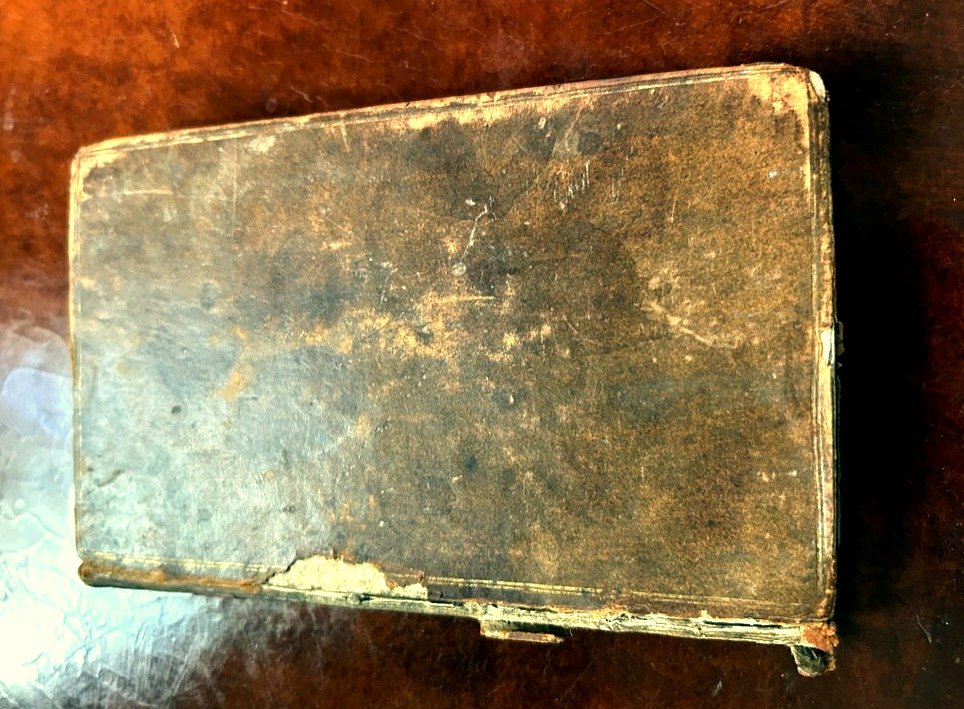 Image 1 of 7
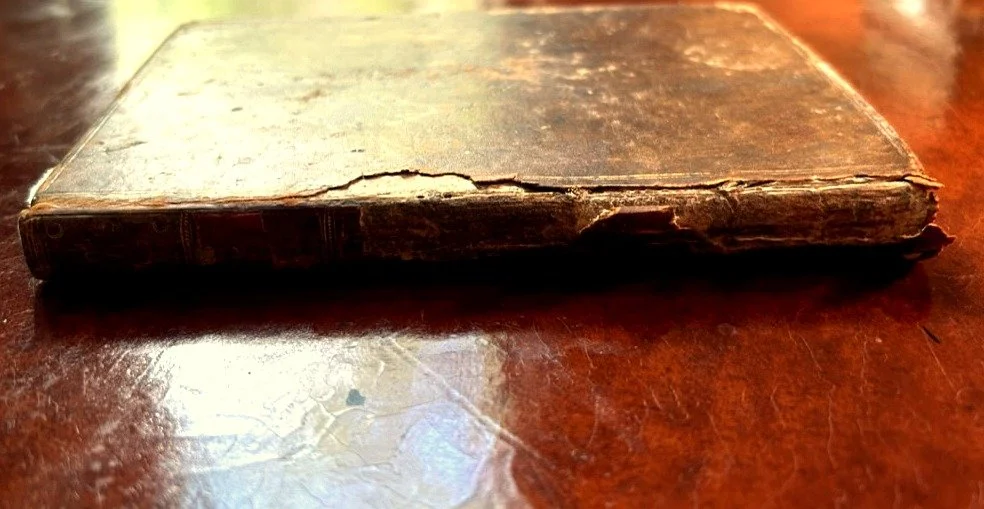 Image 2 of 7
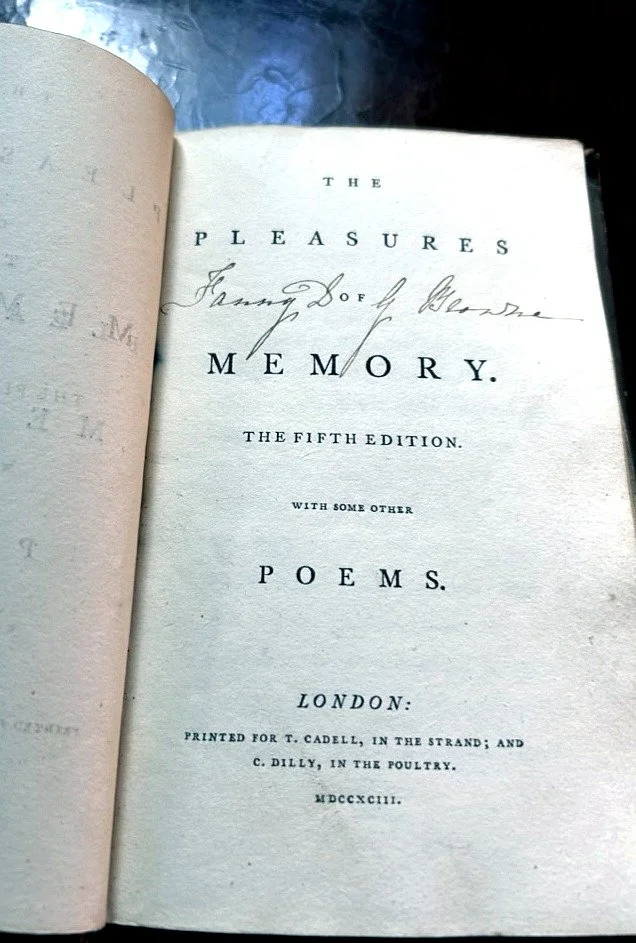 Image 3 of 7
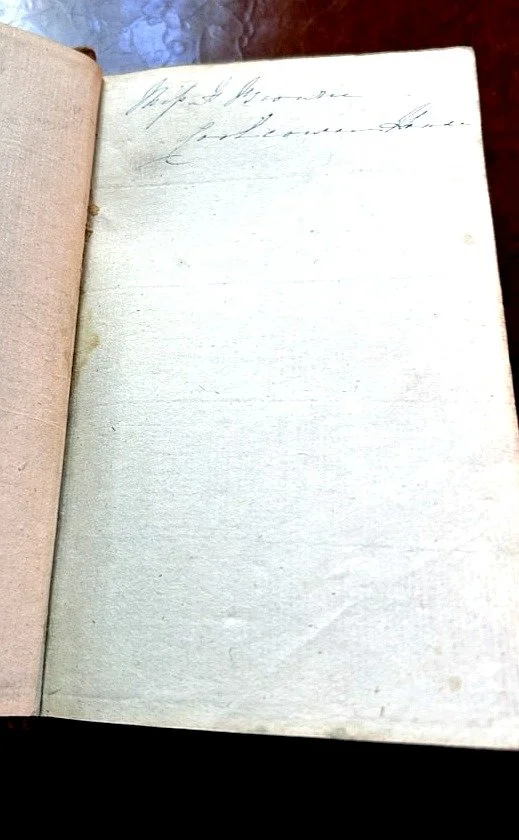 Image 4 of 7
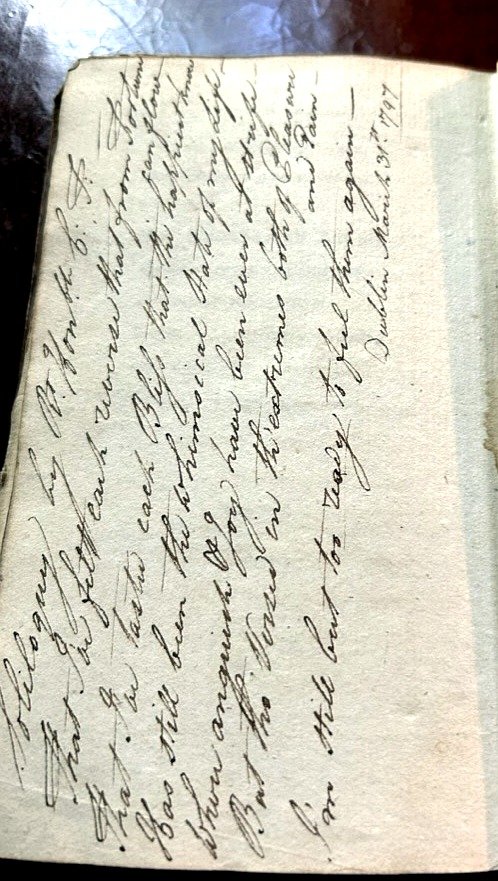 Image 5 of 7
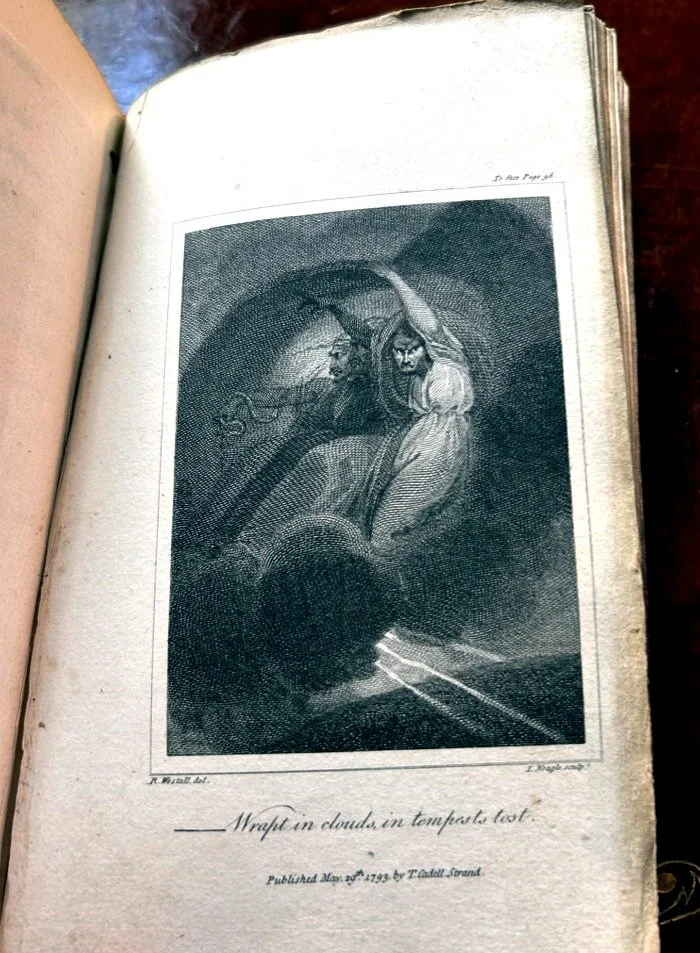 Image 6 of 7
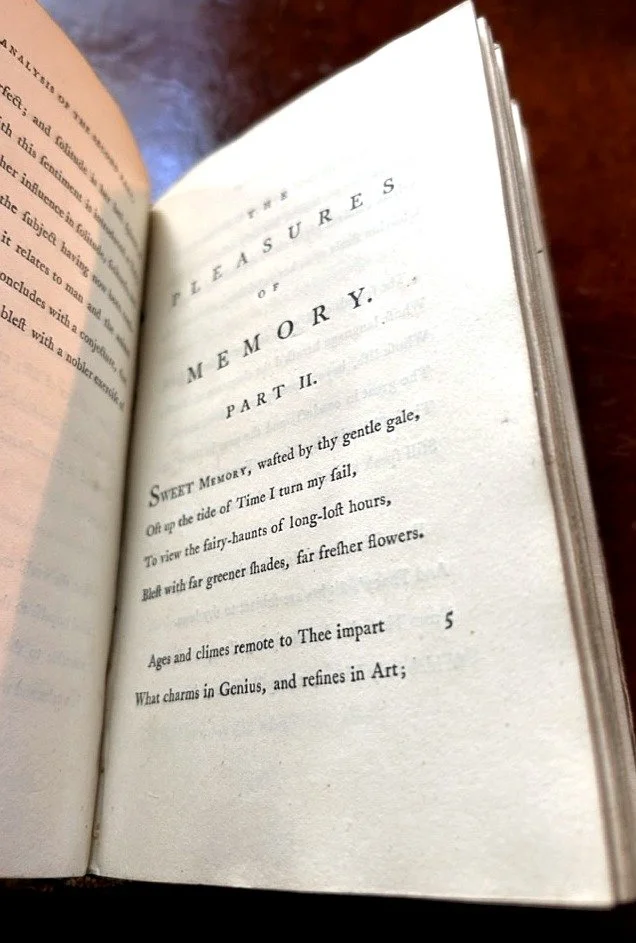 Image 7 of 7