Item No. RSF – B – 4 – γ – 15
Object Description
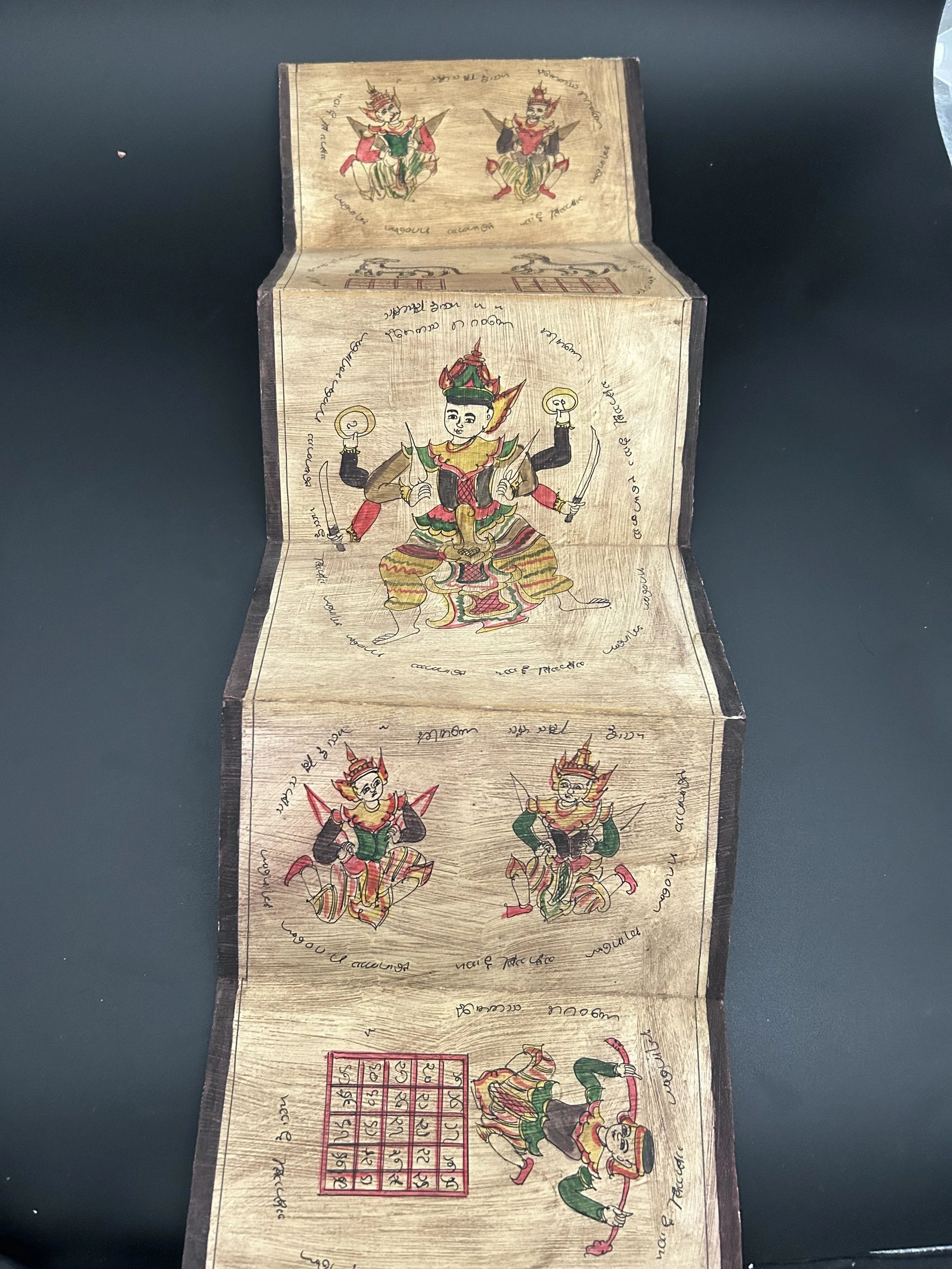
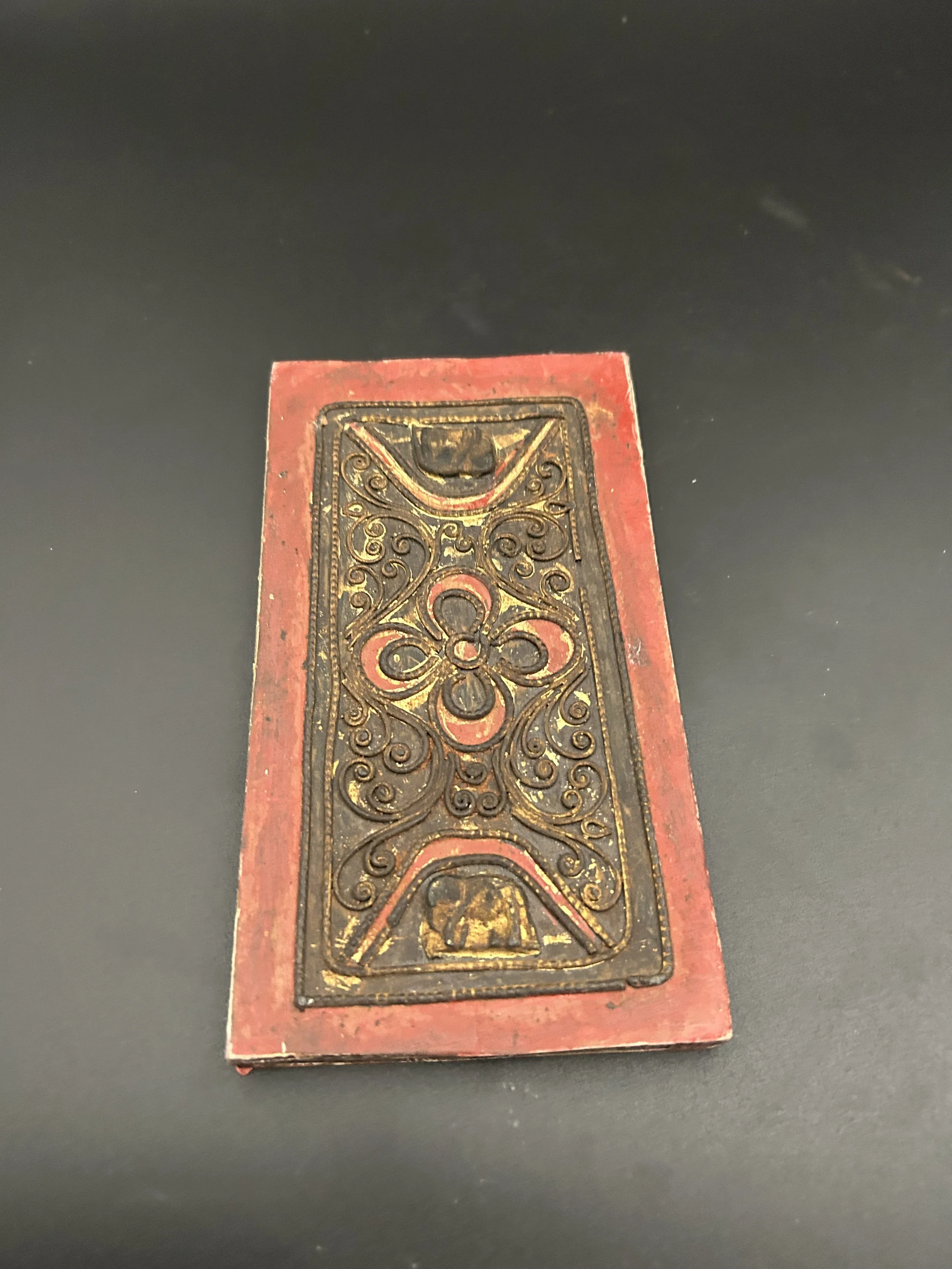
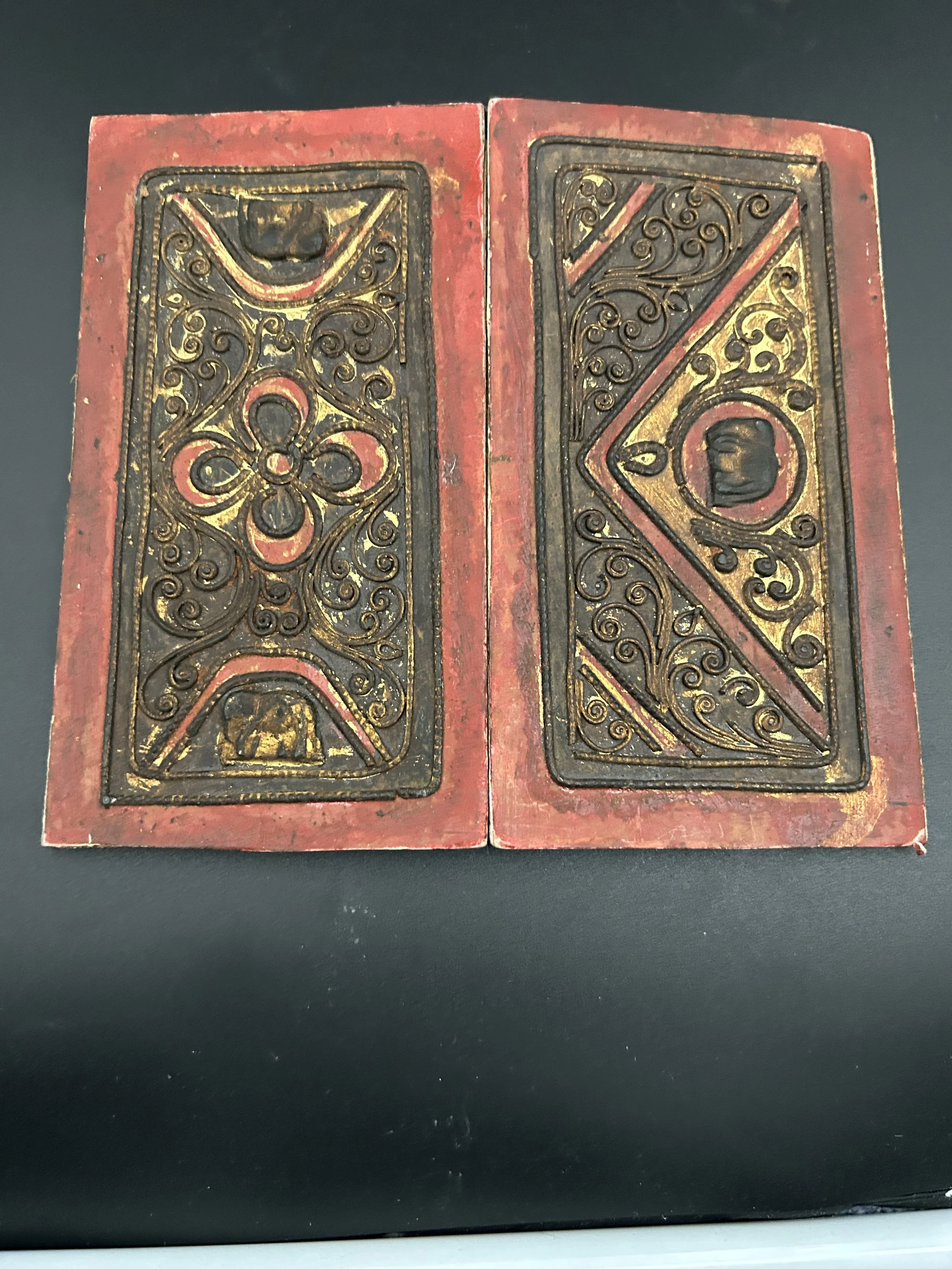
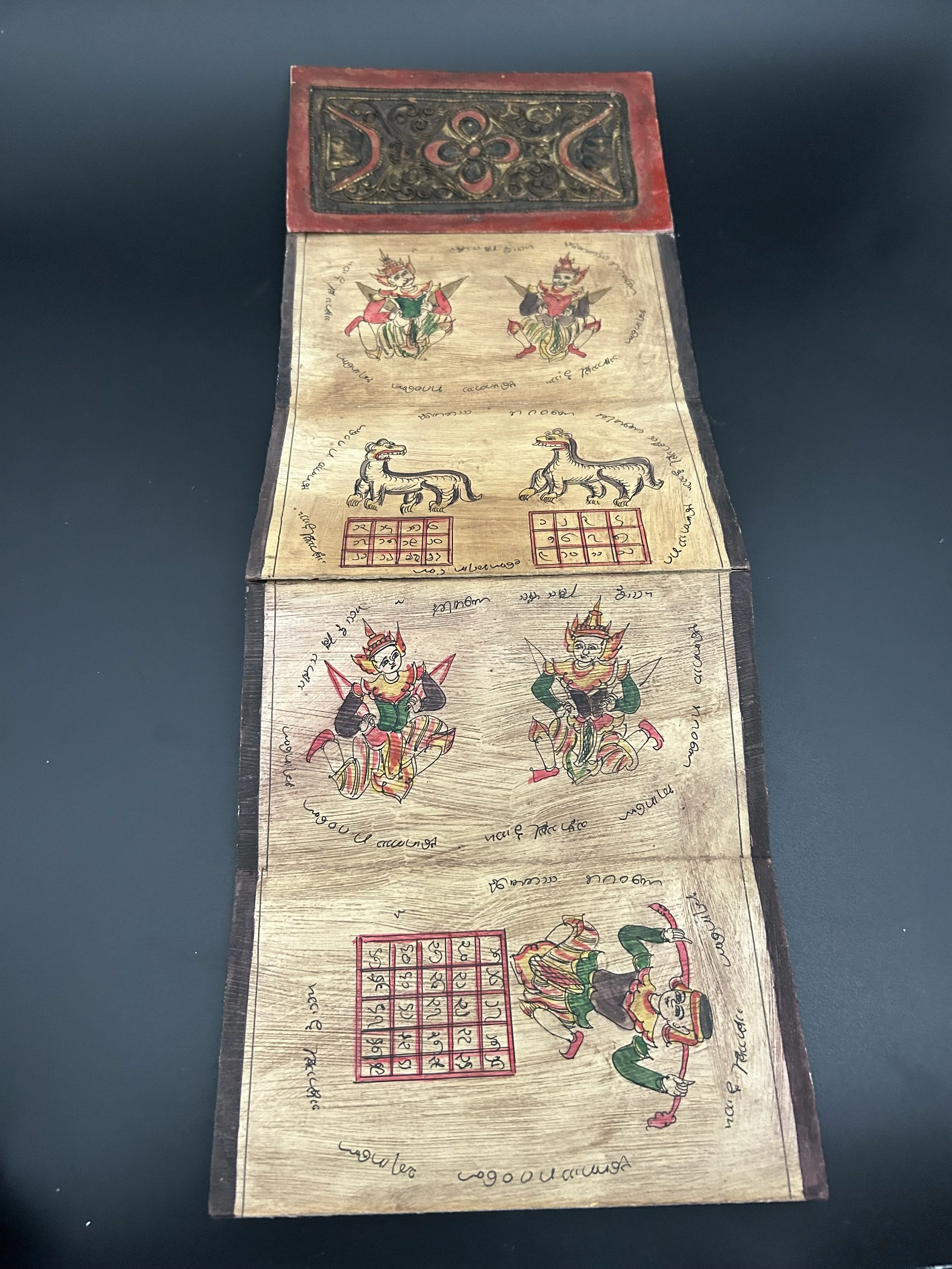
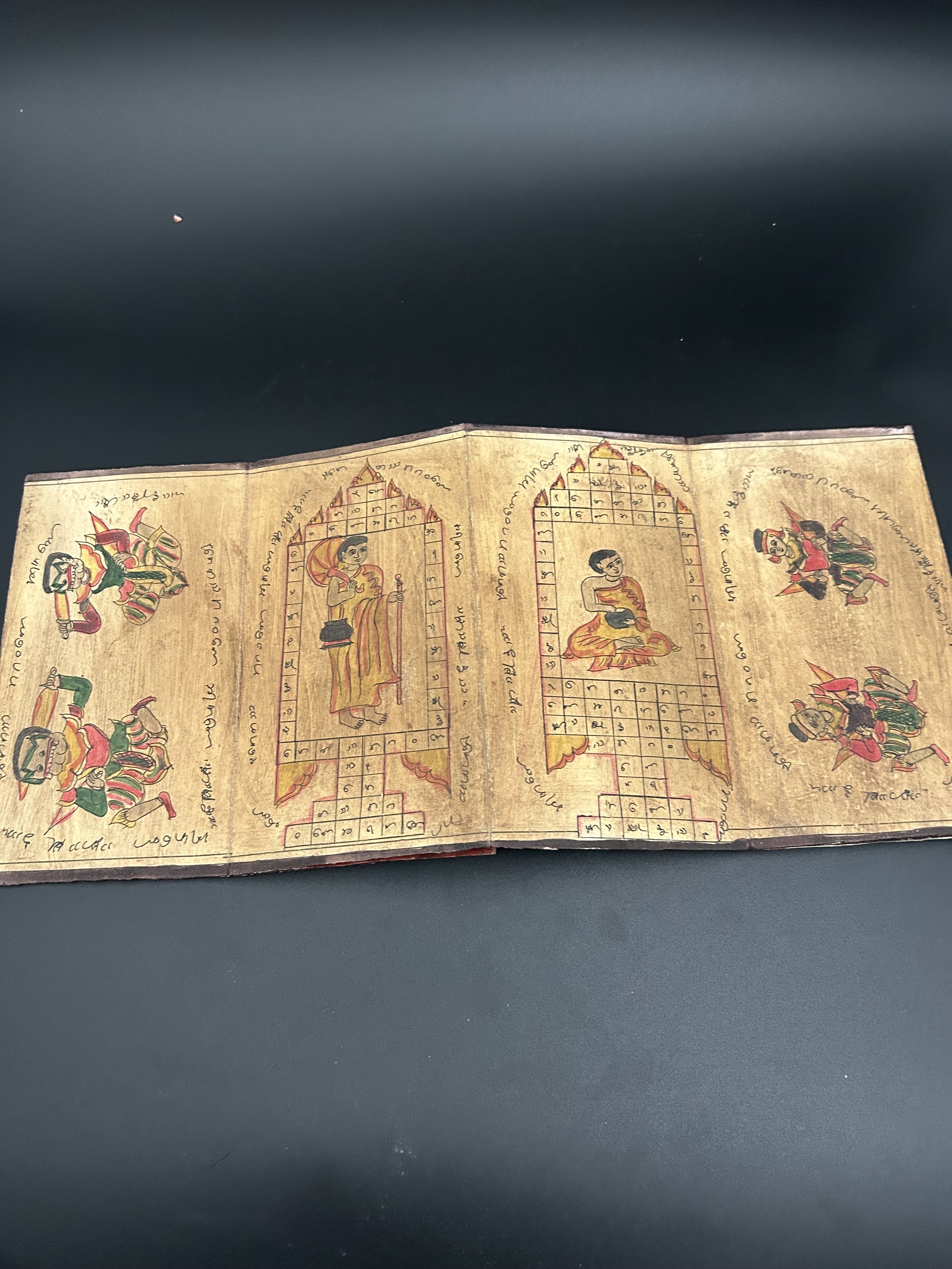
A traditional Ethiopian Orthodox healing scroll, a protective and curative manuscript written in Ge’ez on a long, narrow strip of prepared goat skin and adorned with three hand-painted holy images. Such scrolls were not ornaments but spiritual defenses, made for one person and lived with for a lifetime. This one is worn smooth and darkened at the center, where generations of hands appear to have rested on a single passage.
Physical Details
Prepared goat parchment, rolled, with faded registers of Ge’ez script and three painted figures in red and ochre. The central section is worn smooth and slightly darkened from long handling. Significant signs of age and wear, with some loss along the edges, consistent with an object made to be carried in a leather case at the neck rather than shelved. The painted eyes are unusually direct.
Dimensions
152 cm × 8 cm.
Tradition
This piece belongs to the Ethiopian Orthodox Tewahedo tradition, among the oldest Christian traditions in the world, with its sacred language in Ge’ez. Healing scrolls of this kind were written by a debtera, a scribe-healer of the church, and were often cut to the exact height of the person they were made to protect. They carry prayers, the names of guardian angels, and talismanic images set against illness, misfortune, and the evil eye. They were meant to be worn and lived alongside, and by long custom a scroll was to be buried with its owner when its work was done. A scroll that survives its owner is, in this tradition, a scroll that has been left behind.
Story
The scroll arrived rolled inside a plain cardboard tube, and the collector very nearly overlooked it. Among rare books, paintings, and antique maps, it seemed a modest thing: a narrow strip of animal skin covered in faded Ge’ez and bearing three hand-painted holy figures. The listing called it an Ethiopian Orthodox healing scroll and gave the usual words that follow such objects. Protection. Blessing. Exorcism. He had owned religious things before, pilgrim badges and reliquaries and prayer books, and he knew that objects take on the habits of the hands that use them. When he unrolled it across his desk, though, he noticed something he had not expected. The skin was worn smooth in only one place, a section near the center, as if countless hands had rested on that exact passage over many years.
The first prayer came three nights later. He woke to the sound of someone praying in the dark, not speaking but praying, a low melodic murmur in a language he did not know. He searched the house and found no one, and the sound stopped. The next night it came again, and seemed to rise from the room where the scroll was kept, and when he went in the room was empty and the scroll lay where he had left it, but the air carried the faint scent of incense, old and earthy, like resin burned in a stone church. The prayers continued, always after midnight, always too faint to follow. One night he set his phone to record. In the morning the recording held nothing at all. No voice, no prayer, no sound.
He began to read about Ethiopian healing scrolls, and learned that they are not ordinary manuscripts. Many were made for one particular person, written by a debtera to the owner’s own measure, filled with prayers and the names of angels and images set against sickness and the evil eye. They were not merely read. They were carried, and worn, and lived alongside, some from childhood until death. One passage stopped him. Certain traditions held that a healing scroll should never outlive its owner, and that when its work was done it was meant to be buried with them. He looked at the strip of skin on his desk and wondered, for the first time, whose grave it had missed.
Then the dreams began. He stood each night in a stone church high in the mountains, candles flickering against painted walls, a congregation gathered with their faces turned from him so that he saw only their eyes, every pair watching him, not with hostility but with expectation. At the front a priest held the scroll and spoke a single sentence the collector could never quite keep. The dream repeated, and each time the words came a little clearer, until at last, after nearly a month, he understood. The priest was not speaking to him. He was speaking about someone. A name, the same name every time. A woman, long forgotten.
He searched auction records and estate papers, and eventually found a clue folded into paperwork from a previous owner, a handwritten note from the 1960s. The scroll had come from a missionary family who had left Ethiopia decades before. With the note was a photograph: a young woman seated beneath an olive tree, a leather case large enough to hold a prayer scroll hanging at her neck. On the back, in a careful hand, was written only this. For Almaz. Protected from the fever. 1938. No surname. No death record. Nothing else. Just the name.
That evening he said it aloud. Almaz. The room went quiet, and for the first time in weeks no prayer came after midnight. Instead he dreamed of the church once more, and this time the congregation was gone and only the priest remained. He looked relieved. He crossed to the collector and laid a hand on the scroll, and he said, in plain English, “Now she is remembered.” The dream ended. The voices ended. No more incense, no more waking in the dark.
The scroll stayed in the collection for years after that, and visitors often admired it, and some remarked that the painted faces seemed unusually alive, that the eyes followed them across the room. The collector never mentioned the dreams. There was only one thing he never understood. Months after he found the photograph he looked at it again under magnification, and near the young woman’s neck, beneath the shadow of the leather case, he saw a tiny inscription that had not been added later but was present in the original image, three words in Ge’ez that no camera should have been able to capture. A scholar translated them for him. They read: Do not forget me. He never showed the photograph to anyone again. And whenever he unrolled the scroll he would pause at the worn place in the center, the place touched by generations of hands, and rest his fingers there a moment. Not out of fear. But because someone, long ago, had carried that scroll through sickness and sorrow and prayer, and perhaps all the dead truly ask of the living is to be remembered once more before the silence takes them.
Provenance
Made for a woman named Almaz, Ethiopia, c. 1938; acquired by a missionary family that left Ethiopia, mid-20th century; private collection (the collector of this account); AbyssinianArtifacts, London; Rooks–St. Felix, 2026 to present.
Supernatural Scale: 4
Communicative. The scroll prays aloud after midnight in Ge’ez, carries the scent of church incense, and reaches its owner in dreams. It grows quiet and content once the woman it was made for is named and remembered.
Maintenance Scale: γ (Gamma) — Intermediate
Keep the scroll rolled, dry, and out of direct light. It asks for very little beyond respect. Light frankincense for it now and then, speak Almaz’s name when you handle it, and never treat it as decoration. This is a scroll that was loved and then left behind, and it answers to remembrance more than to ritual.
Item No. RSF – B – 4 – γ – 15
Object Description
A traditional Ethiopian Orthodox healing scroll, a protective and curative manuscript written in Ge’ez on a long, narrow strip of prepared goat skin and adorned with three hand-painted holy images. Such scrolls were not ornaments but spiritual defenses, made for one person and lived with for a lifetime. This one is worn smooth and darkened at the center, where generations of hands appear to have rested on a single passage.
Physical Details
Prepared goat parchment, rolled, with faded registers of Ge’ez script and three painted figures in red and ochre. The central section is worn smooth and slightly darkened from long handling. Significant signs of age and wear, with some loss along the edges, consistent with an object made to be carried in a leather case at the neck rather than shelved. The painted eyes are unusually direct.
Dimensions
152 cm × 8 cm.
Tradition
This piece belongs to the Ethiopian Orthodox Tewahedo tradition, among the oldest Christian traditions in the world, with its sacred language in Ge’ez. Healing scrolls of this kind were written by a debtera, a scribe-healer of the church, and were often cut to the exact height of the person they were made to protect. They carry prayers, the names of guardian angels, and talismanic images set against illness, misfortune, and the evil eye. They were meant to be worn and lived alongside, and by long custom a scroll was to be buried with its owner when its work was done. A scroll that survives its owner is, in this tradition, a scroll that has been left behind.
Story
The scroll arrived rolled inside a plain cardboard tube, and the collector very nearly overlooked it. Among rare books, paintings, and antique maps, it seemed a modest thing: a narrow strip of animal skin covered in faded Ge’ez and bearing three hand-painted holy figures. The listing called it an Ethiopian Orthodox healing scroll and gave the usual words that follow such objects. Protection. Blessing. Exorcism. He had owned religious things before, pilgrim badges and reliquaries and prayer books, and he knew that objects take on the habits of the hands that use them. When he unrolled it across his desk, though, he noticed something he had not expected. The skin was worn smooth in only one place, a section near the center, as if countless hands had rested on that exact passage over many years.
The first prayer came three nights later. He woke to the sound of someone praying in the dark, not speaking but praying, a low melodic murmur in a language he did not know. He searched the house and found no one, and the sound stopped. The next night it came again, and seemed to rise from the room where the scroll was kept, and when he went in the room was empty and the scroll lay where he had left it, but the air carried the faint scent of incense, old and earthy, like resin burned in a stone church. The prayers continued, always after midnight, always too faint to follow. One night he set his phone to record. In the morning the recording held nothing at all. No voice, no prayer, no sound.
He began to read about Ethiopian healing scrolls, and learned that they are not ordinary manuscripts. Many were made for one particular person, written by a debtera to the owner’s own measure, filled with prayers and the names of angels and images set against sickness and the evil eye. They were not merely read. They were carried, and worn, and lived alongside, some from childhood until death. One passage stopped him. Certain traditions held that a healing scroll should never outlive its owner, and that when its work was done it was meant to be buried with them. He looked at the strip of skin on his desk and wondered, for the first time, whose grave it had missed.
Then the dreams began. He stood each night in a stone church high in the mountains, candles flickering against painted walls, a congregation gathered with their faces turned from him so that he saw only their eyes, every pair watching him, not with hostility but with expectation. At the front a priest held the scroll and spoke a single sentence the collector could never quite keep. The dream repeated, and each time the words came a little clearer, until at last, after nearly a month, he understood. The priest was not speaking to him. He was speaking about someone. A name, the same name every time. A woman, long forgotten.
He searched auction records and estate papers, and eventually found a clue folded into paperwork from a previous owner, a handwritten note from the 1960s. The scroll had come from a missionary family who had left Ethiopia decades before. With the note was a photograph: a young woman seated beneath an olive tree, a leather case large enough to hold a prayer scroll hanging at her neck. On the back, in a careful hand, was written only this. For Almaz. Protected from the fever. 1938. No surname. No death record. Nothing else. Just the name.
That evening he said it aloud. Almaz. The room went quiet, and for the first time in weeks no prayer came after midnight. Instead he dreamed of the church once more, and this time the congregation was gone and only the priest remained. He looked relieved. He crossed to the collector and laid a hand on the scroll, and he said, in plain English, “Now she is remembered.” The dream ended. The voices ended. No more incense, no more waking in the dark.
The scroll stayed in the collection for years after that, and visitors often admired it, and some remarked that the painted faces seemed unusually alive, that the eyes followed them across the room. The collector never mentioned the dreams. There was only one thing he never understood. Months after he found the photograph he looked at it again under magnification, and near the young woman’s neck, beneath the shadow of the leather case, he saw a tiny inscription that had not been added later but was present in the original image, three words in Ge’ez that no camera should have been able to capture. A scholar translated them for him. They read: Do not forget me. He never showed the photograph to anyone again. And whenever he unrolled the scroll he would pause at the worn place in the center, the place touched by generations of hands, and rest his fingers there a moment. Not out of fear. But because someone, long ago, had carried that scroll through sickness and sorrow and prayer, and perhaps all the dead truly ask of the living is to be remembered once more before the silence takes them.
Provenance
Made for a woman named Almaz, Ethiopia, c. 1938; acquired by a missionary family that left Ethiopia, mid-20th century; private collection (the collector of this account); AbyssinianArtifacts, London; Rooks–St. Felix, 2026 to present.
Supernatural Scale: 4
Communicative. The scroll prays aloud after midnight in Ge’ez, carries the scent of church incense, and reaches its owner in dreams. It grows quiet and content once the woman it was made for is named and remembered.
Maintenance Scale: γ (Gamma) — Intermediate
Keep the scroll rolled, dry, and out of direct light. It asks for very little beyond respect. Light frankincense for it now and then, speak Almaz’s name when you handle it, and never treat it as decoration. This is a scroll that was loved and then left behind, and it answers to remembrance more than to ritual.

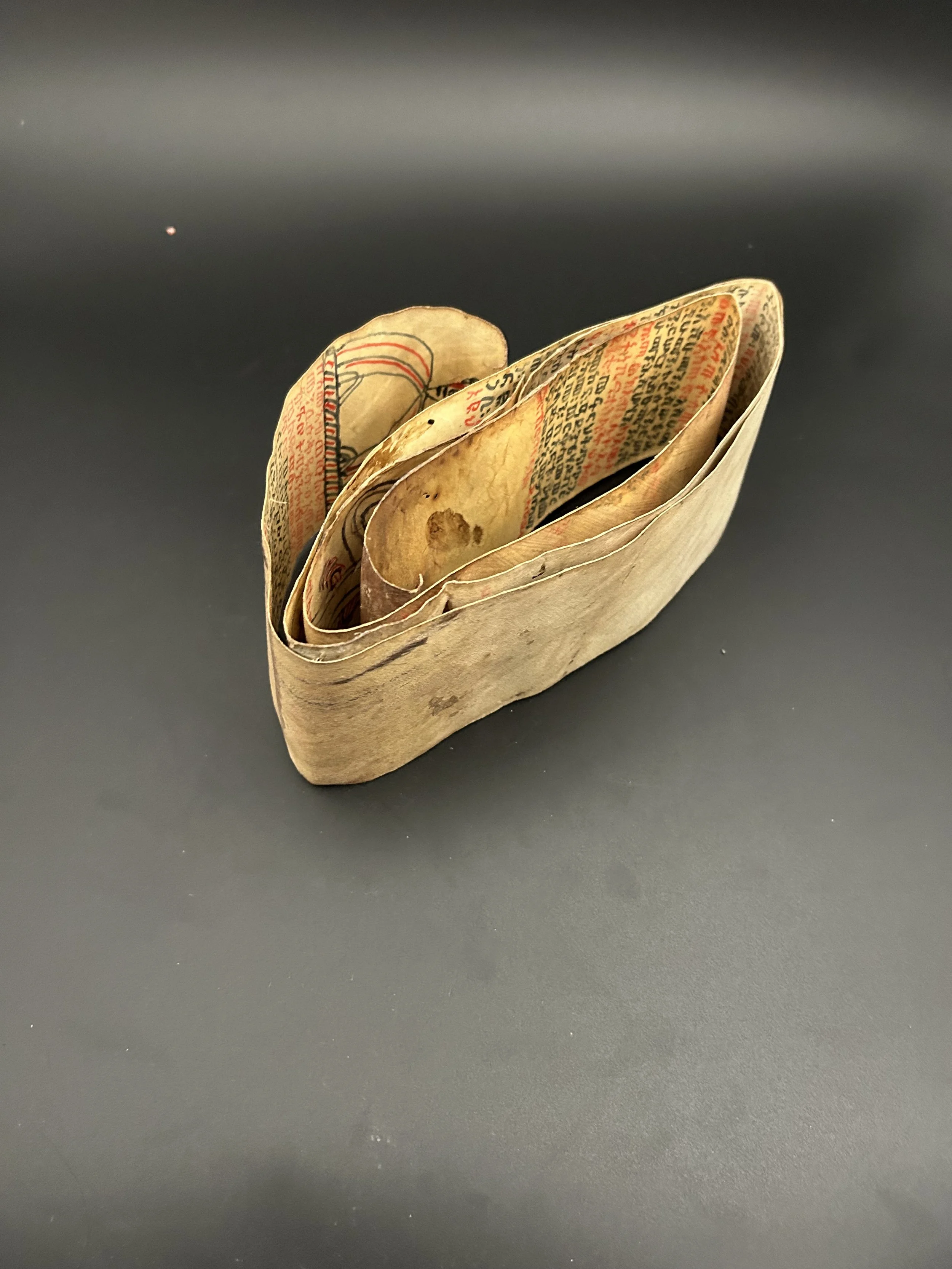 Image 1 of 6
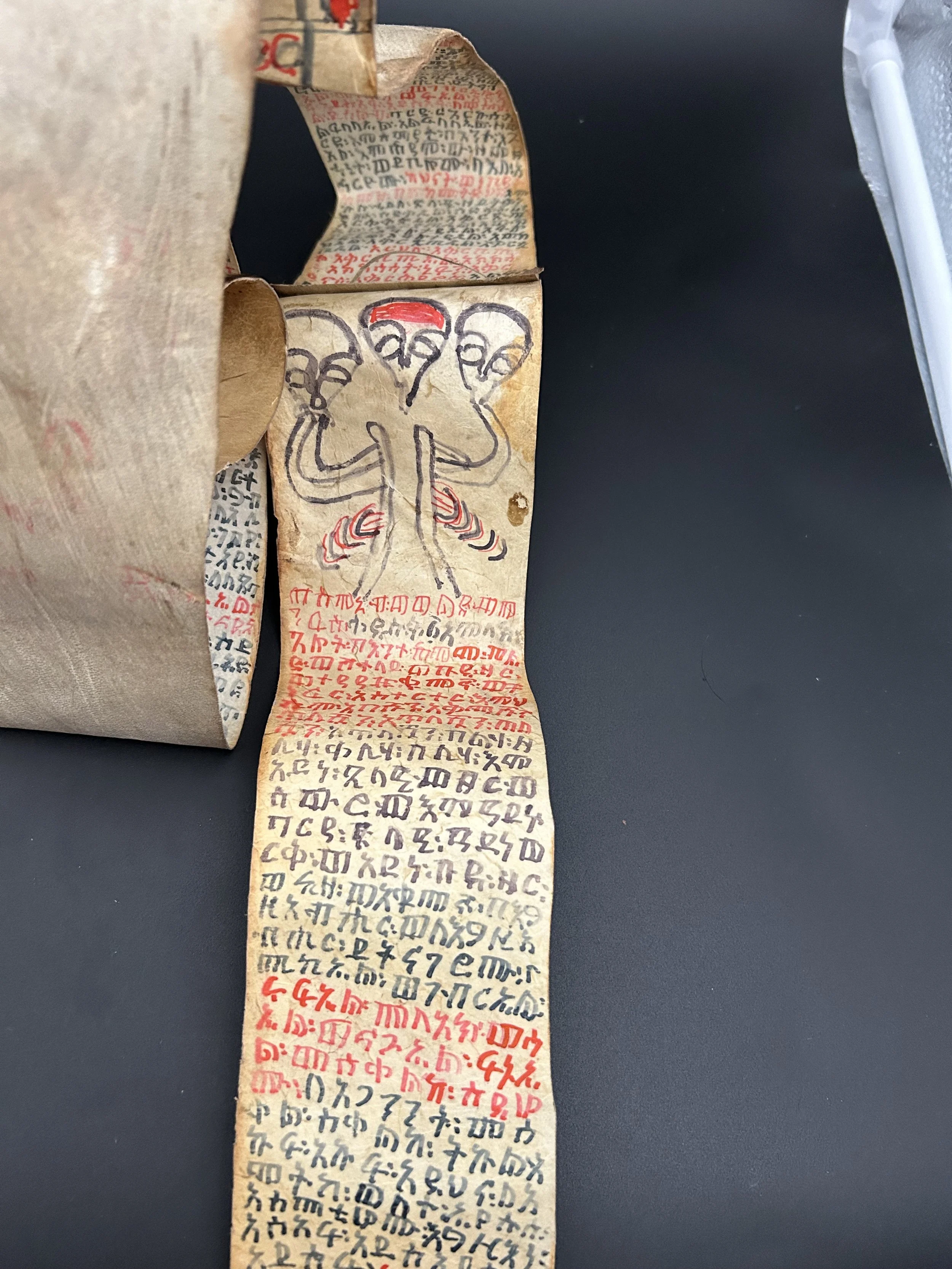 Image 2 of 6
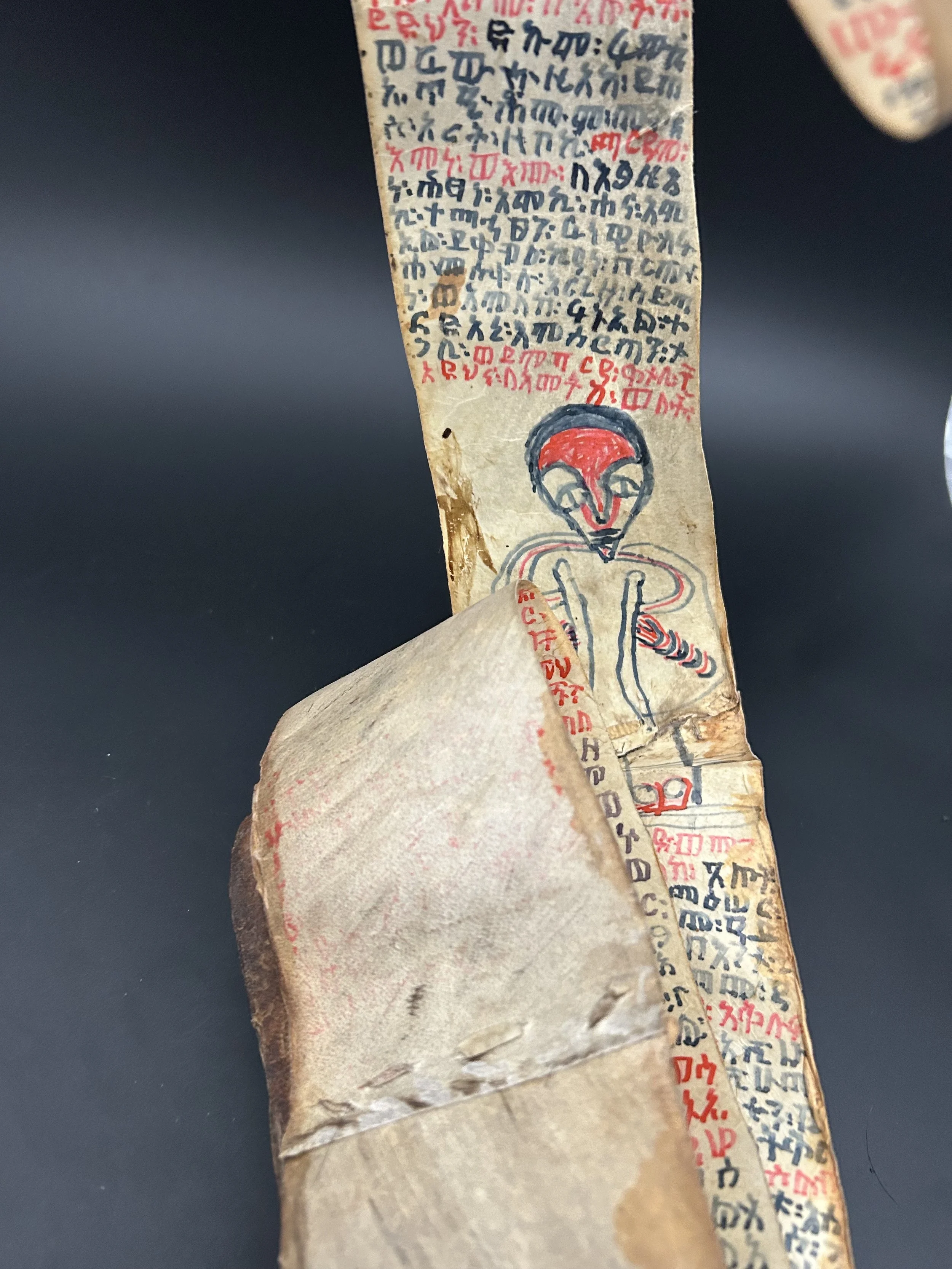 Image 3 of 6
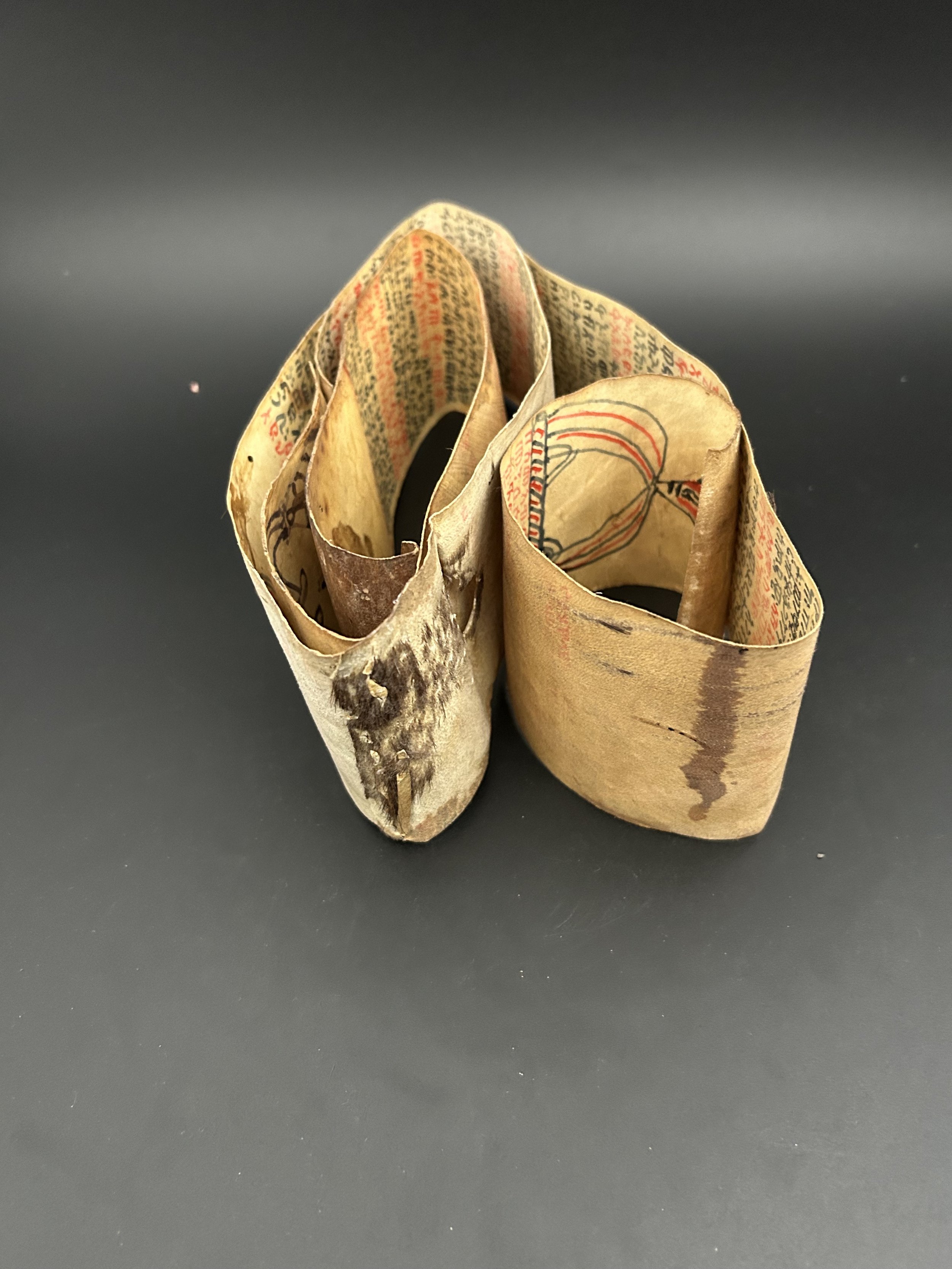 Image 4 of 6
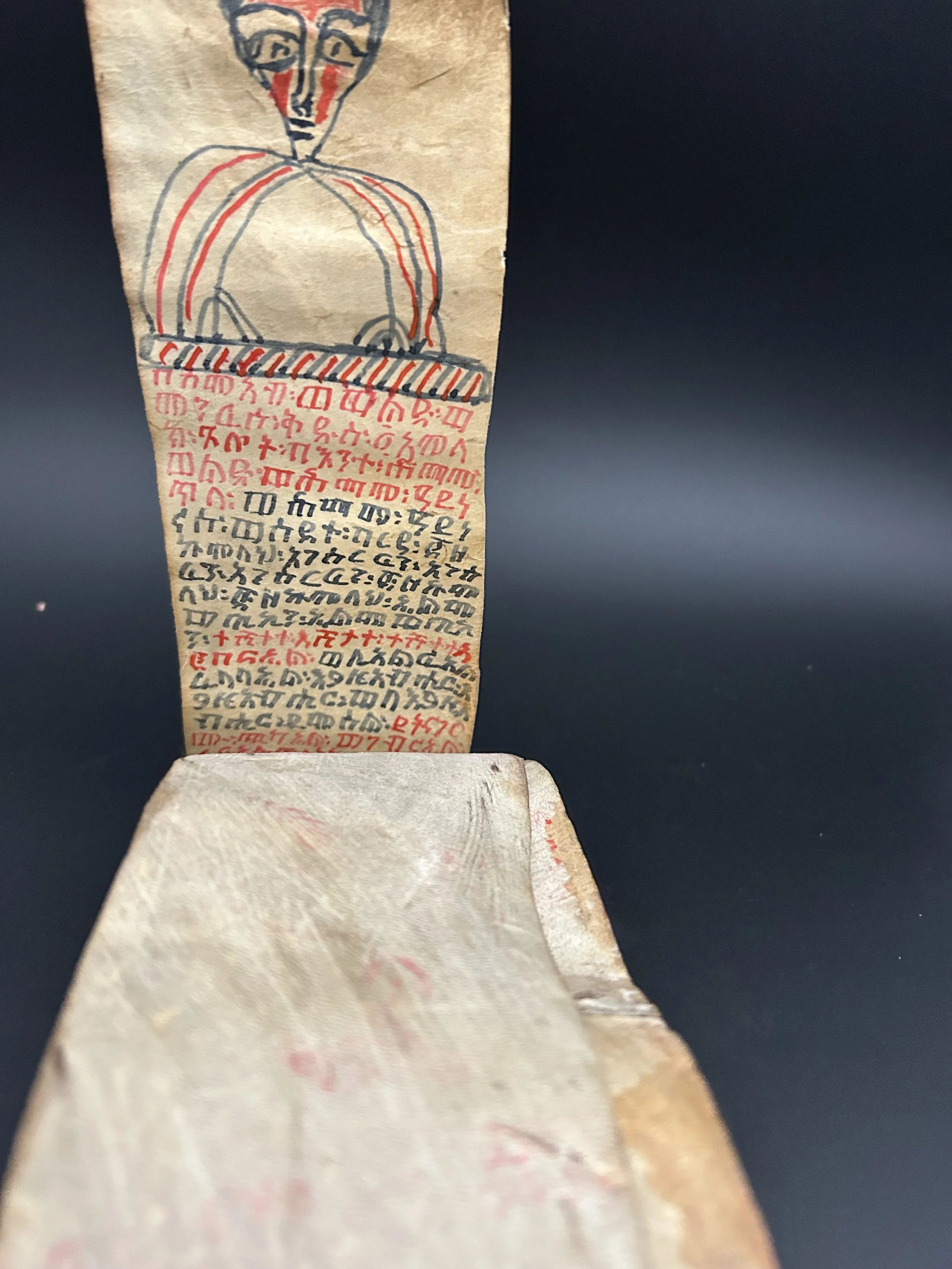 Image 5 of 6
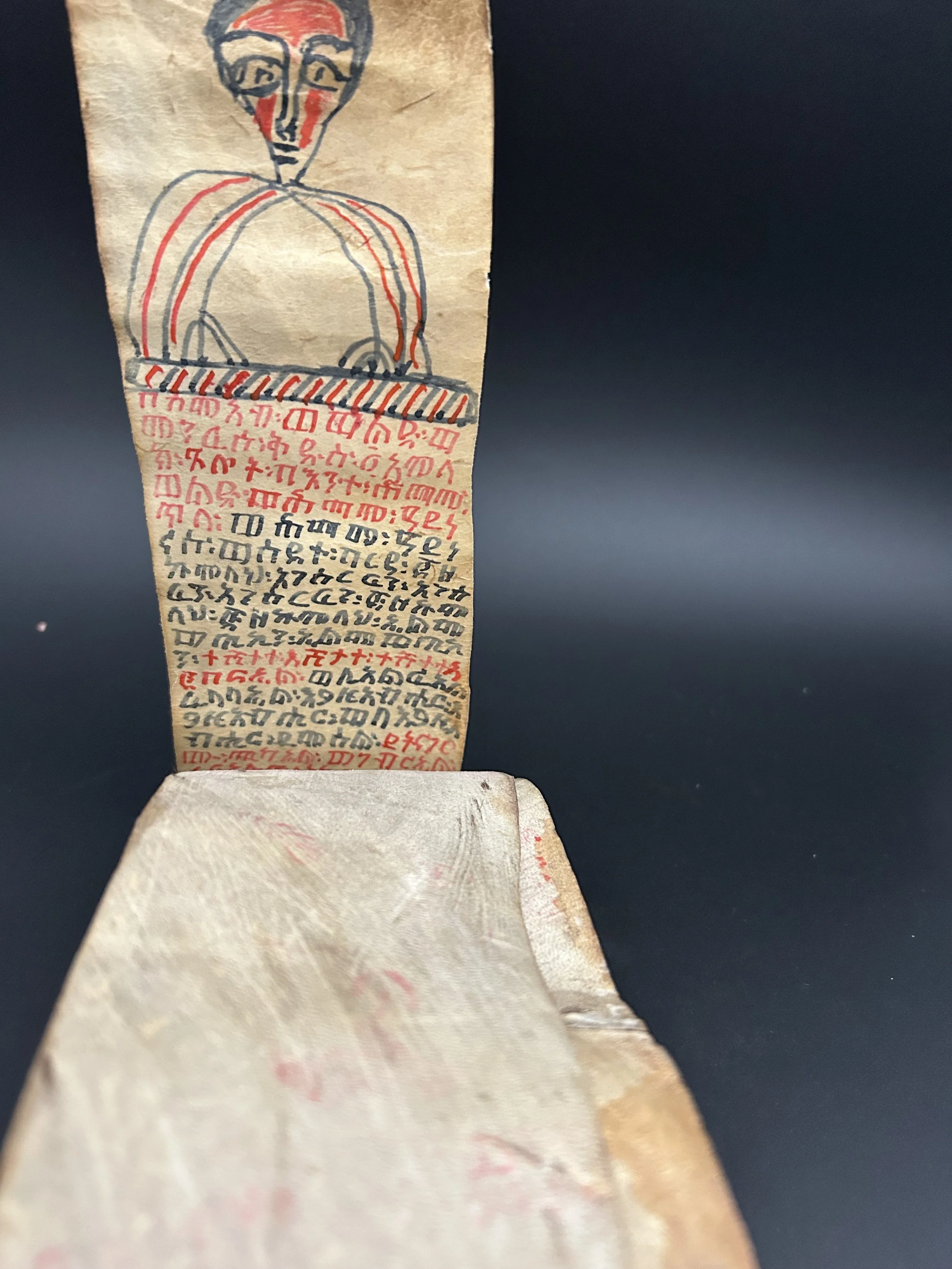 Image 6 of 6